

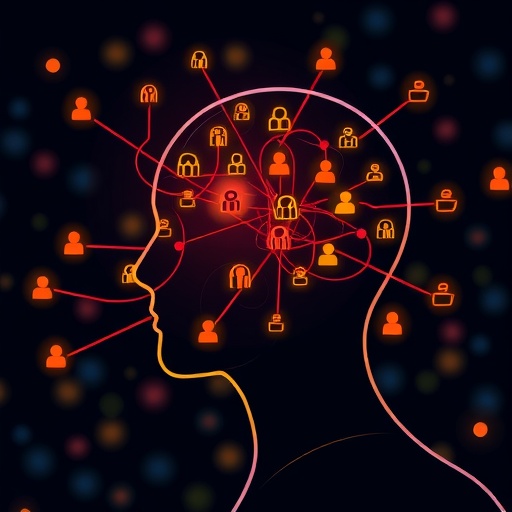
In an era where digital footprints increasingly define our personal and social landscapes, the intersection of user profiling and mental health management is garnering unprecedented attention from researchers worldwide. A recent comprehensive review authored by Fu, Zhang, Huang, and colleagues, published in BMC Psychology in 2025, delves into this burgeoning field to chart the scope and potential applications of user profiling techniques in mental health care. Their work encapsulates a wide array of studies, technologies, and methodologies that collectively promise to revolutionize how mental well-being is monitored, understood, and treated.
User profiling, in its essence, involves the collection and analysis of data generated through individuals’ online and offline activities to build nuanced representations of their behaviors, preferences, and psychological states. Traditionally used in marketing and cybersecurity, this powerful methodology is now being adapted by psychologists and mental health professionals to provide personalized and timely interventions for those at risk of, or suffering from, mental health disorders. The review meticulously outlines how diverse data sources—from social media interactions and wearable sensors to digital communication patterns—serve as the backbone for constructing such profiles.
One of the standout revelations from the review is the multifaceted nature of data utilized for mental health profiling. Psychological states manifest in diverse behavioral cues such as linguistic patterns, social connectivity, activity rhythms, and biometric signals. By applying advanced machine learning algorithms and natural language processing, researchers can decode subtle shifts in mood or cognition that might elude conventional clinical observation. For instance, changes in language complexity or sentiment in social media posts may signal the onset of depression or anxiety, providing an unobtrusive yet potent diagnostic window.
Moreover, the review emphasizes the integration of wearable technology in mental health monitoring, a leap forward made possible by recent advances in sensor miniaturization and data analytics. Wearables capture physiological markers like heart rate variability, sleep patterns, and physical activity levels—all critical indicators of mental health states. When combined with user profiling frameworks, these data enable continuous and real-time assessments, dramatically altering the reactive nature of traditional mental health services to a proactive and preventive model.
While the potential of user profiling in mental health management appears immense, the review does not shy away from addressing the significant ethical and privacy concerns that accompany it. Profiling inherently involves sensitive personal data, mandating stringent safeguards against misuse, data breaches, and algorithmic biases. The authors advocate for transparent consent mechanisms, equitable access, and user empowerment as foundational pillars for ethically responsible deployment in clinical and non-clinical settings.
Technically, the consolidation of heterogeneous data streams presents substantial computational challenges. The review highlights state-of-the-art techniques including federated learning, which allows algorithms to train on decentralized data sources without compromising user privacy. Additionally, explainable AI models are championed to ensure interpretability and trustworthiness of predictions, vital for acceptance among clinicians and patients alike.
The scoping review also foregrounds the gap between experimental prototypes and scalable, real-world implementations. While pilot studies show promising accuracy and user engagement, transitioning such technologies into everyday mental health practices requires overcoming issues of robustness, integration with existing healthcare infrastructure, and regulatory compliance. Interdisciplinary collaboration among psychologists, data scientists, ethicists, and policymakers is identified as crucial to unlocking this potential.
Another area of discussion is the customization of mental health interventions derived from user profiles. Tailoring therapeutic content, timing, and modality based on an individual’s unique behavioral signature could significantly improve treatment adherence and efficacy. Gamification, chatbot support, and adaptive cognitive-behavioral therapy modules exemplify how user-centric designs are reshaping digital mental health tools.
Importantly, the review underscores the role of cultural and demographic variability, urging researchers to ensure that user profiling models are inclusive and sensitive to diverse populations. Mental health expressions and stigmatizations vary widely across cultures, which means algorithms trained on homogenous data risk alienating or misclassifying significant user groups. Strategies for inclusivity and fairness form a pivotal part of ongoing research.
Furthermore, the dynamic nature of mental health states necessitates continuous updating and refinement of user profiles. Static assessments insufficiently capture the fluctuating trajectories of mental wellbeing. Therefore, temporal analysis and real-time feedback loops become essential features of sophisticated profiling systems, enabling early detection of relapses or emergent crises.
Integration with broader digital ecosystems constitutes another promising frontier. Combining user profiling with electronic health records, telehealth platforms, and emerging metaverse environments could create comprehensive, immersive support networks that transcend the limitations of conventional therapy. The authors speculate that such digitally augmented care paradigms might enhance accessibility and destigmatization while fostering empowerment.
The review importantly highlights the potential of user profiling to enable population-level mental health surveillance. Aggregated and anonymized data analytics could aid public health officials in identifying emerging trends, hotspots of psychological distress, or the impact of socio-economic disruptions—thereby informing policy and community interventions at scale.
Nevertheless, the authors prudently delineate the current limitations of automated user profiling systems. False positives and negatives remain a concern, with real-world consequences for patient trust and resource allocation. Hence, hybrid models combining algorithmic insights with human clinical judgment represent an optimal approach during transitional phases.
As mental health disorders continue to rise globally—exacerbated by factors like pandemics, social isolation, and digital dependence—the integration of cutting-edge technological tools becomes not just an opportunity but a necessity. This comprehensive scoping review by Fu and colleagues poignantly positions user profiling at the forefront of this evolving landscape, elucidating both the promise and complexities inherent in harnessing big data for personalized mental healthcare.
Ultimately, translating these technical advancements into tangible improvements in mental health outcomes will hinge on multidisciplinary efforts, thoughtful design, and ethical stewardship. The thoughtful, balanced approach of the review stands as an invitation for ongoing dialogue and innovation aimed at transforming mental health management into a smarter, more responsive, and humane endeavor for the digital age.
Subject of Research: Application of user profiling in mental health management.
Article Title: Application of user profiling in mental health management: a scoping review.
Article References:
Fu, C., Zhang, Y., Huang, X. et al. Application of user profiling in mental health management: a scoping review. BMC Psychol (2025). https://doi.org/10.1186/s40359-025-03800-y
Image Credits: AI Generated


