

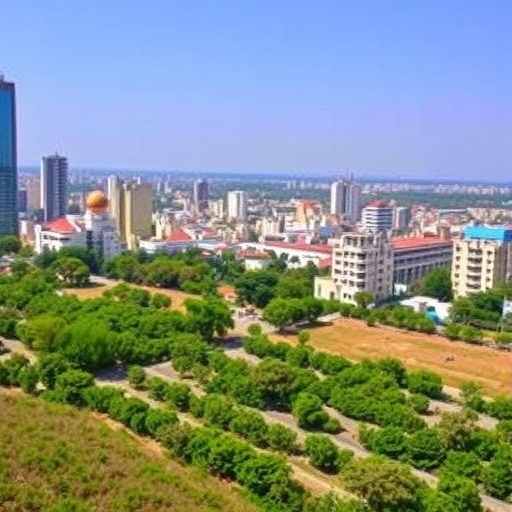
Urbanization is an unstoppable phenomenon that drastically alters landscapes and ecosystems worldwide, affecting the very services that these systems provide to human inhabitants. A ground-breaking study conducted by A. Kapoor focuses on the National Capital Region of India, analyzing significant shifts in the values of ecosystem services between the years 2005 to 2025. This research, set against the backdrop of rapid urbanization, sheds light on the often-overlooked ramifications of development on essential ecological functions. The findings reveal a complex interplay between urban growth and environmental health, urging policymakers to rethink strategies that balance developmental needs with ecological preservation.
The study delineates the concept of ecosystem services, which encompasses tangible and intangible benefits derived from nature, such as clean air, water purification, and biodiversity. These services are integral to human well-being, yet they often go unnoticed until they are lost. In the National Capital Region, which witnesses one of the fastest rates of urban expansion in India, the pressure on these natural resources has escalated significantly. Kapoor’s analysis brings to the forefront the critical narrative that underpins these changes, particularly focusing on how urbanization redefines the ecological landscape.
One of the most alarming findings of the research is the quantification of service value losses associated with urban sprawl. As cities expand, forests are cleared, wetlands are drained, and farmlands are encroached upon, leading to diminished biodiversity and the loss of natural habitats. Kapoor meticulously illustrates how these losses translate into a decline in ecosystem services that communities have long relied upon, such as flood regulation and climate stabilization. The study underscores the necessity for comprehensive data and models to project potential future changes and prepare for impending environmental challenges.
Moreover, the research delves into specific services affected by urbanization. Water supply, for instance, faces increasing risks as natural filtration systems are compromised due to land development. Urban heat islands arise as green spaces diminish, contributing to higher temperatures and exacerbating public health issues. The intricate connections between land use and climatic conditions are thoroughly explored, emphasizing a need for sustainable practices that can mitigate these effects. Kapoor proposes that by integrating nature back into urban planning, cities can enhance resilience against climatic extremes while preserving essential services.
The repercussions of bypassing ecosystem service valuation are profound. Kapoor argues that economic growth must not come at the cost of environmental degradation. Ignoring the value of natural capital leads not only to the erosion of services but also undermines the foundations of human life—clean air, secure water, and healthy ecosystems. This research calls for a paradigm shift where the socio-economic benefits of preserving ecosystem services are recognized and integrated into policy frameworks.
In addition, Kapoor highlights innovative practices that promote urban sustainability in the National Capital Region. Concepts such as green infrastructure and urban forest management emerge as viable strategies to rejuvenate ecological services while catering to the needs of a growing urban population. Investments in green rooftops, permeable pavements, and urban parks not only improve the aesthetic quality of cities but also enhance ecological functions—providing opportunities for biodiversity to flourish amidst urban grit.
In terms of public policy, Kapoor’s research provides critical insights for urban planners and government officials. The urgent need for collaborative approaches that engage communities in conservation efforts is emphasized. Local populations often possess valuable indigenous knowledge that can contribute to effective management strategies. Engaging citizens in dialogue about the importance of ecosystem services fosters a collective ethos of environmental stewardship that can spur meaningful impacts at the grassroots level.
Furthermore, Kapoor’s analysis extends its reach beyond immediate urban concerns, linking local developments to global environmental challenges. Urbanization in one part of the world invariably influences ecosystems elsewhere, especially in the context of climate change and biodiversity loss. The interconnectedness of ecosystems necessitates a holistic approach to urban development that anticipates and mitigates cross-border environmental impacts. This study underscores the importance of global frameworks that harmonize urbanization processes with ecological preservation goals.
Interdisciplinary research and collaborative efforts are paramount in tackling the complexities of urbanization and its effects on ecosystem services. Kapoor stresses the significance of integrating ecological science with urban studies, economics, and social sciences. Such collaboration not only enriches the understanding of urban ecosystems but also enhances the effectiveness of interventions aimed at sustaining ecological functions. The necessity for shared knowledge across disciplines becomes evident as researchers seek innovative solutions to pressing environmental issues.
As the National Capital Region continues to evolve, the findings of this study serve as a wake-up call for urban stakeholders. The trajectory of development must be redirected towards resilience, sustainability, and inclusivity, ensuring that ecosystem services are preserved for future generations. Kapoor’s work not only contributes to academic discourse but also stands as a testament to the urgent need for actionable change in urban planning and policy.
Finally, as we approach the mid-2020s, the implications of Kapoor’s findings resonate on multiple levels. The call for integrating ecosystem service valuation into urban development strategies challenges traditional approaches and necessitates a reevaluation of priorities by decision-makers. Creating a future where urban environments coexist harmoniously with nature requires collective action, informed policy, and sustainable practices—a narrative that must be championed in the conversation about urbanization and environmental health.
In summary, Kapoor’s research serves as a clarion call to acknowledge the intrinsic value of ecosystem services amidst the rapid urbanization of the National Capital Region of India. By closely examining the changes spanning two decades, the study elucidates the critical relationship between urban development and environmental integrity, advocating for a balanced approach that ensures a sustainable future for both people and nature.
Subject of Research: Changes in ecosystem service values due to urbanization in the National Capital Region of India.
Article Title: Changes in ecosystem service values due to urbanization in the national Capital Region of India (2005–2025).
Article References:
Kapoor, A. Changes in ecosystem service values due to urbanization in the national Capital Region of India (2005–2025).
Discov Cities 3, 16 (2026). https://doi.org/10.1007/s44327-026-00196-1
Image Credits: AI Generated
DOI: https://doi.org/10.1007/s44327-026-00196-1
Keywords: Urbanization, ecosystem services, National Capital Region, environmental sustainability, urban planning, biodiversity, climate change.


