

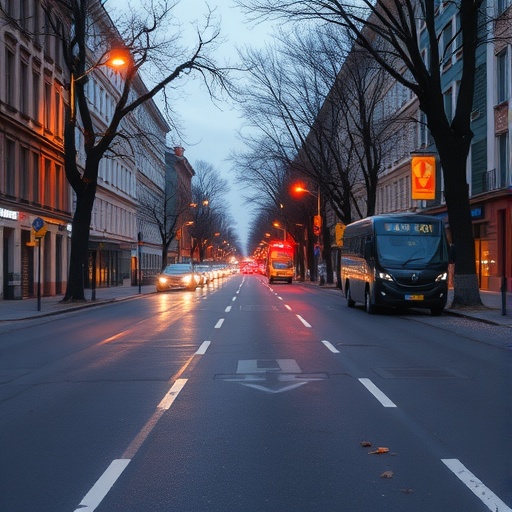
In a groundbreaking study, researchers T. Zubala and Ż. Gliwka have illuminated the intricate relationship between urban noise levels and environmental variability along shared pedestrian and bicycle paths in Lublin, Poland. With developments in urban infrastructure increasingly prioritizing the integration of these pathways, understanding noise pollution becomes paramount, particularly in urban settings that experience diverse terrain conditions. The significant focus on how these elements interact reveals both a challenge and an opportunity for urban planners striving to create more livable cities.
Urban noise pollution has long been recognized for its ability to affect human health and wellbeing. In cities where pedestrians share paths with cyclists, the combination of excess vehicular noise, cyclist speeds, and pedestrian traffic creates a complex acoustic environment. Zubala and Gliwka’s research identifies the key factors that influence noise levels in urban areas, emphasizing the need for targeted solutions to mitigate adverse effects on community health. Their findings draw attention to the urgency of addressing noise pollution in urban planning.
Look at Lublin, Poland, as a case study. This vibrant city showcases varying geographical features from flat surfaces to hilly terrains, each affecting noise propagation differently. The researchers employed sophisticated noise monitoring techniques, deploying devices at various points along the shared paths. This approach enabled them to gather comprehensive data, allowing for an analysis of urban acoustic dynamics in real-time. Through meticulous measurement and data analysis, the team could decipher how differences in elevation, vegetation cover, and adjacent structures contribute to the overall acoustic climate.
One of the primary findings of the study indicates that the urban acoustic environment is highly variable, fluctuating significantly depending on these terrain features. For instance, areas with dense vegetation tend to exhibit lower noise levels, acting as natural sound barriers. In contrast, urban zones with hard surfaces and fewer obstacles often result in heightened noise pollution, which poses a risk to both pedestrians and cyclists navigating through these spaces. This fact raises questions about urban design; how can cities incorporate natural elements to foster a more pleasant acoustic atmosphere?
Additionally, Zubala and Gliwka examined the temporal variability of noise, noting that periods of peak activity coincide with higher levels of disturbance. This observation suggests that planners must consider not only spatial factors but also temporal patterns when designing urban pathways. Noise levels vary throughout the day, influenced by commuter peaks, leisure activities, and other societal rhythms. The implications of this research extend beyond noise; they touch upon psychological wellbeing and community cohesion.
The notion of an “acoustic climate” is critical in understanding the implications of noise pollution. The researchers argue that an emphasis on soundscapes can provide insights into how humans interact with their environment. In urban settings like Lublin, where diverse cultural and social activities thrive, the acoustic climate plays a significant role in shaping the city’s identity. These auditory experiences can either enrich public spaces or detract from their value, affecting urban mobility and community interactions.
Furthermore, the study reveals how policy-makers and urban planners can benefit from integrating noise management strategies into urban development projects. By adopting a proactive stance, cities can improve the quality of life for residents. Implementing solutions such as noise barrier installations, strategic landscaping, and the careful placement of buildings can substantially reduce exposure to harmful noise levels. The research advocates for a holistic approach to urban design, merging aesthetic, functional, and acoustic considerations.
The results of this research are particularly relevant in the context of growing urban populations and increased demand for shared spaces. As cities continue to evolve, the balance between functionality and comfort becomes ever more critical. Therefore, understanding noise variability not only enhances urban life but can also play a role in global sustainability efforts. Incorporating considerations for the acoustic environment into city planning aligns with contemporary objectives for building greener and more sustainable communities.
Moreover, Zubala and Gliwka’s work signifies a turning point in how urban noise is perceived. Rather than viewing noise merely as an inconvenience, their research underscores its complexity and its potential to inform better urban design. The findings advocate for interdisciplinary collaboration among urban planners, acoustic engineers, and environmental scientists, promoting an integrated approach to urban health. The implications reach far beyond Lublin, as cities worldwide grapple with similar issues.
In conclusion, the research by Zubala and Gliwka sheds light on the critical interplay between urban design, noise pollution, and environmental variability. Their findings provide a roadmap for future urban development, encouraging cities to reconsider their approach to shared spaces. As the world faces increasing urbanization, understanding and managing the acoustic environment will be essential in fostering sustainable and vibrant urban communities. It presents an opportunity for transformation where urban noise can be reimagined—not simply as a nuisance but as an integral aspect of the urban landscape that warrants attention and thoughtful planning.
Subject of Research: Variability of acoustic climate and noise hazards along urban shared pedestrian and bicycle paths.
Article Title: Variability of the acoustic climate and noise hazards along an urban shared pedestrian and bicycle path in diverse terrain conditions (Lublin, Poland).
Article References:
Zubala, T., Gliwka, Ż. Variability of the acoustic climate and noise hazards along an urban shared pedestrian and bicycle path in diverse terrain conditions (Lublin, Poland).
Environ Sci Pollut Res (2026). https://doi.org/10.1007/s11356-025-37362-8
Image Credits: AI Generated
DOI:
Keywords: Urban noise, acoustic climate, shared paths, environmental variability, urban sustainability, urban health, pedestrian safety, bicycle paths.


