

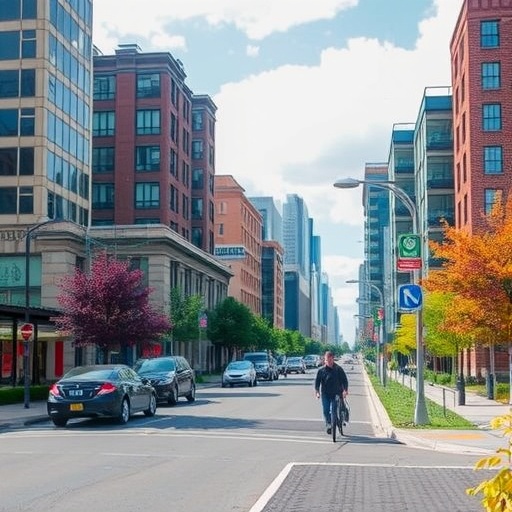
As urban centers continue to expand globally, the complex interplay between climate change and urbanization exerts unprecedented pressure on biodiversity confined within city limits. Emerging research now reveals that urban heat—a phenomenon intensifying due to both global warming and localized anthropogenic effects—significantly magnifies climatic threats to urban biodiversity. This multifaceted challenge raises critical questions about the resilience of urban ecosystems and their capacity to sustain essential ecological functions amidst rising temperatures.
Scientists investigating urban heat islands have long established that cities experience elevated temperatures compared to surrounding rural areas. The recent study led by Dietzel, Moretti, Perrelet, and colleagues brings to light how these localized heat anomalies contribute directly to heightened climatic risks for urban flora and fauna. The research integrates advanced climate modeling with exhaustive biodiversity assessments, offering unprecedented insights into how temperature elevations compound stresses on urban species.
Urban heat islands are characterized by increased surface and air temperatures, driven primarily by high-density development, impervious surfaces, and reduced vegetation. These factors intensify the absorption and retention of solar radiation during daytime and impede nocturnal cooling. The implications for urban biodiversity are profound, as many species have limited adaptive capacity to cope with rapid thermal fluctuations within their already restricted habitats. This phenomenon fundamentally alters microclimates, creating inhospitable conditions for temperature-sensitive organisms.
The study’s methodology incorporated satellite-derived land surface temperature data alongside in situ environmental monitoring across multiple metropolitan areas. By overlaying these thermal data with species distribution models, the research team identified hotspots where urban heat converges with vulnerable biodiversity, thereby pinpointing zones at greatest risk. Their findings demonstrate a clear correlation between intensified urban heat and increased frequency and severity of heat-induced stress events among urban-dwelling species.
One particularly alarming discovery centers on the exacerbation of existing climate pressures, such as drought and altered precipitation patterns, due to urban heat. The combined effects lead to a vicious cycle, wherein raised temperatures elevate evapotranspiration rates, desiccating soils and reducing water availability. Such conditions severely impair the physiological performance of plants and disrupt the habitat structures critical for urban fauna, including insects, birds, and small mammals.
From a physiological standpoint, exposure to extreme heat disrupts cellular processes, metabolic rates, and reproductive success in many organisms inhabiting urban areas. For ectothermic animals, which rely heavily on environmental temperatures to regulate their body heat, even minor thermal stress can trigger cascading ecological consequences. The research highlights how heatwaves amplified by urban heat can result in significant mortality events, ultimately decreasing population viability and altering species composition.
Furthermore, the paper discusses the role of green infrastructure as a moderating force against urban heat. Urban forests, green roofs, and vegetated corridors not only provide refugia for biodiversity but also contribute to cooling through evapotranspiration and shading. Nevertheless, the effectiveness of these natural solutions is challenged by the accelerating pace of urbanization and land-use changes, which often eliminate or fragment green patches, undermining their ability to buffer climatic extremes.
A key technical advancement in this study is the application of high-resolution climate models capable of simulating urban microclimates at fine spatial scales. Unlike broader regional models, these localized projections account for heterogeneity in land cover and urban morphology, thereby producing more accurate risk assessments for urban biodiversity. This modeling precision is essential for informing urban planning strategies aimed at enhancing the resilience of ecosystems amidst climatic threats.
Another significant contribution lies in the interdisciplinary approach adopted by the researchers, who bridged climate science, ecology, and urban studies. By integrating socio-environmental variables—such as pollution levels, human density, and infrastructure characteristics—with ecological data, the analysis provides a holistic understanding of how multiple stressors interact synergistically with urban heat to undermine biodiversity.
The study further elucidates how urban heat exacerbates not only direct thermal stress but also amplifies vulnerability to invasive species and pathogens. Increased temperatures may facilitate the spread of invasive competitors and disease vectors, which thrive under warmer conditions and outcompete or infect native urban species already weakened by environmental stress. This dynamic compounds the challenges facing biodiversity conservation within cities.
In exploring mitigation pathways, the authors emphasize adaptive urban design that prioritizes ecological considerations. Strategies such as increasing canopy cover, enhancing soil moisture retention, and implementing reflective materials can collectively reduce urban heat intensity. Additionally, fostering biodiversity corridors enhances connectivity and migration potential for species seeking cooler microhabitats, aiding their survival in warming cities.
Importantly, the research underscores the disproportionate impact of urban heat on socio-ecologically marginalized communities, where green space is often limited, and species-rich habitats are scarce. Addressing climatic risks to urban biodiversity thus intersects with environmental justice, necessitating equitable distribution of cooling infrastructure to safeguard both human and non-human urban inhabitants.
In conclusion, this groundbreaking study serves as a crucial warning and guidepost for the future of urban biodiversity conservation. As urban heat continues to rise synergistically with global climate change, cities must evolve into resilient ecosystems that actively mitigate heat and support diverse species. Its findings call for urgent integration of climate-sensitive biodiversity strategies in urban planning, ensuring that cities do not become biological deserts but vibrant habitats capable of withstanding climatic upheavals.
The implications of this research extend beyond ecological theory, offering practical pathways toward sustainable urban living. By illuminating the intimate connections between urban heat and biodiversity decline, it spurs innovation in green infrastructure, climate adaptation policies, and community engagement. In doing so, it reshapes the narrative around urban environments from being climatic liabilities to potential bastions of ecological resilience, crucial for the health of our planet’s future.
Subject of Research: Climatic impacts of urban heat on biodiversity within metropolitan environments.
Article Title: Urban heat exacerbates climatic risks to urban biodiversity.
Article References: Dietzel, A., Moretti, M., Perrelet, K. et al. Urban heat exacerbates climatic risks to urban biodiversity. npj Urban Sustain (2025). https://doi.org/10.1038/s42949-025-00309-6
Image Credits: AI Generated


