

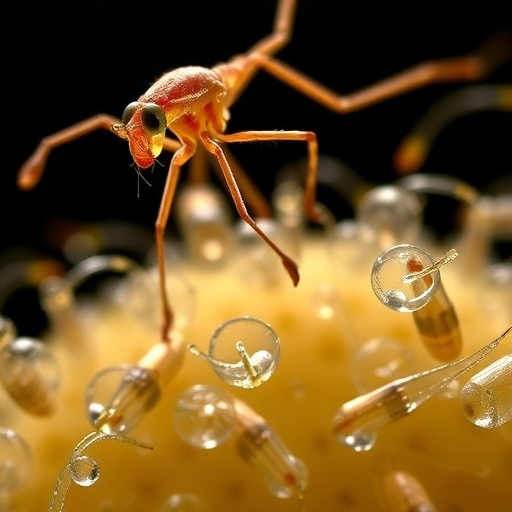
In a groundbreaking study challenging long-held assumptions in reproductive science, researchers at the University of Oxford have unveiled compelling evidence that frequent ejaculation enhances sperm quality, while prolonged sperm storage leads to a marked deterioration in sperm performance across the animal kingdom. This revelation disrupts traditional World Health Organization (WHO) guidelines, which currently recommend abstinence periods ranging from two to seven days prior to semen collection for fertility assessment and assisted reproduction. The implications of this research extend far beyond human fertility, illuminating evolutionary reproductive strategies and heralding new prospects for clinical and conservation practices.
The study synthesized an extensive meta-analysis comprising 115 human-focused studies with data from nearly 55,000 men, alongside 56 investigations encompassing 30 non-human species, ranging from insects to mammals. This comprehensive examination revealed a pervasive pattern: sperm maintained in storage, regardless of whether within male or female reproductive systems, undergoes rapid deterioration—a phenomenon termed post-meiotic sperm senescence. This degradation manifests independently of the age of the male organism, implicating intrinsic cellular and biochemical vulnerabilities unique to sperm physiology.
From a cellular biology perspective, sperm cells are markedly specialized, characterized by extremities such as ultra-streamlined shapes optimized for motility and a highly condensed nucleus. Lacking substantial cytoplasmic content, spermatozoa have minimal endogenous repair mechanisms and swiftly deplete energetic reserves critical for maintaining integrity during storage. Dr. Rebecca Dean of Oxford’s Department of Biology highlights this vulnerability, emphasizing that “the limited capacity for repair and high energy demand make long-term storage particularly deleterious, increasing DNA fragmentation and oxidative stress which compromise motility and viability.”
Intriguingly, the study delineated a pronounced difference in sperm preservation capabilities between males and females in animal species exhibiting sperm storage. Females possess evolved adaptations—specialized storage organs enriched with antioxidants and nutritive secretions—that extend sperm viability and mitigate cellular damage over time. This biological innovation appears to confer an evolutionary advantage, enabling female organisms to maintain fertile sperm reserves even in the absence of frequent mating opportunities. Dr. Irem Sepil, senior author, explains that these female-specific reproductive fluids provide a protective microenvironment, representing a fascinating model for biomimetic approaches to artificial sperm storage technology.
The intimate dynamics of sperm ‘demography’ were also explored. Dr. Krish Sanghvi, lead author, articulates a paradigm shift in viewing ejaculates not as static cell populations but as dynamic entities undergoing cycles akin to birth, death, ageing, and selective survival. Variations in these demographic processes contribute to sex-specific differences observed in sperm longevity and quality, a detail with profound implications across reproductive biology.
From a clinical perspective, the revelation that sperm quality diminishes with prolonged abstinence challenges the entrenched protocols for semen collection in fertility clinics. The study posits that brief abstinence—potentially as short as 48 hours—prior to sample provision may optimize sperm parameters favorable for assisted reproductive technologies such as in vitro fertilization (IVF). This assertion echoes emergent clinical data suggesting that reduced abstinence correlates with higher fertilization rates and embryo viability, compelling a reevaluation of WHO guidelines and clinical practices worldwide.
Moreover, the cross-species insights offered by this research enrich our understanding of reproductive strategies from an evolutionary biology lens. The conservation of sperm senescence patterns across diverse taxa underscores the fundamental biological constraints shaping reproductive success. This knowledge holds particular promise for captive breeding programs aimed at conserving endangered species, where optimizing sperm viability is critical for population management and species survival.
The study also bridges traditionally siloed disciplines—biomedical science and zoology—highlighting the value of interdisciplinary approaches. By juxtaposing data from human and animal models, researchers elucidate universal principles governing reproductive cell biology alongside species-specific adaptations. This holistic perspective fosters innovative avenues for developing fertility treatments and preservation techniques that draw inspiration from nature’s nuanced mechanisms.
In practical terms, implementing findings from this research could spur advancements in medical fertility protocols, enhancing the efficacy of sperm banking and assisted reproduction. Additionally, understanding the biochemical milieu of female storage organs offers a blueprint for improving artificial storage media, potentially reducing sperm senescence during cryopreservation and transport.
While the findings spotlight the detriments of sperm storage, they also encourage provocative questions about how sperm cells manage oxidative stress and DNA integrity. Investigating molecular pathways involved in sperm ageing may pave the way for targeted antioxidant therapies or interventions aimed at rejuvenating sperm cells, thereby bolstering reproductive outcomes.
This research arrives at a pivotal moment, as global trends in male fertility show concerning declines potentially linked to environmental and lifestyle factors. Insights into the role of ejaculation frequency and sperm storage damage add a nuanced layer to understanding male reproductive health, informing public health messaging and personal reproductive choices alike.
In essence, the revelation that sperm quality is intimately tied to ejaculation frequency, and that storage imposes intrinsic biological costs, reframes our comprehension of male fertility. It prompts a reevaluation of best practices in reproductive medicine and invigorates a broader scientific dialogue on the evolutionary underpinnings and clinical ramifications of sperm senescence.
Subject of Research: Post-meiotic sperm senescence and its impact on sperm quality across human and non-human animals
Article Title: Sperm storage causes sperm senescence in human and non-human animals
News Publication Date: 25 March 2026
Web References: http://dx.doi.org/10.1098/rspb.2025.3181
References: (Details contained within the publication in Proceedings of the Royal Society B)
Image Credits: Krish Sanghvi
Keywords: sperm storage, sperm senescence, post-meiotic ageing, fertility, oxidative stress, DNA damage, sperm motility, reproductive biology, assisted reproduction, sperm demography, evolutionary adaptation, sperm viability


