

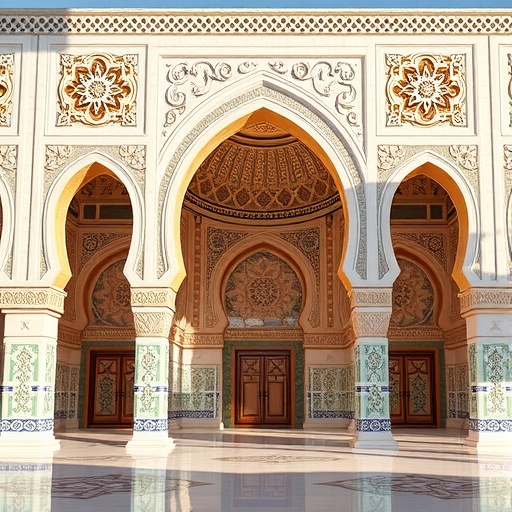
In a remarkable convergence of archaeology, history, and modern technology, a recent study sheds new light on the intricate architectural history of the Masjed-e Jameʿ of Golpayegan, a notable Islamic structure located in Iran. This research promises to enhance our understanding of not just the building itself but also the cultural and historical context in which it was constructed. The findings are pivotal for historians, architects, and enthusiasts of cultural heritage as they unravel the evolution of a structure that has stood as a testament to Persian architecture for centuries.
The Masjed-e Jameʿ, or Friday Mosque, has been an integral part of Golpayegan’s urban fabric since its inception. With its impressive domes and delicate tile work, the mosque encapsulates the artistry and architectural ingenuity of its era. However, like many historical buildings, it has undergone various renovations and restorations, leading to questions about its original design and subsequent modifications. This recent scientific analysis seeks to address these ambiguities by employing advanced techniques to study and interpret the mosque’s decorative elements.
One of the most notable aspects of the study is the use of high-resolution imaging and analysis technology. By utilizing state-of-the-art photographic methods coupled with digital analysis, researchers have been able to capture minute details of the mosque’s carvings and decorations. This is not merely a superficial examination; rather, it lays the groundwork for a deeper understanding of the materials and techniques utilized by the artisans of the time. These insights could potentially redefine our understanding of Persian architectural practices and their evolution over the centuries.
The role of geometric patterns in Persian architecture is well-documented, yet the study explores how these elements are woven into the fabric of the Masjed-e Jameʿ. Geometric designs not only serve an aesthetic purpose but are also steeped in philosophical and spiritual symbolism within Islamic culture. This research emphasizes how these patterns were more than decorations; they were integral components that conveyed deeper meanings and cultural narratives.
Furthermore, the research delves into the historical context surrounding the construction of the Masjed-e Jameʿ. By analyzing archival materials alongside the architectural elements, researchers have gathered evidence that suggests the mosque may have been influenced by regional architectural trends of its time. This indicates a dynamic exchange of ideas and stylistic influences across different cultures and periods, enriching the historical tapestry of Golpayegan. Such a multi-faceted approach allows for a comprehensive narrative that transcends the boundaries of architecture, touching upon social history and intercultural dialogue.
From a conservation perspective, the findings from this study could prove invaluable. Understanding the original materials and methods used in the mosque’s construction will aid modern conservators in making informed decisions regarding ongoing restoration efforts. The longevity of the mosque, along with its historical significance, underscores the necessity of maintaining its integrity for future generations. Each layer of paint, each sculpted pattern, holds stories of the past, making preservation not just a matter of aesthetics but an act of stewardship over cultural history.
The architectural decorations of Masjed-e Jameʿ reflect not only the skill of its builders but also the socio-political environment of the time. Researchers have identified elements that suggest the mosque was not merely a religious structure but also a statement of community identity and prestige. As the study unfolds, it reveals how the mosque served as a focal point for the city’s social and cultural life, providing insights into how architectural spaces can influence human interaction and community cohesion.
In today’s rapidly changing world, the study holds lessons about the importance of preserving cultural heritage. By applying modern scientific methods to ancient structures, we not only learn about the past but also foster a sense of pride and continuity for present and future generations. The Masjed-e Jameʿ of Golpayegan stands as a symbol of resilience, representing the enduring nature of cultural identity through the ages.
As archaeologists and historians continue to explore the depths of our shared heritage, studies like this highlight the collaboration between technology and traditional scholarship. The convergence of various academic disciplines not only broadens perspectives but also enhances the depth and richness of historical narratives. As we move forward, the importance of interdisciplinary approaches in understanding our past cannot be overstated, particularly in today’s globalized society.
The implications of this research extend beyond the architectural realm. They open a dialogue about how historical narratives are constructed and preserved. As voices from diverse communities contribute to the understanding of structures like the Masjed-e Jameʿ, we come to recognize the complexity and plurality of our cultural histories. The value of heritage sites is not solely in their physical form but also in their capacity to embody shared stories and collective memories.
In conclusion, the study of the Masjed-e Jameʿ of Golpayegan is not just an exploration of architectural design; it symbolizes the connection between past and present, tradition and innovation. As we continue to uncover the layers of history embedded in such monumental structures, we gain a richer appreciation for the cultural legacies that shape our world today. The detailed analysis and findings provided by Holakooei and colleagues serve as a reminder of the significance of preserving our architectural heritage for future generations, reinforcing the vital relationship between culture, community, and identity.
The profound insights from this research remind us that every historical structure carries within it a narrative waiting to be told. As architectural scholars, historians, and the general public engage with these findings, they enrich not only our understanding of the Masjed-e Jameʿ but also the broader discourse on cultural preservation and the lessons that ancient architecture holds for modern society.
Subject of Research: Architectural decorations and historical context of the Masjed-e Jameʿ of Golpayegan.
Article Title: New insights into the history of the Masjed-e Jameʿ of Golpayegan: a scientific analysis of architectural decorations.
Article References: Holakooei, P., Karimy, AH., Aghajani, I. et al. New insights into the history of the Masjed-e Jameʿ of Golpayegan: a scientific analysis of architectural decorations. Archaeol Anthropol Sci 17, 175 (2025). https://doi.org/10.1007/s12520-025-02292-6
Image Credits: AI Generated
DOI: https://doi.org/10.1007/s12520-025-02292-6
Keywords: Masjed-e Jameʿ, Golpayegan, architectural decorations, Persian architecture, cultural heritage, conservation.


