

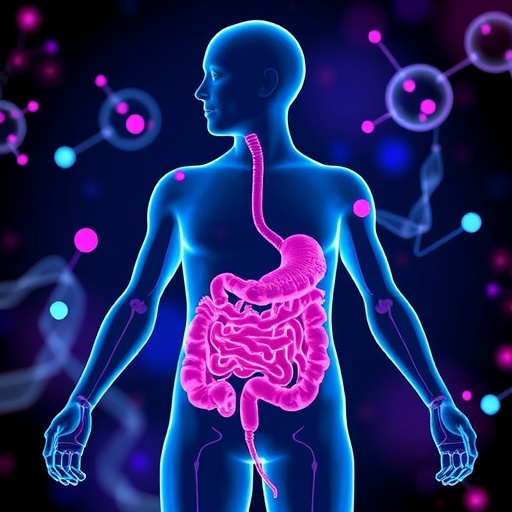
In a groundbreaking review published in the March 2026 issue of Immunity & Inflammation, researchers have shed new light on the profound interplay between gut microbial metabolites and host immune regulation, offering an intricate map of how these biochemical signals orchestrate immune responses in health and disease. This comprehensive synthesis meticulously explores the origins and biosynthetic pathways of critical microbial metabolites—such as bile acids, short-chain fatty acids (SCFAs), tryptophan derivatives, and other amino acid metabolites—and delineates their pivotal roles across innate and adaptive immunity.
At the core of this emerging narrative lies the recognition that microbial metabolites are far from mere metabolic byproducts; instead, they are potent modulators that influence immune cell phenotypes, cytokine production, and antigen presentation. The innate immune system, in particular, displays a complex and nuanced interaction with these metabolites. For instance, SCFAs are shown to dampen dendritic cell (DC) antigen-presenting capacities, shifting them toward an immunoregulatory state via enhanced interleukin-10 and retinoic acid synthesis. This modulates tolerance and inflammation, revealing a mechanism by which the gut microbiota can prevent excessive immune activation.
Equally intriguing is the role of specific bile acids like deoxycholic acid (DCA), which activates the G-protein coupled receptor TGR5 on dendritic cells to alleviate autoimmune uveitis. This exemplifies how secondary bile acids mediate immune homeostasis by fine-tuning DC function and consequently modulating autoimmune pathology. Contrasting these immunosuppressive effects, trimethylamine N-oxide (TMAO), another gut microbial metabolite, demonstrates an opposite function by priming macrophages in the tumor microenvironment to secrete type I interferons, thereby enhancing antitumor immunity and augmenting pancreatic cancer immunotherapy responses.
Innate lymphoid cells (ILCs), key players in mucosal immunity, are similarly influenced by microbial metabolites through mechanisms that reflect the gut-immune axis’s systemic reach. Taurodeoxycholic acid (TDCA) fosters ILC retention within the intestinal milieu, curbing inflammation in colitis models, while glycodeoxycholic acid (GDCA) exerts beneficial metabolic and immunological effects in polycystic ovary syndrome (PCOS) by promoting IL-22 secretion from ILC3 subsets. These findings illuminate the role of gut microbial metabolites in connecting gastrointestinal immune signaling to distant organ systems.
Within adaptive immunity, the review highlights a delicate balance orchestrated by microbial metabolites to either promote tolerance or inflammation through CD4+ T cell lineage decisions. Secondary bile acids such as 3-oxolithocholic acid (3-oxoLCA) bind directly to the transcription factor RORγt, suppressing the differentiation of pro-inflammatory Th17 cells. Concurrently, isoalloLCA and isodeoxycholic acid stimulate regulatory T cell (Treg) differentiation by engaging nuclear receptors such as NR4A1 or receptors like FXR on dendritic cells. This bidirectional control is further extended by SCFAs, which increase Treg populations through epigenetic modulation via histone deacetylase inhibition and G protein-coupled receptor 43 (GPR43) activation, collectively attenuating inflammatory responses in colitis.
Contrasting pro-tolerogenic actions, the tryptophan derivative indoxyl sulfate accentuates inflammation in psoriasis by enhancing chromatin plasticity in Th17 cells via activation of the aryl hydrocarbon receptor (AhR). Similarly, inosine amplifies Th1 responses by activating the adenosine A2A receptor, thus potentiating efficacy of immune checkpoint blockade therapies. This dualistic nature epitomizes the complex context-dependent influences microbial metabolites exert on T cell function.
The narrative continues with CD8+ cytotoxic T lymphocytes, where secondary bile acids again display multifaceted roles. DCA suppresses CD8+ T cell effector functions by inhibiting calcium-mediated signaling pathways, consequently facilitating colorectal cancer progression. In contrast, 3-oxo-Δ4,6-lithocholic acid activates the androgen receptor to promote CD8+ T cell infiltration into tumors, thus enhancing responsiveness to anti-PD-1 immunotherapy. These insights underscore metabolite-driven dynamic regulation of cytotoxic immune effector activity.
Within the B cell compartment, SCFAs regulate antibody class switching and secretion in a nuanced, concentration-dependent manner by modulating both cellular metabolism and epigenetic landscapes. Moreover, microbial indole derivatives, notably indole-3-acetic acid, facilitate the accumulation of regulatory IL-35+ B cells in the colon by engaging AhR, providing an immunosuppressive axis that counters metabolic inflammation induced by high-fat diets. These mechanisms reveal yet another layer of microbiota-derived metabolite influence, bridging metabolism, immunity, and host defense.
Fundamental to the researchers’ synthesis is the concept that a single metabolite may exert diametrically opposing effects depending on immune cell type, microenvironmental context, and disease state. This underscores the complexity of therapeutic targeting; for instance, SCFAs can concurrently enhance antitumor cytotoxic responses while suppressing antigen presentation by dendritic cells, reflecting a delicate balance that may tip immune outcomes. As precision immunotherapy emerges, dissecting these multifactorial interactions remains paramount.
Looking ahead, the review extols novel technologies reshaping gut microbial metabolite research. Advanced metabolomics methodologies—such as reverse metabolomics and click chemistry labeling—combined with artificial intelligence-driven enzyme function prediction, are catalyzing the discovery of hitherto uncharacterized metabolites and their multifaceted immune roles. These innovations encourage a holistic perspective, emphasizing that metabolome-wide modulation rather than isolated single-metabolite interventions may be required to safely harness microbial metabolites therapeutically.
Crucially, establishing quantitative, mechanistic links between metabolite concentrations and immune cell functions stands out as an imperative frontier. This quantitative precision will enable stratified strategies optimized for individual immune and disease contexts. Moreover, the authors advocate for translational pipelines integrating synthetic biology, microbial engineering, and AI-powered predictive models to realize metabolite-targeted immunotherapies, positioning this field as a fertile terrain for next-generation treatments.
This review, authored by Professor Changtao Jiang and Dr. Kai Wang at Peking University, crystallizes a vibrant interdisciplinary frontier where microbiology, immunology, and metabolism converge. As the scientific community intensifies efforts to decode the molecular dialogues between gut microbes and host immunity, the potential to translate these insights into transformative therapeutic innovations grows ever closer, heralding a new era in precision immunomodulation driven by microbial metabolite biology.
Subject of Research: Not applicable
Article Title: Gut microbial metabolites and immune‑related diseases
News Publication Date: 23-Mar-2026
References: DOI: 10.1007/s44466-026-00031-7
Image Credits: Professor Changtao Jiang, Peking University, Beijing, China
Keywords: Immunology, Microbiology, Metabolism, Metabolites, Microbiota, Inflammation, Autoimmune disorders, Cancer, Metabolomics, Gut microbiota, Cell biology


