

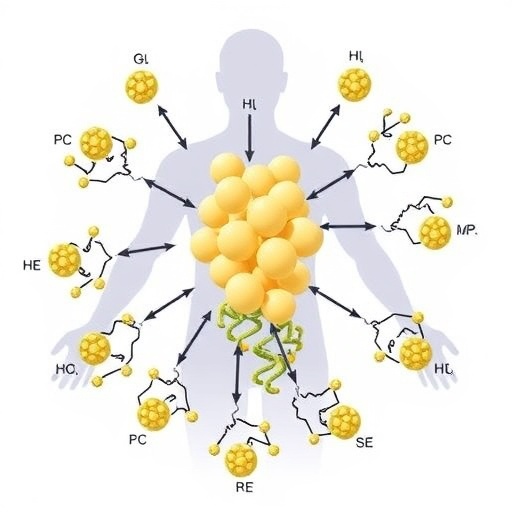
In a groundbreaking study poised to reshape our understanding of cellular lipid dynamics, researchers have unveiled comprehensive insights into the mechanisms by which human lipid transfer proteins (LTPs) mobilize lipids to maintain membrane integrity and function. Lipid transfer proteins, essential custodians of organellar membrane composition, orchestrate the selective movement of lipid molecules—a process fundamental to cellular health and implicated in a myriad of diseases. This multi-faceted investigation integrates biochemical assays, lipidomic profiling, and cutting-edge computational analysis to systematically decode the lipid cargo associated with a vast repertoire of human LTPs, revealing both familiar partnerships and unexpected alliances.
The integrity of cellular membranes depends on the precise lipid composition maintained by a complex network of lipid transfer proteins. These proteins act as molecular shuttles, ferrying lipids between membrane compartments, thus preserving the dynamic architecture essential for processes such as signaling, vesicular trafficking, and energy metabolism. While many LTPs have been linked to specific lipid ligands and pathological conditions, the full spectrum of lipid species they transport remained largely uncharted territory—until now. The current study boldly ventures into this gap, cataloging lipid interactions for roughly half of the hundred or so LTPs analyzed, thereby doubling the known landscape of LTP-lipid relationships.
Employing an innovative interdisciplinary approach, the scientists first isolated and identified the bound lipids directly associated with purified LTP complexes. This lipidomic interrogation not only reaffirmed known ligand specificities for various LTP families but notably expanded the inventory by identifying previously unrecognized lipid partners across diverse LTP classes. Such discoveries challenge prevailing assumptions about the lipid preferences of these proteins, underscoring the functional plasticity and broad selectivity that characterize their interactions in a cellular milieu.
To probe further into the functional consequences of lipid-LTP interactions, the team engineered cellular models demonstrating augmented LTP activity. Intriguingly, these gain-of-function scenarios induced measurable shifts in the cellular lipidome, altering the abundance of both the classical and the newly identified lipid cargoes of these proteins. This dual influence firmly establishes the physiological relevance of the novel lipid ligands and highlights how modulation of LTP function can ripple through membrane lipid homeostasis, potentially impacting cellular behavior and disease pathways.
Delving deeper, the researchers leveraged structural bioinformatics to dissect the molecular underpinnings of lipid selectivity. Through detailed structural comparisons and predictive modeling, they uncovered that selectivity operates not merely at the level of lipid head groups but extends to fine molecular features such as acyl chain length and saturation. Fascinatingly, many LTPs displayed a pronounced preference for lipids featuring shorter acyl chains with one or two unsaturations, suggesting a refined mechanism by which these proteins discern their cargo amidst the lipid complexity of cellular membranes.
This nuanced understanding reveals that LTPs do not indiscriminately transfer lipid species but instead mobilize distinct subsets within broader lipid classes. Such specificity can have profound implications for membrane fluidity, curvature, and the formation of microdomains, which are critical for numerous signaling and trafficking events. The selective extraction and delivery of lipids with particular acyl chain characteristics could, therefore, represent a finely tuned regulatory axis in membrane biology, one that is dynamically regulated according to cellular needs and environmental cues.
The study also elucidates fundamental principles governing the interplay between LTPs and their lipid ligands. Many LTPs engage with several lipid classes, exhibiting what can be described as broad but discerning preferences. This behavior ensures adaptability in lipid mobilization, permitting cells to respond swiftly to fluctuations in lipid supply or demand. The findings paint a picture of a versatile lipid shuttling system, wherein multiple LTPs could coordinate to redistribute lipids efficiently, thereby maintaining cellular homeostasis and membrane specialization.
Beyond its immediate biochemical revelations, this research lays a rich foundation for future explorations into the role of lipid transfer proteins in health and disease. Given that numerous human pathologies—including neurodegenerative disorders, cancer, and metabolic syndromes—are now linked to aberrant lipid metabolism, understanding LTP-lipid interactions at this granular level opens exciting avenues for therapeutic intervention. Targeting specific LTP-lipid interfaces could enable the correction of lipid imbalances central to disease pathogenesis.
Importantly, the datasets generated by this study serve as a valuable resource, offering a comprehensive map of lipid cargoes linked to distinct human LTPs. This repository invites researchers across disciplines to interrogate lipid mobilization dynamics in diverse cell types and physiological or pathological contexts. By leveraging this knowledge, scientists can unravel how lipid transfer processes adapt to cellular state changes, potentially illuminating new biomarker signatures or drug targets.
Moreover, the integration of structural bioinformatics with lipidomic data exemplifies the power of combining experimental and computational tools to decipher complex biological systems. This approach not only accelerates the identification of lipid ligands but also provides mechanistic insight into the specificity determinants guiding lipid transfer. Such methodologies promise to revolutionize lipid biology and pave the way for precision targeting of lipid-related pathways in medicine.
This paradigm-shifting work highlights the intricacy of lipid trafficking machinery and emphasizes the critical nature of lipid diversity—down to individual molecular species—in maintaining cellular function. It underscores that lipid mobilization is a highly selective and regulated process rather than a random filling of lipid reservoirs. As the field advances, appreciating these subtleties will be crucial for a holistic understanding of membrane biology and the development of novel strategies to modulate lipid dynamics therapeutically.
In sum, the study offers a comprehensive and systematic view of human lipid transfer proteins, bridging gaps in our knowledge of lipid specificity, transport mechanisms, and functional impacts on the lipidome. The revelations on selective lipid mobilization and the identification of new ligand classes enhance our grasp of membrane biology’s fundamental processes and chart promising paths for future investigation into lipid-associated diseases.
As researchers continue to unravel the complex choreography of lipid transfer, these insights lay the groundwork for transformative advances in biology and medicine, spotlighting lipid transfer proteins as key players in cellular health and disease that warrant sustained attention and exploration.
Subject of Research: Lipid mobilization and lipid transfer proteins in human cells.
Article Title: Systematic analyses of lipid mobilization by human lipid transfer proteins.
Article References:
Titeca, K., Chiapparino, A., Hennrich, M.L. et al. Systematic analyses of lipid mobilization by human lipid transfer proteins. Nature (2026). https://doi.org/10.1038/s41586-025-10040-y
Image Credits: AI Generated


