

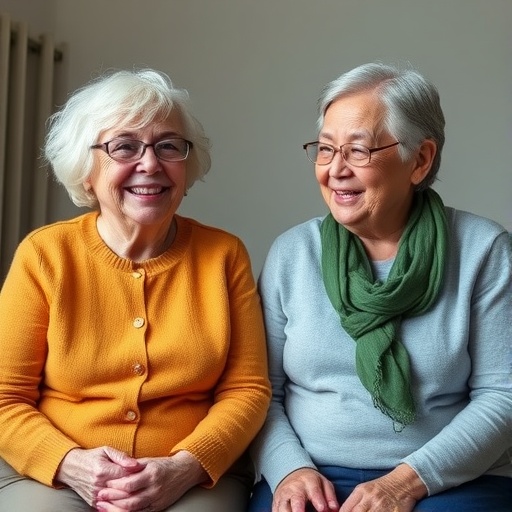
As populations around the world continue to age at an unprecedented pace, a new health and social challenge quietly intensifies, yet remains vastly underexplored. The phenomenon known as “dual ageing” refers to the increasing demographic trend where older adults not only live longer themselves but often find themselves caring for spouses who are also elderly and in need of significant support. This concurrent ageing creates a complex web of caregiving demands, particularly when chronic diseases like Chronic Obstructive Pulmonary Disease (COPD) are involved. A groundbreaking scoping review recently published in BMC Geriatrics has begun to unravel the critical and largely unmet needs faced by older spousal caregivers providing care for elderly partners afflicted with COPD, heralding a call for urgent action in health policy and caregiving support systems.
COPD, a progressive and debilitating respiratory disease, primarily affects older adults, significantly impairing lung function and limiting everyday activities. For older adults living with COPD, the disease imposes not only physical limitations but also emotional and psychological burdens. Yet the unique challenges of their caregivers—who are often also elderly—have remained distinctly underappreciated in both research and healthcare practice. The new study meticulously charts the terrain of these spousal caregiving experiences, emphasizing the profound physical, mental, social, and economic toll exerted by sustained caregiving roles under the shadow of dual ageing.
What sets this investigation apart is its focus on the caregivers themselves, a demographic frequently invisible in the healthcare narrative despite being pivotal in disease management and patient quality of life. The scoping review reveals that older spousal caregivers encounter multifaceted barriers, ranging from the physical strain of daily symptom management to psychological stress fueled by uncertainty about disease progression and caregiving adequacy. Unlike younger caregivers who may possess greater physical resilience or external support networks, these older adults grapple with their own health concerns while continuously attending to their spouse’s complex needs.
Particularly harrowing is the omnipresent risk of caregiver burnout—a state characterized by physical exhaustion, emotional depletion, and reduced sense of personal achievement. For older spousal caregivers of COPD patients, such burnout can be accelerated by their own age-related vulnerabilities, compounded by inadequate access to respite care and insufficient tailored counseling services. The review provides an extensive analysis of how traditional caregiver support systems fail to fully address these age-specific challenges, revealing both gaps in service provision and opportunities for targeted intervention.
The dual ageing phenomenon compounds caregiving complexities because it simultaneously intensifies both the caregiver’s and care recipient’s medical, psychological, and social needs. COPD’s unpredictable trajectory exacerbates these difficulties. Acute exacerbations often require rapid intervention and adjustment, placing overwhelming pressure on the caregiving spouse who might be managing their own frailties. The study highlights that this high level of caregiving demand often correlates with poorer health outcomes for caregivers themselves, setting up a cyclical strain that can precipitate a spiral of diminishing well-being for both partners.
Social isolation emerges as a predominant theme within the review. As caregiving responsibilities mount, older spouses report withdrawal from previously enjoyed social activities and community engagement, which serve as crucial buffers against loneliness and depression. The intense, singular focus on caregiving reduces opportunities for emotional respite and peer support, which are vital for mental health maintenance. The authors argue that addressing social connectedness is as critical as managing physical health in securing caregiver resilience.
Economically, the review underscores the often hidden financial burden borne by older spousal caregivers. Many live on fixed incomes and are unprepared for the incremental costs associated with long-term COPD management, including medication, home adaptations, and medical devices. Economic stress compounds the emotional and physical strains, further deteriorating caregivers’ quality of life. The study calls attention to the urgent need for policy reforms that provide financial assistance and resource access tailored specifically to this vulnerable group.
Technological advancements in telehealth and digital monitoring present promising avenues to support older spousal caregivers, yet the review notes that adoption remains low due to barriers such as limited digital literacy and apprehensions around privacy. Future interventions may require dedicated training programs and simplified technology designs to empower elderly caregivers in harnessing these tools effectively, thereby alleviating some caregiving demands through remote support and real-time health tracking.
Moreover, the review discusses the significance of culturally sensitive approaches to caregiving support. Traditional caregiving roles and family dynamics vary greatly across cultures, influencing how older spousal caregivers perceive and experience their responsibilities. Tailored interventions that respect cultural values and incorporate family members can enhance caregiver engagement and optimize outcomes for both caregiver and patient.
Healthcare provider engagement is another critical factor emphasized in the study. The authors argue for routine assessment of caregiver needs during clinical visits and direct integration of caregiver support within COPD management plans. Such an integrated care model recognizes caregivers as active participants in health outcomes rather than peripheral observers, helping to coordinate services that address their multifarious challenges.
In considering mental health, the scoping review elucidates the prevalence of anxiety and depression amongst older spouses engaged in long-term caregiving. The constant vigilance required for COPD symptom monitoring and the emotional weight of witnessing a loved one’s health decline exact heavy psychological costs. Yet mental health support specifically designed for this cohort is scarcely available, highlighting a glaring service deficit in geriatric and chronic illness care frameworks.
The overarching theme across the review is one of invisibility—the silent suffering endured by elderly spousal caregivers who often prioritize their spouse’s needs above their own. The study’s comprehensive synthesis of available evidence sheds vital light on this hidden epidemic, compelling healthcare systems, policymakers, and researchers to recognize and respond to this emerging public health concern.
Implications of this research stretch far beyond COPD alone. Dual ageing presents a universal challenge as the demographic shift advances globally, spanning diseases and caregiving contexts. The multifactorial burden on older spousal caregivers will only intensify unless proactive and multifaceted support strategies are implemented. Future research directions proposed by the authors include longitudinal studies on caregiver health outcomes and intervention trials evaluating the effectiveness of integrated service models.
In sum, this pioneering scoping review offers a clarion call to reimagine caregiving support through the lens of ageing couples confronting chronic illness. It highlights that the health of older adults with COPD cannot be disentangled from the well-being of their caregiving spouses. Addressing unmet needs in this dyad is vital to sustaining quality of life, reducing healthcare costs, and fostering dignified ageing under the dual strain of disease and caregiving.
This in-depth exploration enriches our understanding of the nuanced challenges underscoring dual ageing and chronic disease management, setting the stage for innovation in geriatric care policies and caregiver support initiatives. As society progresses into an era dominated by longevity and chronic illness, illuminating the lived realities of older spousal caregivers offers an indispensable roadmap toward more equitable, compassionate, and effective healthcare systems worldwide.
Subject of Research: Unmet needs of older spousal caregivers for older adults with chronic obstructive pulmonary disease (COPD) within the context of dual ageing.
Article Title: Unmet needs of older spousal caregivers for older adults with chronic obstructive pulmonary disease in the context of dual ageing: a scoping review.
Article References:
Xu, H., Han, X., Li, Y. et al. Unmet needs of older spousal caregivers for older adults with chronic obstructive pulmonary disease in the context of dual ageing: a scoping review. BMC Geriatr (2026). https://doi.org/10.1186/s12877-026-07266-4
Image Credits: AI Generated


