

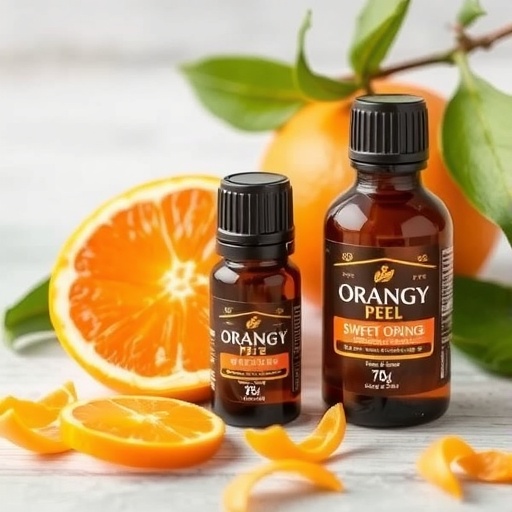
In a groundbreaking study that delves into the underutilized yet potent byproducts of agriculture, researchers have focused on the essential oil extracted from the peel of sweet orange, scientifically known as Citrus sinensis. This vibrant fruit, typically enjoyed for its juicy flesh and refreshing flavor, has garnered attention for the potential of its peel, often considered waste. The findings illuminate the essential oil’s impressive antimicrobial properties, capacity for food preservation, and its cytotoxic effects, presenting a new frontier in both food safety and health.
The research conducted by Syed, Ali, and Rashid expands the horizons of how we perceive waste materials in the food industry. Citrus peels, which are usually discarded, hold valuable chemical compounds that can be harnessed for various applications. The study underscores the importance of re-evaluating agricultural byproducts and considering them as resources that can add value to our lives and health. With a growing global emphasis on sustainability, such explorations into the potential value of byproducts resonate well with current trends in food science and conservation.
The authors employed rigorous methodologies to extract the essential oils from sweet orange peels and analyze their chemical composition. They utilized advanced techniques such as gas chromatography-mass spectrometry (GC-MS) to identify the various phytochemicals present in the oil. This analysis revealed a complex mixture of compounds, many of which are known for their antimicrobial capacities. By dissecting the chemical makeup, the study lays the groundwork for understanding how these compounds can be effectively utilized in various fields, from food preservation to the pharmaceutical industry.
One key finding of the research is the antimicrobial activity exhibited by the sweet orange peel essential oil. The study experimented with several bacterial strains and found that the oil demonstrated significant inhibitory effects. This offers a promising alternative to synthetic preservatives commonly used in the food industry. By integrating this natural antimicrobial agent into food preservation methods, it may be possible to enhance food safety while also addressing the growing consumer demand for clean-label products devoid of artificial additives.
Exploring the food preservation potential further, the researchers examined how the sweet orange peel oil could prolong the shelf life of perishable food items. This is particularly relevant in a world that struggles with food waste; every year, millions of tons of food are lost due to spoilage. By utilizing natural preservatives derived from citrus peels, food manufacturers could not only reduce waste but also cater to consumer preferences for natural solutions. This innovation is poised to revolutionize the way we think about food safety and integrity.
The cytotoxic potential of sweet orange peel essential oil also surfaced as an intriguing aspect of the study. The authors conducted assays to assess the oil’s effects on cancer cells, leading to promising results that suggest possible applications in oncology. The research indicates that certain components within the essential oil may impede the growth of malignant cells, paving the way for future investigations into natural cancer treatments. This illustrates not only the versatility of citrus peel byproducts but also their potential role in contributing to more holistic healthcare solutions.
Moreover, this study aligns with the global shift towards circular economy practices, where waste materials are reimagined and repurposed into valuable products. It advocates for a more sustainable approach to agriculture and food production, one that does not merely focus on maximizing yield but also on minimizing waste and promoting environmental health. By taking innovative approaches to reuse byproducts, the research encourages industries to rethink their practices in regard to sustainability.
For consumers, the implications of these findings resonate on multiple levels. Not only does the research provide insight into the benefits of consuming products derived from citrus peels, but it also emphasizes the need for informed choices in purchasing food products. As market trends increasingly favor natural ingredients, consumers can advocate for brands that utilize such sustainable resources, further driving the demand for responsible production practices.
The researchers also called for additional studies to expand on their findings, suggesting avenues for continued exploration of citrus peel essential oils in various applications. Future research could investigate their efficacy in other food items, explore the health benefits associated with the consumption of these oils, or even delve into the economic impacts of utilizing agricultural waste on a larger scale. Such endeavors could foster significant advancements in both scientific understanding and practical implementation in the food and health sectors.
As the narrative unfolds regarding the value extraction of sweet orange peel oil, it serves as a reminder that innovation often arises from overlooked resources. This research provides a roadmap for other industries considering the sustainability narrative and highlights the critical intersection of food production, waste management, and health innovation. The story of sweet orange peel essential oil is just beginning, and its potential is ripe for exploration.
Overall, the evaluation of sweet orange peel essential oil expands our comprehension of natural products as resources capable of transforming food preservation practices, contributing to health and wellness strategies, and laying the foundation for sustainable agricultural practices. This research is a vivid illustration of how interdisciplinary efforts can converge to cultivate knowledge that not only benefits the scientific community but also society at large.
In conclusion, this cutting-edge study presents a compelling case for the functional benefits of sweet orange peel essential oil. It challenges preconceived notions about food waste and illuminates pathways for future research in sustainable practices. As we move forward in a world more conscious of environmental and health considerations, the findings of this research are not merely timely; they are essential.
By fostering a broader understanding of citrus byproducts and their multifaceted applications, this research not only highlights the ingenuity present in nature but also the potential it holds in shaping a sustainable future. Thus, sweet orange peel essential oil stands at the forefront of an exciting era of discovery, urging us to treat even the most humble byproducts as valuable treasures of nature.
Subject of Research: Antimicrobial, Food Preservation, and Cytotoxic Potential of Sweet Orange Peel Essential Oil
Article Title: Evaluation of Antimicrobial, Food Preservation and Cytotoxic Potential of Sweet Orange (Citrus sinensis) Peel Essential Oil: From Underutilized Citrus Byproducts to Value Addition
Article References: Syed, M., Ali, M., Rashid, K. et al. Evaluation of Antimicrobial, Food Preservation and Cytotoxic Potential of Sweet Orange (Citrus sinensis) Peel Essential Oil: From Underutilized Citrus Byproducts to Value Addition. Waste Biomass Valor (2025). https://doi.org/10.1007/s12649-025-03426-6
Image Credits: AI Generated
DOI: https://doi.org/10.1007/s12649-025-03426-6
Keywords: Citrus, Essential Oils, Food Preservation, Antimicrobial Activity, Cytotoxicity, Sustainable Practices, Agricultural Byproducts


