

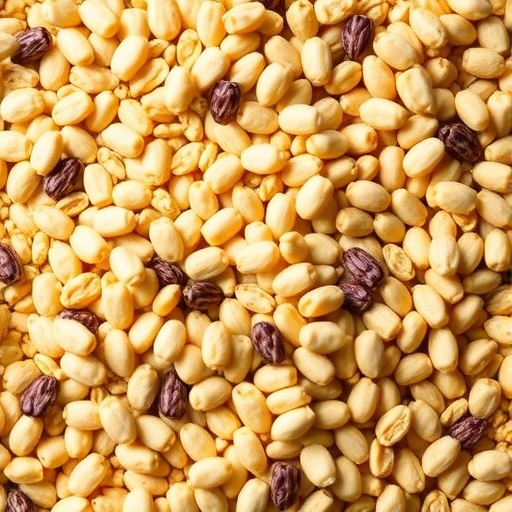
In a groundbreaking study titled “Value-Added Utilization of Protein Rich Agricultural Residues—Development and Evaluation of Chemical Hydrolysis,” researchers illuminate the potential of agricultural residues as a resource for enhancing sustainability and economic viability in the farming sector. With agriculture generating vast amounts of plant-based byproducts, the study highlights how these wastes can be transformed into valuable products through advanced chemical processes. This pivot to utilizing agricultural residues rather than discarding or burning them could mean a significant leap toward circular economy practices within the agricultural industry.
The study addresses the pressing need for innovative solutions in waste management and bioresource exploitation. Agricultural residues, which often consist of protein-rich materials, are typically seen as undesirable waste products. However, this research explores a promising avenue: breaking down these residues into reusable components via chemical hydrolysis. This method leverages the power of chemicals to degrade the structural integrity of biomass, rendering the proteins and other beneficial compounds accessible for further utilization.
Researchers conducted a comprehensive evaluation to assess the efficiency of different hydrolysis techniques employed on various types of agricultural residues. The results indicated a significant variability in how different residues can be processed, offering insight into the most effective methodologies based on the material in question. This finding not only sheds light on the versatility of agricultural byproducts but also provides guidance on tailored approaches for different waste types, ensuring higher yields of valuable output.
What makes this research particularly timely is the growing urgency to address food security and environmental sustainability concerns. As the global population continues to rise, the need for efficient food production methods is increasingly critical. By deriving valuable components from what was once considered waste, this research presents a dual solution: reducing agricultural waste while augmenting the nutrient profile of secondary products, which can be used as animal feed, fertilizer, or even biofuels.
The study’s authors emphasize that this process does not merely result in the extraction of proteins; it also facilitates the recovery of other essential nutrients and bioactive compounds that are beneficial not just for crop production but also in various health applications. By maximizing the utility of agricultural residues, we open doors to innovative products ranging from bioplastics to pharmaceuticals, all while promoting a more sustainable agricultural framework.
A key feature of the research is its robust experimental design, which includes extensive trials to determine optimal conditions for chemical hydrolysis. Factors such as temperature, pressure, and the concentration of hydrolytic agents were meticulously controlled to quantify their impact on the yield and purity of the extracted compounds. The insights gained from these experiments form a foundational piece for future developments in agricultural waste valorization.
Furthermore, the implications of this research extend beyond the laboratory. The authors argue for the implementation of these findings within larger agricultural frameworks, advocating for policies and incentives that encourage farmers to adopt waste-to-value methodologies. Educational initiatives can also be crucial in raising awareness among farmers about the benefits of utilizing residues, thus bridging the gap between scientific research and practical application.
The study’s results urge policymakers and agricultural businesses to rethink their waste management strategies. The transformation of residues into valuable products can lead to not only significant economic gains for farmers but also a reduction in environmental impacts associated with waste disposal. By harmonizing agricultural practices with innovative technology, we can pave the way for a future where agricultural production is both profitable and sustainable.
Transitioning to value-added processes, such as chemical hydrolysis, requires an integration of knowledge across multiple disciplines—from green chemistry to agricultural engineering. This interdisciplinary approach fosters a holistic understanding of the challenges and solutions associated with agricultural waste. As more researchers join the ranks of those innovating within this field, the potential for groundbreaking discoveries continues to grow.
As we look ahead, the promise of chemical hydrolysis of agricultural residues could set a new standard in resource efficiency. It embodies the idea that waste can be redefined as an asset, leading to a paradigm shift in how we view and manage waste in agriculture. The findings of this research not only challenge the traditional notions of waste but also advocate for a vision of agriculture that is relentlessly forward-thinking.
In conclusion, the ongoing exploration of the valorization of agricultural residues through chemical hydrolysis represents a pivotal step towards a more sustainable farming future. As society increasingly grapples with the implications of climate change and food scarcity, studies like this one offer a beacon of hope. They remind us that with innovation and determination, we can transform problems into opportunities—ultimately creating a resilient agricultural ecosystem that thrives on its own waste.
The significance of this research reaches beyond the science involved. It serves as a call to action for stakeholders across the agricultural landscape to embrace these findings. Researchers, policymakers, and farmers must collaborate to implement the findings and maximize the potential of agricultural residues, fostering a new era of sustainability in food production. As the cycle of innovation continues, so too does the opportunity for a more responsible and profitable relationship with our agricultural resources.
By harnessing the power of chemical hydrolysis, we can not only address the challenges of waste management but also unlock the potential of agricultural residues as a cornerstone for future advancements in the bioeconomy. As this transformation unfolds, it could redefine the very foundations of agriculture as we know it, ultimately leading us toward a more sustainable and resilient global food system.
Subject of Research: Chemical Hydrolysis of Agricultural Residues for Sustainable Utilization
Article Title: Value-Added Utilization of Protein Rich Agricultural Residues—Development and Evaluation of Chemical Hydrolysis
Article References:
Kuenz, A., Hancock, V., Schmiede, D. et al. Value-Added Utilization of Protein Rich Agricultural Residues—Development and Evaluation of Chemical Hydrolysis.
Waste Biomass Valor (2026). https://doi.org/10.1007/s12649-025-03456-0
Image Credits: AI Generated
DOI: https://doi.org/10.1007/s12649-025-03456-0
Keywords: Agricultural residues, Chemical hydrolysis, Sustainability, Food security, Bioeconomy, Waste management, Circular economy.


