

A pioneering study introduces a functional data analysis (FDA) methodology to model the relationship between environmental factors and crop yields in year-round agriculture. Designed for crops like strawberries and tomatoes, this model offers a predictive framework that enhances agricultural management, optimizing resource use and promoting sustainability amidst climate change and increasing global food demands.
Predicting crop yields is a significant challenge in modern agriculture, especially under fluctuating environmental conditions. With the escalating demand for sustainable food production, understanding the complex interplay between environmental factors and crop growth has become increasingly crucial. These challenges underscore the need for in-depth research on the interactions between crop yields and environmental variables over time.
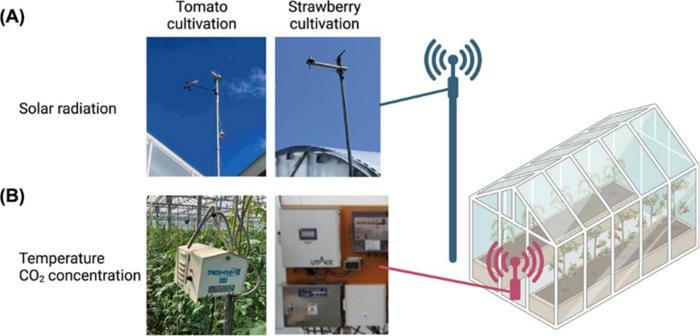
Conducted by a team from Shiga University and published (DOI: 10.1093/hr/uhae144) in Horticulture Research on May 24, 2024, the study presents a novel functional data analysis (FDA)-based methodology for predicting crop yields in year-round cultivation. By analyzing time-series data of strawberries and tomatoes grown in natural-light plant factories, the research uncovers how factors like temperature and solar radiation influence yields, providing a new tool for optimizing agricultural production.
The study introduces a varying-coefficient functional regression model (VCFRM) using FDA to investigate the influence of environmental factors like temperature and solar radiation on crop yields over time. The analysis of strawberry and tomato data revealed key periods when these factors most significantly impact growth. The model’s ability to visualize these dynamic interactions offers a deeper understanding of how to optimize conditions for maximum yield. Its interpretability makes it particularly valuable, providing actionable insights into the relationship between environmental conditions and crop performance, which are critical for enhancing resource efficiency and sustainability in year-round crop cultivation.
Professor Hidetoshi Matsui, the lead author, remarked, “Our FDA-based yield prediction model marks a major step forward in precision agriculture. It not only enhances the accuracy of yield forecasts but also deepens our understanding of how environmental factors influence crop growth over time. This knowledge is crucial for developing more resilient and sustainable agricultural practices in response to climate change.”
The findings from this study have wide-ranging applications, particularly in controlled environments like plant factories and greenhouses. The FDA-based model can be adapted to various crops and environmental settings, making it a versatile tool for optimizing production. By enabling more precise management of environmental variables, this approach advances sustainable agriculture, ensuring stable yields and profitability even in challenging conditions.

Credit: Horticulture Research
A pioneering study introduces a functional data analysis (FDA) methodology to model the relationship between environmental factors and crop yields in year-round agriculture. Designed for crops like strawberries and tomatoes, this model offers a predictive framework that enhances agricultural management, optimizing resource use and promoting sustainability amidst climate change and increasing global food demands.
Predicting crop yields is a significant challenge in modern agriculture, especially under fluctuating environmental conditions. With the escalating demand for sustainable food production, understanding the complex interplay between environmental factors and crop growth has become increasingly crucial. These challenges underscore the need for in-depth research on the interactions between crop yields and environmental variables over time.
Conducted by a team from Shiga University and published (DOI: 10.1093/hr/uhae144) in Horticulture Research on May 24, 2024, the study presents a novel functional data analysis (FDA)-based methodology for predicting crop yields in year-round cultivation. By analyzing time-series data of strawberries and tomatoes grown in natural-light plant factories, the research uncovers how factors like temperature and solar radiation influence yields, providing a new tool for optimizing agricultural production.
The study introduces a varying-coefficient functional regression model (VCFRM) using FDA to investigate the influence of environmental factors like temperature and solar radiation on crop yields over time. The analysis of strawberry and tomato data revealed key periods when these factors most significantly impact growth. The model’s ability to visualize these dynamic interactions offers a deeper understanding of how to optimize conditions for maximum yield. Its interpretability makes it particularly valuable, providing actionable insights into the relationship between environmental conditions and crop performance, which are critical for enhancing resource efficiency and sustainability in year-round crop cultivation.
Professor Hidetoshi Matsui, the lead author, remarked, “Our FDA-based yield prediction model marks a major step forward in precision agriculture. It not only enhances the accuracy of yield forecasts but also deepens our understanding of how environmental factors influence crop growth over time. This knowledge is crucial for developing more resilient and sustainable agricultural practices in response to climate change.”
The findings from this study have wide-ranging applications, particularly in controlled environments like plant factories and greenhouses. The FDA-based model can be adapted to various crops and environmental settings, making it a versatile tool for optimizing production. By enabling more precise management of environmental variables, this approach advances sustainable agriculture, ensuring stable yields and profitability even in challenging conditions.
###
References
DOI
Original Source URL
Funding information
This work was supported by PRESTO (grant no. JPMJPR16O6 to H.M.) of the Japan Science and Technology Agency and KAKENHI (grant no. 19 K11858 to H.M.) of the Japan Society for the Promotion of Science. This work was also partially supported by CREST (grant no. JPMJCR16O4 to K.M.) of the Japan Science and Technology Agency and by Cabinet Office, Government of Japan, Moonshot Research and Development Program for Agriculture, Forestry and Fisheries (funding agency: Bio-oriented Technology Research Advancement Institution, No. JPJ009237 to K.M.).
About Horticulture Research
Horticulture Research is an open access journal of Nanjing Agricultural University and ranked number two in the Horticulture category of the Journal Citation Reports ™ from Clarivate, 2023. The journal is committed to publishing original research articles, reviews, perspectives, comments, correspondence articles and letters to the editor related to all major horticultural plants and disciplines, including biotechnology, breeding, cellular and molecular biology, evolution, genetics, inter-species interactions, physiology, and the origination and domestication of crops.
Journal
Horticulture Research
Subject of Research
Not applicable
Article Title
Functional data analysis-based yield modeling in year-round crop cultivation
Article Publication Date
24-May-2024
COI Statement
The authors declare that they have no competing interests.

