

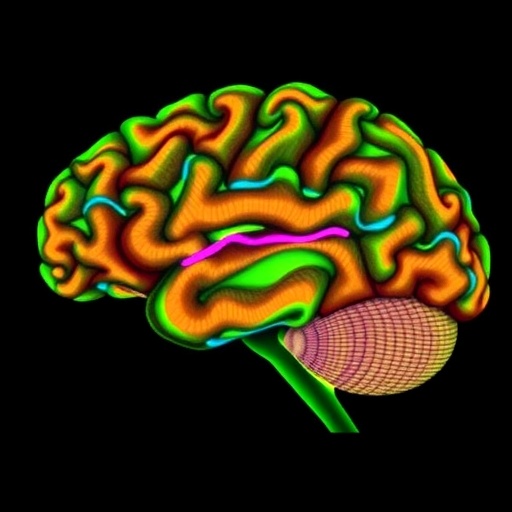
In a monumental stride toward deciphering the complexities of the human brain, researchers at the University of Maryland School of Medicine (UMSOM) have developed a transformative database that elucidates the intricate development of the neocortex across diverse species. This pioneering initiative, the Neuroscience Multi-Omic Analytics (NeMO) database, amalgamates multiomic data derived from 188 distinct studies, providing an unprecedented resource that integrates human, non-human primate, mouse, and brain organoid datasets. The database’s revolutionary design transcends previous limitations by facilitating comprehensive, cross-species analyses of neocortical development layer by layer and cell by cell, empowering scientists to explore the molecular orchestration underlying brain maturation and associated pathologies.
Published on March 25, 2026, in the esteemed journal Nature Neuroscience, this work represents a critical contribution to the ongoing efforts of the National Institutes of Health’s Brain Initiative Cell Atlas Network (BICAN). The BICAN consortium leverages the NeMO database, housed within the Institute for Genome Sciences (IGS) at UMSOM, to unify multiomic datasets that were previously siloed across varied developmental stages, anatomical regions, and species. This consolidation enables novel analytical methodologies that identify conserved molecular mechanisms operating throughout neocortical evolution and development, thereby uncovering patterns that single datasets alone could not reveal.
The neocortex, a highly evolved brain region responsible for sensory perception, language processing, memory consolidation, and consciousness, exhibits remarkable complexity in its developmental trajectory. Variations in neocortical ontogeny are implicated in the etiology of neurodevelopmental and psychiatric disorders such as autism spectrum disorders (ASD) and schizophrenia. Notably, the neocortex has undergone significant expansion and reorganization during mammalian evolution, especially in the human lineage, necessitating a detailed understanding of the molecular events driving this transformation.
One of the primary challenges addressed by the research team, led by Dr. Carlo Colantuoni—senior author and Research Associate at IGS and UMSOM’s Department of Neurology—was overcoming the fragmented nature of existing brain development databases. Previous repositories often focused on isolated brain regions, limited developmental intervals, or specific species, lacking the breadth required for integrative species-wide comparisons. Moreover, conventional data analysis pipelines were insufficiently equipped to integrate and analyze multisource multiomic datasets at scale, limiting the ability to detect universal molecular themes across divergent biological contexts.
To surmount these hurdles, the researchers leveraged the unparalleled scale of data encompassed in NeMO Analytics, incorporating gene expression profiles from 30 million single-cell transcriptomes, spatial transcriptomics, RNA sequencing from sorted cell populations, and bulk tissue analyses. Through meticulous integration of these multifaceted datasets, they characterized gene activity patterns that traverse the six distinct neocortical layers common to all mammals. Intriguingly, their findings reveal a profound disparity in the temporal dynamics of cortical neuron maturation: mice achieve full molecular maturity within mere months postnatally, whereas humans exhibit a protracted developmental timeline extending over several years.
The investigation also extended to brain organoids—three-dimensional cellular models that emulate early human brain development. Remarkably, the team discovered that neurons within these organoids fail to fully differentiate into the cell types characteristic of individual neocortical layers, highlighting both the promise and current limitations of these in vitro systems for replicating the complexity of human brain development.
From a mechanistic perspective, the study sheds light on the epigenetic regulation of critical developmental genes. For instance, the FOXN3 gene, implicated in neural progenitor proliferation, exhibits divergent expression patterns between species: it is actively transcribed in mouse progenitors, potentially constraining neocortical growth, whereas it is repressed in humans, enabling extended proliferative periods and resultant cortical expansion. This differential gene regulation underscores the intricate molecular choreography that underlies species-specific brain development and offers valuable insights into evolutionary neurobiology.
“As we continue to unravel the layers of gene regulation and molecular signaling that govern neocortical development, it becomes increasingly clear that brain disorders are not solely the consequence of genetic mutations but also involve disruptions in the temporal and spatial activation of genes during maturation,” remarked Dr. Mark Gladwin, Dean of UMSOM. He emphasized the translational significance of these findings, envisioning how detailed maps of gene expression trajectories may pave the way for early diagnostics and targeted therapeutics for complex neurological diseases.
Co-author Dr. Seth Ament, Associate Professor of Psychiatry at UMSOM and member of IGS, highlighted the transformative potential of NeMO Analytics: “The ability to integrate and dissect enormous multiomic datasets across species in a user-accessible platform allows researchers worldwide to pinpoint unique molecular features of human brain development and track pathological alterations such as inflammation or epigenetic dysregulation that could precipitate brain disorders.”
The Institute for Genome Sciences, established at UMSOM in 2007, continues to spearhead innovative genomic research with broad biomedical applications, ranging from cancer and infectious diseases to neuroscience and aging. Its core facility, Maryland Genomics, empowers global researchers with state-of-the-art sequencing technologies and bioinformatics analyses, reinforcing UMSOM’s role at the vanguard of biomedical sciences.
UMSOM itself is one of America’s oldest and most prestigious public medical schools, boasting robust research funding and extensive collaborative networks. The institution’s commitment to interdisciplinary research and cutting-edge technological developments ensures that advances like NeMO Analytics contribute to both fundamental neuroscience and practical medical interventions. With a focus on leveraging artificial intelligence and health computing, UMSOM is poised to continue generating impactful discoveries that enhance human health worldwide.
In sum, the development of NeMO Analytics exemplifies how the integration of vast, diverse datasets can revolutionize our understanding of brain development. By illuminating the molecular underpinnings that distinguish human cortical maturation from that of other species, this research not only advances basic neuroscience but also lays the groundwork for novel clinical strategies aimed at mitigating neurodevelopmental disorders. The convergence of multiomic data analysis and open-access platforms heralds a new era in brain research, promising accelerated discovery and improved outcomes for patients affected by brain diseases.
Subject of Research: Not applicable
Article Title: University of Maryland School of Medicine Researchers Create Revolutionary Database to Map Neocortical Development Across Species
News Publication Date: 25-Mar-2026
Web References:
- NeMO Analytics: https://nemoanalytics.org/landing/neocortex/
- Nature and Nature Neuroscience Collection: https://www.nature.com/collections/gjdefhadcj
- BRAIN Initiative Cell Atlas Network (BICAN): https://www.nature.com/immersive/d42859-025-00057-8/index.html
- UMSOM Website: https://www.medschool.umaryland.edu/
References: - DOI: 10.1038/s41593-026-02204-4 (Nature Neuroscience)
Keywords: Developmental neuroscience, Developmental biology, Developmental genetics, Brain development, Genetics, Neuroscience, Cerebral cortex


