

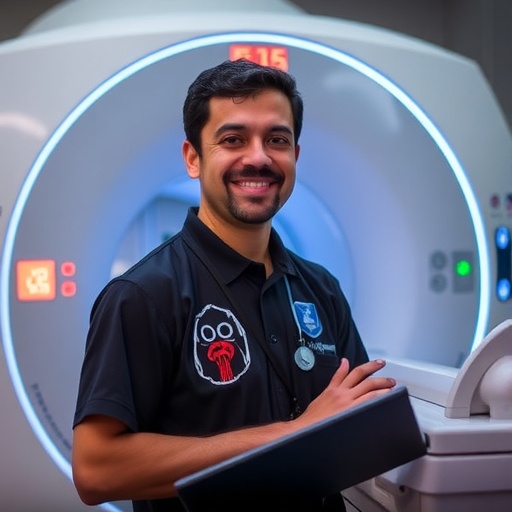
In a groundbreaking study conducted at the University of Houston, Professor Ji Chen, an expert in electrical and computer engineering, brings attention to a critical yet overlooked safety concern involving magnetic resonance imaging (MRI) and implanted cuff electrodes. These electrodes, which have become a cornerstone in therapies for neurological disorders such as epilepsy and depression, as well as inflammatory diseases, may pose unforeseen risks during MRI scans due to unintended nerve stimulation.
Implanted cuff electrodes are sophisticated medical devices designed to modulate nerve activity by delivering electrical impulses to specific nerve bundles, most notably the vagus nerve. The vagus nerve is a significant component of the autonomic nervous system, implicated in regulating a wide array of physiological processes, from heart rate to digestion. The electrodes themselves are metallic, an inherent characteristic that raises red flags in the context of MRI environments. MRI machines operate using powerful magnetic fields alongside rapidly switching gradient coils and radio frequency (RF) fields. Together, these elements can interact with metallic components in ways that are not yet fully understood.
Professor Chen’s team employed advanced computational simulations to dissect the intricate electromagnetic interactions between MRI fields and the cuff electrodes. Their models reveal that the metallic electrodes significantly lower the activation threshold of the nerve, meaning that less electrical stimulation is required to provoke a nerve response. This phenomenon can be attributed to the induced currents and heating effects generated by the gradient coils and RF fields during scanning.
Perhaps most concerning is the demonstration that RF-induced heating adjacent to the electrodes further exacerbates this effect, particularly during short pulse durations typical of clinical MRI protocols. This heating causes localized temperature rises around the electrode, which in turn can sensitize nerve fibers and reduce the threshold for unintended stimulation. Such exposure potentially leads to discomfort or even pain, a risk that remains poorly quantified in current MRI safety guidelines.
These findings challenge the adequacy of existing safety parameters, which have traditionally been developed with generic implanted devices in mind, often without precise consideration of nerve cuff electrodes. The research suggests that the intricate biophysical milieu created by the electrode’s position, the complex anatomy of nerve bundles, and the specific MRI scanning sequences necessitate more nuanced safety frameworks.
Moreover, the study underscores the need for diversified testing approaches. Chen explicitly advocates for the incorporation of multiple human body models, diverse imaging landmarks, varied electrode implantation pathways, and multiple RF polarization patterns in future assessments. Such comprehensive analysis would enable a more robust understanding of how personalized anatomy and device positioning influence MRI safety.
Interestingly, while the current research emphasizes caution, it also pioneers avenues for innovation in electrode design. The University of Houston team is actively developing novel electrode architectures and materials aimed at mitigating RF-induced heating and minimizing electromagnetic coupling effects. These efforts are poised to enhance the compatibility of implantable neurostimulation devices with MRI technology, ensuring patient safety without compromising diagnostic efficacy.
From a clinical perspective, this research carries significant implications. With MRI being an indispensable diagnostic tool across multiple medical disciplines, patients reliant on implantable cuff electrodes are often advised to avoid MRI scans due to perceived risks. Chen’s findings could lead to revised protocols that balance the urgent need for imaging with new safety standards tailored specifically to neurostimulation implants.
The dialogue initiated by this study resonates beyond medical engineering, touching on regulatory policies, device manufacturing standards, and clinical practice guidelines. As neural interface technologies proliferate, understanding and mitigating the electromagnetic interactions within high-field MRI environments is paramount for protecting patient well-being and expanding therapeutic possibilities.
In essence, the revelations from Chen’s simulations act as a clarion call to the biomedical community: existing assumptions about MRI safety for patients with implanted neurodevices require critical reevaluation. Future interdisciplinary collaborations will be essential to translate these insights into safer, more effective clinical strategies.
As the research community digests these novel findings, the importance of harmonizing engineering ingenuity with medical imperatives becomes ever clearer. This synergy promises not only to safeguard patients but also to unlock the full potential of neuroengineering innovations integrated seamlessly with advanced medical imaging technologies.
Professor Chen’s detailed investigative work, published in the prestigious journal Magnetic Resonance in Medicine, opens the door to a new epoch in neuroengineering research. His team’s pioneering use of computational models to unravel complex electromagnetic phenomena sets a benchmark for future studies aiming to bridge the gap between cutting-edge device design and clinical safety.
With MRI procedures constituting a vital diagnostic cornerstone globally, this study underscores the urgency for the medical and engineering fields to unite and innovate. The ultimate goal remains clear: to enable patients with implantable neural devices to undergo MRI safely and comfortably, thereby facilitating uninterrupted access to the diagnostic insights that modern medicine demands.
Subject of Research: Safety concerns and electromagnetic interactions between implanted cuff electrodes and MRI systems, focusing on unintended vagus nerve stimulation.
Article Title: Unintended Vagus Nerve Stimulation From Cuff Electrode During MRI: Combined Effects of Gradient and Radiofrequency Fields
News Publication Date: 16-Jan-2026
Web References:
Magnetic Resonance in Medicine Journal Article
Image Credits: University of Houston


