

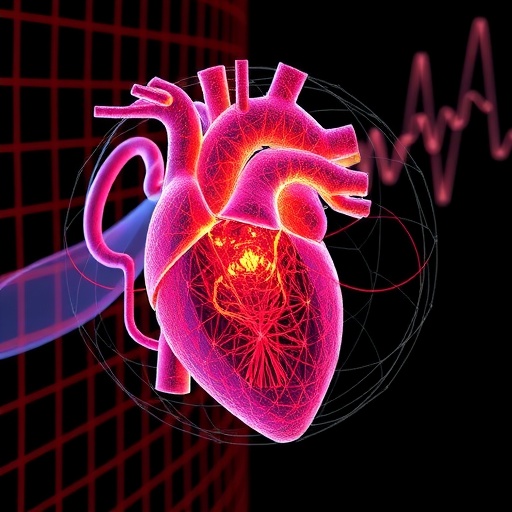
In the evolving landscape of healthcare technology, the cardiovascular system stands out as one of the most intricately monitored aspects. This is largely due to the varied signals it produces, such as photoplethysmography (PPG), electrocardiography (ECG), and blood pressure readings, which are inherently correlated and valuable in assessing overall heart health. However, the integration of these signals in real-time monitoring presents significant challenges. From noisy readings captured by wearable devices to the complexities involved in invasive procedures, the barriers to effective utilization of cardiovascular signals are considerable.
The introduction of UniCardio marks a pivotal advancement in the field of cardiovascular signal processing. At its core, UniCardio is a multimodal diffusion transformer designed specifically to address the shortcomings of traditional methods. By reconstructing low-quality signals and synthesizing unrecorded signal types within a unified generative framework, this innovative model taps into the complementary nature of cardiovascular data. An essential feature of UniCardio is its specialized architecture, which is adept at managing various signal modalities concurrently, allowing for more nuanced generation tasks.
One of the standout innovations of UniCardio is its continual learning paradigm. This feature enables the model to incorporate a diverse range of modality combinations over time, enhancing its adaptability in real-world applications. Unlike conventional models that may be rigid and limited to pre-defined parameters, UniCardio learns and evolves, significantly improving its performance in tasks including signal denoising, imputation, and translation. This adaptability is crucial in a field that presents varied and unpredictable data streams.
The implications of this technology extend far beyond mere academic interest. As healthcare continues to move toward personalized and real-time monitoring, the ability to generate high-quality cardiovascular signals has profound implications for patient care. Using UniCardio, healthcare professionals can expect a remarkable enhancement in the detection of abnormal health conditions and the estimation of vital signs. The model’s capacity to produce accurate readings rivals those of ground-truth signals, even in previously unseen scenarios.
In clinical environments where timely decisions can save lives, the ability to reliably interpret cardiovascular data is paramount. UniCardio delivers on this front by ensuring that its generated signals are not only accurate but also interpretable by human experts. The dual focus on performance and interpretability means that clinicians can trust the data they receive, promoting better patient outcomes through informed decision-making.
Moreover, UniCardio also opens the door to broader applications in artificial intelligence-assisted healthcare. As the medical community increasingly turns to AI solutions, having robust frameworks that can seamlessly integrate into existing infrastructures is invaluable. This technology could fundamentally change how cardiovascular health is monitored, making it more accessible and efficient for both medical practitioners and patients alike.
Research suggests that the efficacy of UniCardio can be attributed to its innovative approach to signal processing, which leverages the synergies between different cardiovascular signals. By utilizing a generative model, it can achieve outcomes that were previously thought unattainable with isolated methods. The evidence points to significant advancements in addressing noise and enhancing signal quality, which are critical for accurate diagnostics and continuous monitoring.
The design and functioning of UniCardio reflect a significant shift towards machine learning-based solutions in healthcare. Traditional methods often struggle with the variability and noise inherent in real-world data, but with a generative approach, UniCardio can create a more stable and comprehensive depiction of a patient’s cardiovascular health. This could not only enhance the monitoring experience for patients but also extend the capabilities of wearable technology, leading to wider adoption among users.
As research in this area continues to evolve, the potential for UniCardio to adapt and respond to emerging challenges will be vital. The healthcare sector is notorious for its rapid advancements and changing demands, and a solution that can continually learn and improve will be well-positioned in this dynamic environment. In the future, we might even see UniCardio integrated with other health monitoring systems, further broadening its impact and applicability.
The significance of UniCardio in addressing the challenges of cardiovascular monitoring cannot be overstated. By overcoming acquisition challenges, it lays the groundwork for a more comprehensive understanding of heart health. The blending of different signal types into a cohesive and interpretable format not only drives functionality but also enhances the trust in AI-assisted healthcare systems. This trustworthy collaboration between man and machine is indeed the future of personalized healthcare.
As we look ahead, the promise of UniCardio represents not just a technical achievement but a transformation in how we perceive and manage cardiovascular health. Its pioneering applications reflect the ultimate goal of healthcare technology—to use intelligent systems to improve patient care. The journey of exploring and enhancing cardiovascular signals through artificial intelligence like UniCardio will undoubtedly continue to gain momentum in the upcoming years.
In conclusion, UniCardio stands at the forefront of cardiovascular signal generation, representing a leap forward in artificial intelligence-assisted healthcare. By nurturing the integration of multimodal data streams and enhancing their interpretability for medical professionals, it encapsulates the innovation needed to tackle modern healthcare challenges. The future of cardiovascular monitoring is brighter with the advent of such cutting-edge technology that promises to redefine standards of care.
Subject of Research: Cardiovascular Signal Processing
Article Title: Versatile Cardiovascular Signal Generation with a Unified Diffusion Transformer
Article References:
Chen, Z., Miao, Y., Wang, L. et al. Versatile cardiovascular signal generation with a unified diffusion transformer.
Nat Mach Intell (2025). https://doi.org/10.1038/s42256-025-01147-y
Image Credits: AI Generated
DOI: https://doi.org/10.1038/s42256-025-01147-y
Keywords: Cardiovascular signals, signal denoising, signal imputation, AI in healthcare, multimodal data integration.


