

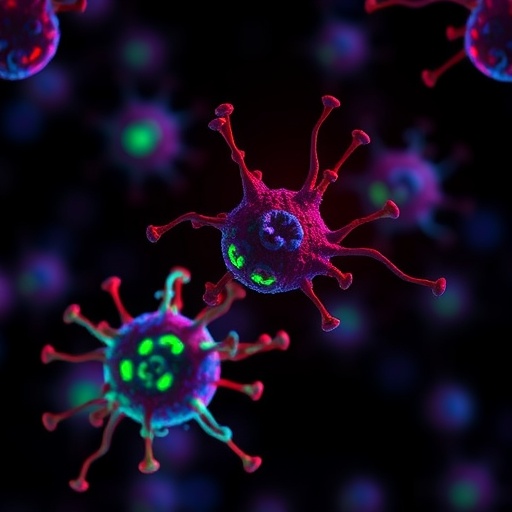
In a groundbreaking study published in the Journal of Translational Medicine, researchers have unveiled a revolutionary approach in combating T-cell leukemia using fratricide-driven, unedited CD7 CAR-T cells. This innovative strategy leverages the unique properties of T-cells to enhance their efficacy against malignancies that have long posed challenges to oncologists. The research underscores the importance of multi-omic profiling, where various biological data types are integrated to provide a comprehensive understanding of cellular mechanisms and therapeutic responses.
The study revolves around the concept of fratricide, a phenomenon where T-cells engaged in a battle against cancerous cells inadvertently induce apoptosis in their own kind when targeting CD7 antigens. In T-cell malignancies, CD7 is a compelling target due to its selective expression in these neoplasms, allowing engineered T-cells to home in on cancerous cells while sparing healthy tissues. Freile and colleagues meticulously examined the mechanics behind this process, unraveling a promising pathway for innovative cancer therapies.
Among the salient features of this research is the application of multi-omic profiling methodologies, which encompass genomics, transcriptomics, proteomics, and metabolomics. By harnessing these diverse data sets, researchers can elucidate the intricate signaling pathways and metabolic adaptations that underscore CAR-T cell functionality. The researchers went beyond classical genetic modifications to understand how unedited CAR-T cells could maneuver through the intricacies of the T-cell network while retaining their ability to proliferate and effectively target leukemia cells.
Through rigorous preclinical trials, the researchers assessed the performance of unedited CD7 CAR-T cells in animal models of T-cell leukemia. They discovered that these T-cells displayed enhanced cytotoxicity against malignant cells, suggesting that their intrinsic properties allow them to persist and combat cancerous growths. The study challenges the notion that extensive gene editing is necessary to engineer effective CAR-T cells, providing insights that could simplify production and improve patient accessibility to advanced therapies.
Furthermore, the researchers documented the remarkable ability of fratricide-driven CD7 CAR-T cells to modulate the tumor microenvironment. The presence of fratricide-induced factors was shown to alter the immunosuppressive conditions typically found in such environments, enabling a more effective elimination of tumor cells. This aspect of the research reveals new layers of interaction between engineered CAR-T cells and the surrounding cellular milieu, emphasizing the need for comprehensive studies on how to enhance immune responses in the context of cancer treatment.
The implications of this study extend into clinical landscapes, as the findings may serve as a foundation for the development of more efficient CAR-T therapies. Historically, CAR-T cell therapies have been complex and costly, often requiring extensive patient-specific modifications. The introduction of unedited CAR-T cells presents the opportunity for broader applications, potentially democratizing access to advanced treatment modalities for patients suffering from aggressive hematological malignancies.
In addition, the researchers foresee potential collaborations with pharmaceutical companies to further refine and translate their findings into clinical practice. The pathway towards FDA approval is rigorous, but if successful, the implications of fratricide-driven CAR-T cells could redefine treatment protocols for T-cell leukemia, setting the stage for a new era in immunotherapy. The bridge between basic research and clinical application is a vital area of interest, and Freile’s team is poised to contribute to the next wave of advancements in cancer therapeutics.
This groundbreaking study has stirred conversations within the oncology community, opening avenues for further research not only in T-cell leukemia but also in other types of cancers that exploit similar histological characteristics. The multifaceted approach taken by the authors provides a template for future studies exploring the use of unedited CAR-T cells against various malignancies, allowing for a more systematic understanding of cancer immunology.
As we look to the future of cancer research, the success and efficacy of using fratricide-driven CAR-T cells could prompt shifts in how research is conducted in the realm of immunotherapy. The testament to the resilience of the immune system is reflected in these findings, with the authors advocating for a closer examination of the self-regulatory mechanisms at play within T-cells, emphasizing that “the immune system can often protect itself against malignancy.”
In conclusion, Freile and his colleagues have provided hope and a new perspective on treating T-cell leukemia through their study on fratricide-driven, unedited CD7 CAR-T cells. Their findings not only pave the way for innovative treatment strategies but also broaden our understanding of T-cell dynamics in cancer therapy. As ongoing research continues to explore these dimensions, the lasting impact of their work could reshape how hematological malignancies are approached and treated in the near future.
The excitement generated by this study is palpable, as it represents not just an advancement in scientific knowledge but also a beacon of optimism for patients and their families. With ongoing efforts to harness the capabilities of the immune system, we stand on the verge of transformative breakthroughs that could change the face of cancer treatment for generations to come.
Subject of Research: T-cell leukemia and CAR-T cell therapy
Article Title: Multi-omic profiling and preclinical efficacy of fratricide-driven, unedited CD7 CAR-T cells in T-cell leukemia
Article References:
Freile, J.Á., Rockstein, L., Kloosterman, R. et al. Multi-omic profiling and preclinical efficacy of fratricide-driven, unedited CD7 CAR-T cells in T-cell leukemia.
J Transl Med (2026). https://doi.org/10.1186/s12967-026-07701-5
Image Credits: AI Generated
DOI: 10.1186/s12967-026-07701-5
Keywords: T-cell leukemia, CAR-T cells, fratricide, multi-omic profiling, immunotherapy, oncology, hematological malignancies, apoptosis, cellular mechanisms, cancer therapy.


