

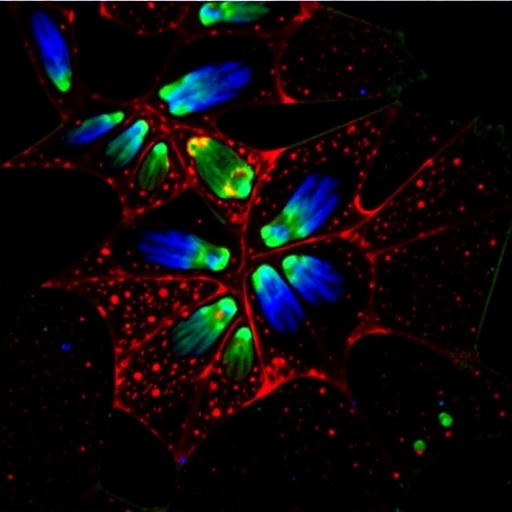
In a groundbreaking study set to be published in the Journal of Translational Medicine, researchers led by Luo et al. delve into the complexities of basal cell carcinoma (BCC) by utilizing cutting-edge single-cell and spatial transcriptomics methodologies. Their research identifies a significant subset of cancer-associated fibroblasts (CAFs) positive for tenascin-C (TNC), showcasing how these cells can create an immunosuppressive microenvironment that directly aids in tumor progression. This research is pivotal as it elucidates the intricate relationship between CAFs and tumor cells, providing new insights that could lead to more effective therapies for cancer.
Basal cell carcinoma is a common skin cancer characterized by its slow growth and infrequent metastasis. However, its therapeutic challenges frequently lie in its local aggressiveness and the tendency for recurrence. Identifying and understanding the role of various cellular actors in the tumor microenvironment is crucial for developing innovative treatment strategies. In this research, the authors employed single-cell RNA sequencing and spatial transcriptomics to dissect the cellular landscape within BCC tumors, detecting variations in gene expression among different cellular populations.
One of the key findings of this study is the identification of TNC-positive CAFs, a cell type that has previously been underappreciated in the context of BCC. CAFs are known to play multifaceted roles in tumor biology, such as promoting tumor growth, facilitating metastasis, and contributing to immune evasion. By demonstrating that TNC is a marker of immunosuppressive CAFs in BCC, the authors highlight its importance as a potential therapeutic target. This finding opens new avenues for immunotherapy, particularly in the design of treatments that could counteract the immunosuppressive effects mediated by these CAFs.
Previous research has shown that cancer-associated fibroblasts can influence tumor aggressiveness through various mechanisms, including the secretion of soluble factors that modulate immune responses. However, the specific contribution of TNC-positive CAFs to tumor progression in BCC has remained elusive until now. The study revealed that these cells not only support tumor growth but also actively downregulate immune responses, creating an environment that favors tumor survival and growth. This insight suggests that targeting the interactions between these CAFs and immune cells could restore antitumor immunity within the microenvironment.
Using spatial transcriptomics, the researchers also mapped the localization of TNC-positive CAFs in the tumor microenvironment, revealing their distribution patterns relative to tumor cells and immune cells. This spatial perspective is vital in understanding how the physical arrangement of various cell types coordinates the tumorigenic process. The unique mapping provided by this technology allows for a better understanding of how TNC-positive CAFs interact with both tumor cells and immune effectors, ultimately contributing to local immune suppression.
Moreover, the interplay between TNC-positive CAFs and immune cells elucidates why BCC can evade immune detection. The study showcases that these fibroblasts secrete a range of factors that inhibit T-cell proliferation and function, effectively creating a shield around the tumor cells. This immune evasion mechanism is particularly troubling as it complicates the clinical management of BCC and similar malignancies. Recognizing this, the research emphasizes the need for therapies that can dismantle this immunosuppressive environment.
In the broader context of cancer research, the study adds significant knowledge to the rapidly evolving field of tumor microenvironment investigations. As researchers begin to appreciate the multifaceted roles of CAFs and their markers, there is an increasing urgency to incorporate this knowledge into therapeutic strategies. The distinct molecular features associated with TNC-positive CAFs might serve as biomarkers for patient stratification in clinical trials, opening pathways for personalized treatment approaches.
Additionally, as the landscape of cancer therapy shifts, there is growing interest in combining traditional therapies with immunotherapy. This study suggests that a combination approach—which would include agents that target TNC and other immune checkpoint inhibitors—could enhance treatment efficacy. By targeting both the tumor cells and the supportive stromal environment, oncologists could potentially improve patient outcomes in BCC while minimizing the risk of recurrence.
The work of Luo et al. not only builds upon previous findings in the field but also raises critical questions about the functional plasticity of CAFs in cancer progression. Understanding how these fibroblasts adapt their properties in response to the surrounding tumor microenvironment could reveal novel targets for therapeutic intervention. Identifying the signaling cascades involved in their transition to an immunosuppressive state is essential for developing strategies to reverse this process.
Crucially, the implications of this research extend beyond just basal cell carcinoma; the insights gained concerning TNC-positive CAFs may also be applicable to other tumor types where CAFs play a significant role. As ongoing research continues to uncover the complexities of the tumor microenvironment, this study serves as a vital reminder of the critical interplay between different cell types in dictating cancer biology.
In conclusion, the pioneering work by Luo et al. presents a comprehensive analysis of the role of TNC-positive CAFs in basal cell carcinoma, shedding light on previously unexplored aspects of tumor biology. By harnessing advanced techniques like single-cell and spatial transcriptomics, the authors provide a foundation for future studies aimed at unraveling the intricate networks that govern cancer progression. Their findings not only enhance our understanding of BCC but also hold promise for the development of novel therapeutic strategies that can effectively target the tumor microenvironment, potentially leading to improved patient outcomes.
As we move forward in the field of cancer research, the identification of crucial cellular players such as TNC-positive CAFs will remain at the forefront of efforts to combat this pervasive disease. Continuous exploration and integration of advanced technologies will be essential for translating these findings into actionable clinical therapies, illustrating the unwavering drive to innovate in the quest for effective cancer treatment.
Subject of Research: Basal Cell Carcinoma and Cancer-Associated Fibroblasts
Article Title: Single-cell and spatial transcriptomics reveal TNC-positive cancer-associated fibroblasts that mediate immunosuppression and promote tumor progression in basal cell carcinoma.
Article References:
Luo, M., Tian, W., Zhuo, Q. et al. Single-cell and spatial transcriptomics reveal TNC-positive cancer-associated fibroblasts that mediate immunosuppression and promote tumor progression in basal cell carcinoma. J Transl Med (2025). https://doi.org/10.1186/s12967-025-07491-2
Image Credits: AI Generated
DOI: 10.1186/s12967-025-07491-2
Keywords: Basal Cell Carcinoma, Cancer-associated fibroblasts, Tenascin-C, Immunosuppression, Tumor progression, Single-cell transcriptomics, Spatial transcriptomics.


