

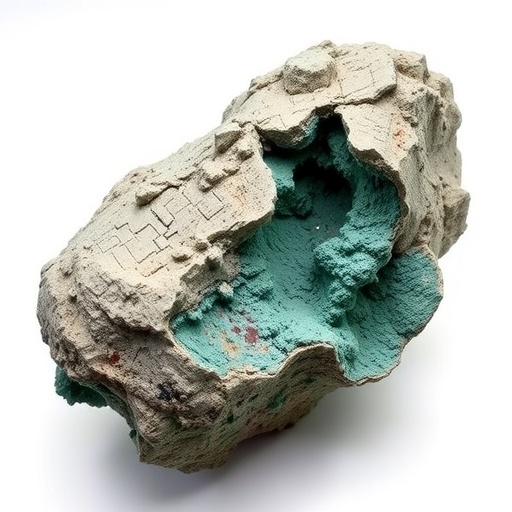
In the hidden depths of our planet, where tectonic plates converge and collide, an intricate dance unfolds—one that profoundly influences seismic activity and shapes the geological character of subduction zones. Recent groundbreaking research spearheaded by Associate Professor Takayoshi Nagaya at Waseda University, alongside Professor Simon R. Wallis from The University of Tokyo, sheds new light on the mechanisms governing the deformation of serpentinite, a key mineral assemblage in these geologically dynamic regions.
Subduction zones, where the dense oceanic lithosphere sinks beneath continental plates, are epicenters of seismicity. The physical and chemical processes occurring within these subterranean interfaces are critical to our understanding of earthquakes and mantle dynamics. A pivotal factor in these zones is the introduction of water, which facilitates the transformation of peridotite—the dominant rock in Earth’s upper mantle—into serpentinite, characterized primarily by the mineral antigorite.
This serpentinization process is far from a mere chemical curiosity; it fundamentally alters the rock’s mineralogy and physical properties. As peridotite reacts with infiltrating fluids, it gives rise to serpentinite, which exhibits markedly different mechanical behavior due to the unique characteristics of antigorite. Unlike the well-documented deformation modes of peridotite, the rheological and mechanical responses of serpentinite under tectonic stresses have remained elusive, thereby representing a frontier of geophysical research.
A key aspect of mineral deformation in the mantle is the development of crystallographic preferred orientation (CPO), wherein mineral grains align their crystal lattices in response to differential stress, profoundly affecting rock anisotropy and seismic wave propagation. Traditionally, deformation in antigorite serpentinite was attributed predominantly to dislocation creep, producing a distinctive “A-type” CPO pattern where the crystallographic a-axes align parallel to the shear direction.
However, natural serpentinite bodies often exhibit diverse CPO patterns, notably the “B-type,” where the b-axes preferentially align with shear. This dichotomy posed a persistent scientific enigma, challenging the prevailing paradigm that dislocation creep was the sole deformation mechanism in antigorite. Recognizing this gap, Nagaya and his colleagues embarked on an investigative journey employing natural serpentinite specimens sourced from the Besshi and Shiraga localities in Shikoku, Japan, a region emblematic of active subduction zone processes.
Their meticulous experimental study reveals that grain boundary sliding (GBS), a deformation mechanism involving relative motion along the interfaces of mineral grains, can account for the formation of the B-type CPO in antigorite. This mechanism contrasts with dislocation creep, as GBS generally accommodates deformation without significant lattice distortion, which has profound implications for the mechanical behavior of serpentinite in deep Earth settings.
The identification of GBS as a dominant deformation process in antigorite serpentinite revolutionizes our understanding of subduction zone rheology. It implies that serpentinite could accommodate aseismic slip—movement along faults without generating detectable seismic waves. Such aseismic behavior might explain the occurrence of slow earthquakes and other transient slip events that conventional seismology struggles to detect or interpret.
Moreover, this insight has far-reaching ramifications for seismic hazard assessment. Since GBS-driven deformation in serpentinite can facilitate fault slip devoid of typical earthquake signatures, it suggests a subtle, previously unrecognized mode of strain release deep within subduction zones. Understanding these mechanisms may help bridge the elusive gap between slow slip events and the genesis of large megathrust earthquakes.
The study eloquently illustrates the power of integrating mineral physics, structural geology, and seismology to decipher complex Earth processes. By unraveling the deformation behavior of serpentinite, Nagaya and Wallis’s work provides a crucial piece in the puzzle of subduction zone mechanics, enhancing predictive models of earthquake occurrence and informing risk mitigation strategies.
Their research further underscores the importance of investigating natural rock specimens from geologically relevant settings. The samples from Shikoku, Japan, not only replicate the mineralogy and physical conditions of mantle wedge serpentinite but also embody the dynamic environment of plate boundary deformation.
From a materials science perspective, discerning between dislocation creep and grain boundary sliding enriches our comprehension of rock mechanics under extreme conditions. It opens pathways for future numerical modeling aimed at simulating the complex interplay between deformation mechanisms and seismicity patterns in subduction zones worldwide.
In summary, this pioneering research transforms how scientists perceive the internal dynamics of subduction zones, highlighting the nuanced interplay of mineral deformation mechanisms and their geological consequences. As our planet continues its relentless tectonic ballet, studies like these illuminate the hidden movements shaping Earth’s surface and seismic behavior.
Subject of Research: Not applicable
Article Title: Grain boundary sliding as a formation mechanism for the crystal preferred orientation of antigorite: the formation and development of B-type antigorite CPO patterns
News Publication Date: 21-Jan-2026
References:
Nagaya, T. & Wallis, S. R. (2026). Grain boundary sliding as a formation mechanism for the crystal preferred orientation of antigorite: the formation and development of B-type antigorite CPO patterns. Progress in Earth and Planetary Science. DOI: 10.1186/s40645-025-00790-8
Image Credits: Dr. Takayoshi Nagaya, Waseda University, Japan
Keywords: Geophysics, Earth sciences, Seismology, Plate tectonics, Subduction, Earthquakes, Mineralogy, Rocks, Mantle slabs


