

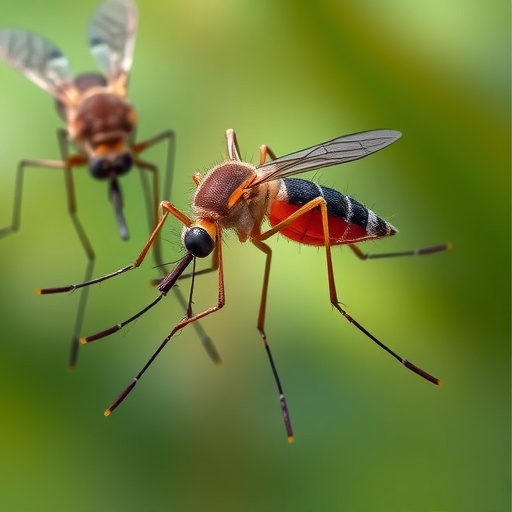
Recent advancements in the field of virology have spotlighted the dengue virus, an arbovirus that poses significant global health challenges. The dengue virus, transmitted by Aedes mosquitoes, can lead to severe manifestations such as dengue fever and dengue hemorrhagic fever. The pressing need for effective antiviral compounds has catalyzed research efforts aimed at discovering natural inhibitors to combat this viral threat. A groundbreaking study has emerged, identifying and validating novel natural inhibitors targeting the dengue virus non-structural protein 1 (NS1), offering new hope for antiviral interventions with promising therapeutic potential.
In this pivotal research, the authors focus on NS1, a protein secreted by dengue virus-infected cells and implicated in the pathogenesis of the disease. NS1 plays a crucial role in the viral lifecycle, serving as a biomarker for active infection and contributing to immune evasion strategies employed by the virus. The study meticulously assesses the inhibitory effects of various natural compounds against NS1, aiming to delineate their potential as antiviral agents. This innovative approach harnesses the power of natural products, which have long been recognized for their multifaceted biological activities.
The screening process employed in the study involved a systematic evaluation of numerous natural compounds derived from plants and other organisms. Utilizing advanced techniques, the researchers were able to identify candidates that exhibited significant binding affinity to the NS1 protein, suggesting that these compounds could effectively disrupt the protein’s function. The selection process was rigorous, ensuring that only the most promising candidates advanced to the validation phase, wherein their antiviral efficacy was tested in vitro.
One of the standout features of this research is its validation of the selected compounds through well-established virological assays. The researchers employed laboratory models to confirm that the inhibitors effectively reduced viral replication, providing crucial evidence of their antiviral potential. By leveraging cutting-edge methodologies and technologies, the study not only identifies inhibitors but also substantiates their functional capabilities against the dengue virus.
Moreover, the findings from this research are particularly noteworthy in the context of the growing threat posed by antibiotic resistance and the limitations of current antiviral therapies. The exploration of natural products as a source of antiviral agents offers a viable pathway to developing new therapeutic options. As the efficacy of traditional antiviral drugs wanes, the need for innovative solutions becomes increasingly urgent, further underscoring the significance of this study in the broader landscape of infectious disease research.
The implications of finding natural inhibitors for dengue virus NS1 extend beyond mere antiviral activity. The insights garnered from this study contribute to a deeper understanding of the viral pathology and the host-pathogen interactions that underpin dengue virus diseases. By elucidating how these natural compounds interact with NS1, researchers can explore novel strategies to enhance immune responses or mitigate the severe effects associated with dengue virus infections.
In addition to advancing antiviral drug development, this research highlights the importance of interdisciplinary collaboration between chemistry, biology, and pharmacology. By leveraging expertise across these fields, the study exemplifies how a holistic approach can accelerate the translation of scientific discoveries into clinical applications. The research findings serve as a call to action for the scientific community, suggesting that a concerted effort is required to unravel the complexities of dengue virus infection and develop effective countermeasures.
Furthermore, this study opens the door to future investigations examining the mechanisms of action of these natural inhibitors. Understanding how these compounds influence NS1 activity at the molecular level can provide valuable insights that inform the design of more potent antiviral drugs. The incorporation of structure-activity relationship studies will likely be a focus of subsequent research, potentially leading to optimized compounds with enhanced efficacy.
The importance of ongoing research in the domain of viral diseases cannot be overstated. As new strains and variants of viruses emerge, the dynamic landscape of virology necessitates continuous exploration for innovative antiviral strategies. The study serves as a pivotal reminder of the untapped potential residing within nature’s arsenal, calling for further investigations into other natural compounds that may also hold promise as antiviral agents.
In conclusion, the identification and validation of natural dengue virus NS1 inhibitors represent a significant milestone in antiviral research. The interplay between natural compounds and viral targets underscores the relevance of exploring alternative avenues in drug discovery. By fostering a deeper understanding of the mechanisms behind viral pathogenesis, the scientific community stands poised to enhance our repertoire of tools against dengue and potentially other viral infections.
As the global burden of dengue fever continues to escalate, research like this is crucial for developing effective antiviral treatments. The confluence of natural product chemistry and virology offers a compelling strategy to combat viral infections that disproportionately affect under-resourced regions worldwide. Enhanced collaboration and sustained research efforts will undoubtedly yield more discoveries that have the potential to transform the landscape of viral therapeutics.
This research sets a precedent for future studies aimed at discovering additional natural inhibitors against other viral infections. With a growing body of evidence supporting the viability of natural compounds in antiviral drug development, there is a renewed optimism within the scientific community. The quest for innovative solutions to viral infections is vital, and studies such as this exemplify the path forward.
The roadmap laid out by this research marks the beginning of an exciting journey into the realm of natural antiviral agents. As the scientific community delves deeper into the world of natural products, the potential for revolutionary treatments for dengue and other viral diseases becomes increasingly tangible. By harnessing the power of nature, we are not only addressing immediate health concerns but also paving the way for a more resilient future in the fight against infectious diseases.
Subject of Research: Identification of natural dengue virus NS1 inhibitors and their antiviral potential.
Article Title: Identification and validation of natural dengue virus NS1 inhibitors with promising antiviral potential.
Article References:
Ansari, H.K., Alisha, Baig, M.S. et al. Identification and validation of natural dengue virus NS1 inhibitors with promising antiviral potential.
Mol Divers (2026). https://doi.org/10.1007/s11030-025-11447-5
Image Credits: AI Generated
DOI: https://doi.org/10.1007/s11030-025-11447-5
Keywords: dengue virus, NS1 inhibitors, natural compounds, antiviral research, virology


