

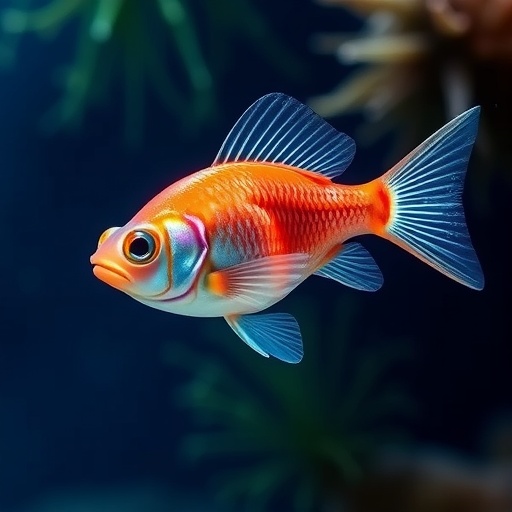
Recent groundbreaking research sheds light on the immunotoxic effects of pentachlorophenol (PCP), a persistent organic pollutant commonly detected in marine environments, revealing its detrimental impacts on the immune systems of marine fish through a newly proposed molecular mechanism. Despite widespread environmental presence of PCP, the exact pathways by which it impairs immune function have remained elusive until now.
In a detailed study published in the Journal of Environmental Chemistry and Ecotoxicology, a team of Chinese researchers has demystified the adverse immunological impacts of PCP on marine medaka (Oryzias melastigma), a sentinel species for marine toxicology studies. Their work uncovers how PCP initiates an immune-inflammatory cascade by directly activating the Toll-like receptor (TLR) signaling pathway, which is pivotal in pathogen recognition and immune defense.
The investigation reveals that the initial molecular event is PCP binding to Toll-like receptor 5 (TLR5), which sets off a complex signaling cascade. Activation of TLR5 by PCP leads to heightened expression of pro-inflammatory cytokines, amplifying inflammatory responses that are typically designed to combat pathogens but in this case, become deleterious due to unnatural triggering by the pollutant.
Further inquiry into downstream effects demonstrated that PCP exposure induces significant oxidative stress within hepatic tissues of marine medaka. Oxidative stress results from the imbalance between reactive oxygen species (ROS) production and antioxidant defenses, causing molecular damage to lipids, proteins, and DNA, thereby compromising cellular integrity and driving liver injury.
Concomitantly, PCP disrupts amino acid metabolism, a vital biochemical network supporting immune cell function and overall metabolic homeostasis. Alterations in these fundamental metabolic pathways exacerbate the toxic insult, affecting the organism’s capacity to mount effective immune responses and maintain systemic health.
The researchers employed a multi-omics approach integrating transcriptomics, metabolomics, biochemical assays, histopathology, as well as molecular docking and kinetic simulations, providing a comprehensive analysis of PCP’s immunotoxic effects. This integrative methodology allowed the dissection of both molecular initiating events and subsequent adverse outcome pathways in unprecedented detail.
Of particular importance, the study identifies the entire adverse outcome pathway (AOP) from molecular initiation to organism-level effects. The AOP commences with PCP binding to TLR5, proceeds through TLR signaling pathway activation, escalates inflammatory processes, heightens oxidative stress, disrupts crucial metabolic functions, culminates in liver damage, and ultimately results in impaired immune function and increased vulnerability to disease.
Notably, even environmentally relevant low concentrations of PCP (as low as 1 to 10 micrograms per liter) were sufficient to trigger these molecular and physiological changes, underscoring the ecological risk posed by prevailing levels of this contaminant in marine habitats.
This research transcends previous findings of PCP immunotoxicity which primarily focused on algae and invertebrates, by clearly demonstrating that marine vertebrates like fish are equally susceptible to immune dysfunction caused by PCP. The implications are far-reaching for marine ecosystem health and resilience, highlighting the pollutant’s capacity to undermine a crucial level of biological defense.
Professor Zhang Huanxin, the senior author, emphasizes the novelty and significance of these findings, noting that their work pioneers the decoding of PCP’s immunotoxic mechanisms in higher marine organisms. This study not only delineates the biochemical and molecular disruptions but also establishes a mechanistic framework that can guide future ecotoxicological risk assessments and regulatory decisions.
Introducing the AOP framework into the toxicological evaluation of pollutants like PCP enables a structured understanding of dynamic biological responses, providing predictive power for assessing risk from chemical exposures in aquatic environments. Such mechanistic insights improve environmental monitoring strategies and inform remediation efforts to safeguard marine biodiversity.
The implications extend beyond marine medaka, suggesting a potential universal vulnerability of aquatic vertebrates to PCP exposure that could disrupt ecological balances and fisheries resources. Consequently, the study underscores the urgent need to regulate and mitigate PCP contamination to preserve marine immune health and ecosystem stability.
In conclusion, this pioneering research unravels the immunotoxic pathways triggered by PCP in marine fish, accentuating how low-dose exposure leads to inflammation-driven liver damage and immune impairment via TLR5 activation. These insights pave the way for enhanced environmental protection frameworks and deepen our understanding of pollutant-induced immunotoxicity in marine life.
Subject of Research: Animals
Article Title: Deciphering the TLR-Mediated Immunotoxic Adverse Outcome Pathway of Pentachlorophenol in Marine Medaka (Oryzias Melastigma)
Web References: http://dx.doi.org/10.1016/j.enceco.2025.11.039
Image Credits: Zhang, Y. et al
Keywords: Bioinformatics, Ecology, Toxicology, Pollution, Environmental remediation


