

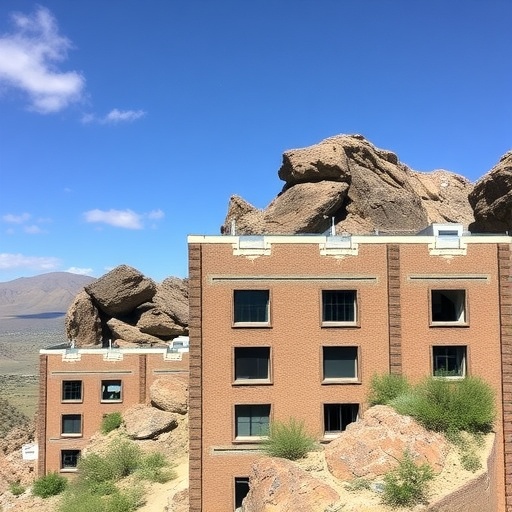
In the relentless global pursuit of carbon dioxide removal (CDR) technologies that can help combat climate change, enhanced rock weathering (ERW) has emerged as a promising yet complex strategy. ERW mimics and accelerates natural geochemical processes by spreading finely crushed silicate rocks over agricultural soils, thereby capturing atmospheric CO₂ through mineral weathering reactions. Despite its reported potential for long-term carbon sequestration, significant uncertainties cloud the pathway from ERW theory to scalable, practical application. These uncertainties span from the availability and environmental safety of mineral feedstocks to the broader ecological, hydrological, and socio-economic impacts that ripple through landscapes and communities alike.
At the heart of the ERW approach lies the crucial role of silicate and ultramafic rocks—rich in magnesium and calcium—for facilitating carbon capture through chemical weathering. This natural process, which consumes CO₂ to form stable carbonate minerals, can theoretically be accelerated by intentionally mining, grinding, and dispersing these rocks across croplands. However, the intrinsic chemical composition of these feedstocks not only governs their weathering rates and carbon capture efficacy but also raises the specter of co-releasing potentially toxic trace elements. This intrinsic geochemical uncertainty poses a formidable barrier, demanding rigorous characterization and monitoring of mineral sourcing to prevent unintended environmental contamination.
Moreover, the availability of these suitable mineral feedstocks is far from unlimited. The scale of mining and processing required to deploy ERW globally is staggering. Dedicated and extensive mining operations would likely be indispensable for providing the volumes of rock necessary for meaningful CDR, which introduces logistical, environmental, and energy costs that challenge the net climate benefit of the approach. In particular, the mining and grinding processes themselves can lead to carbon emissions and land degradation, offsetting some of the gains from enhanced weathering. This paradox highlights a critical need for comprehensive life-cycle assessments to evaluate the true carbon footprint of large-scale ERW deployment.
The interaction of ERW with plant-soil systems introduces another layer of complexity. On one hand, the addition of minerals can improve soil structure, enhance nutrient availability, and potentially increase crop yields, which would create positive feedbacks for carbon sequestration and food security. On the other hand, disruptions to soil hydrology, microbial communities, and nutrient cycles could occur, potentially undermining ecosystem services and agricultural productivity. The heterogeneity of soils and agroecosystems worldwide means that the ramifications of ERW application are spatially variable and require site-specific assessments to balance effective CDR with sustainable land management.
Once these mineral-derived weathering products enter the broader landscape, their journey along the land-ocean continuum poses additional uncertainties for carbon sequestration verification and ecosystem impact. Weathering-derived bicarbonates and carbonates can be transported by rivers to marine systems, where their long-term fate and interactions with ocean chemistry remain poorly constrained. This pathway complicates quantifying the actual CO₂ removal attributed to ERW because some carbon may be released back into the atmosphere or dissolved in recalcitrant forms over extended timeframes. Advanced modeling and long-term monitoring along watersheds and coastal zones are essential to trace and validate the net global benefit of this carbon removal route.
Beyond the biogeochemical and environmental boundaries, challenges loom large on the socio-economic front. Financing ERW at the scale needed to make a meaningful dent in atmospheric CO₂ hinges upon clear policies, risk sharing, and equitable governance structures. The upfront costs, long project timelines, and uncertainties surrounding the permanence and verification of carbon removal create disincentives for private and public investment. Questions about who bears environmental and financial risks, how benefits are distributed, and how local communities engage with ERW initiatives remain insufficiently explored. Addressing these social dimensions is critical to deploying ERW responsibly and ensuring it does not exacerbate existing inequalities or environmental injustices.
Technological and scientific innovation are crucial but insufficient by themselves. The pathway toward ERW deployment necessitates integrated research frameworks that combine geochemical experimentation, agronomic studies, ecosystem monitoring, socio-economic analyses, and policy design. Cross-disciplinary efforts must prioritize site-specificing the conditions under which ERW can both maximize carbon removal and minimize collateral impacts on crops, soils, and local environments. This targeted approach is vital because a one-size-fits-all model would overlook the nuanced interactions within diverse agroecosystems and climatic regions where ERW might be implemented.
Longitudinal monitoring spanning geographic gradients from terrestrial release sites to downstream marine environments represents another imperative. Tracking biogeochemical fluxes, soil health indicators, and aquatic carbon species over timescales of decades will provide the empirical basis to confirm permanence claims and refine carbon accounting models. Furthermore, such monitoring will detect unforeseen environmental feedbacks or toxic element mobilization early, enabling adaptive management responses to emerging risks.
In terms of governance, institutional frameworks that define responsibilities, liabilities, and incentives for ERW must be established before widespread adoption. These frameworks should also embed mechanisms for transparent reporting and verification to bolster public trust and integrate science into policy. Including affected communities in decision-making processes will be instrumental for developing socially acceptable and just deployment pathways, particularly in regions where mining or agricultural modifications intersect with livelihoods and traditional land uses.
A holistic evaluation of ERW’s potential highlights a sobering reality: despite the alluring prospect of accelerating a natural carbon sink, deploying enhanced rock weathering at a scale that meaningfully mitigates climate change faces substantial hurdles. Uncertainties at every stage—from mineral sourcing and ecosystem interactions to downstream transport and socio-economic feasibility—cannot be glossed over. Rather, they call for systematic, multidisciplinary research agendas paired with collaborative governance to guide effective and responsible ERW implementation.
Notwithstanding these challenges, the promise of a broadly applicable, soil-based carbon removal approach that synergistically supports agriculture and ecosystem health fuels ongoing interest and innovation. If targeted well and managed carefully, ERW could become a key component of diversified CDR portfolios, alongside reforestation, soil carbon enhancement, and emerging technological solutions. Yet, prematurely scaling ERW without resolving its uncertainties risks disillusionment, wasted resources, and environmental harm.
The coming decade will thus be pivotal in determining whether enhanced rock weathering transitions from an intriguing theoretical solution into a viable climate mitigation tool. Accelerated research funding, cross-sector partnerships, and open data sharing will catalyze the nuanced understandings and technologies necessary for this transformation. Ultimately, the fate of ERW—whether as a silver bullet or a supplementary strategy—will rest on our collective ability to navigate its inherent complexities and trade-offs with scientific rigor and social conscience.
As climate targets become increasingly urgent, the allure of natural analogues like ERW is undeniable. Yet the path forward demands patience, precision, and precaution. Harnessing the carbon capture power of earth’s geochemical cycles at scale remains a grand scientific and engineering challenge, fraught with unknowns but ripe with opportunity. By embracing the full scope of uncertainties and adopting site-specific, evidence-based deployment strategies, enhanced rock weathering might yet carve out a meaningful niche in humanity’s climate defence toolkit.
In summary, the journal article “Uncertainties of enhanced rock weathering for climate-change mitigation” by Schiedung et al. brings a nuanced perspective to the ERW discourse. Their comprehensive evaluation cautions that while ERW holds considerable promise, realizing that potential requires overcoming significant knowledge gaps and operational challenges. The study advocates for integrating geochemical, ecological, hydrological, and socio-economic research alongside robust policy frameworks to ensure ERW can be deployed effectively, equitably, and sustainably in the decades ahead.
Subject of Research: Enhanced rock weathering (ERW) as a carbon dioxide removal (CDR) strategy and its associated uncertainties spanning mineral feedstock availability, plant-soil impacts, biogeochemical fate, and socio-economic implications.
Article Title: Uncertainties of enhanced rock weathering for climate-change mitigation.
Article References:
Schiedung, M., Harrington, K.J., Dupla, X. et al. Uncertainties of enhanced rock weathering for climate-change mitigation. Nat Rev Earth Environ (2026). https://doi.org/10.1038/s43017-026-00761-7
Image Credits: AI Generated
DOI: https://doi.org/10.1038/s43017-026-00761-7
Keywords: enhanced rock weathering, carbon dioxide removal, climate change mitigation, ultramafic rocks, soil chemistry, carbon sequestration, biogeochemical cycles, land-ocean continuum, socio-economic considerations


