

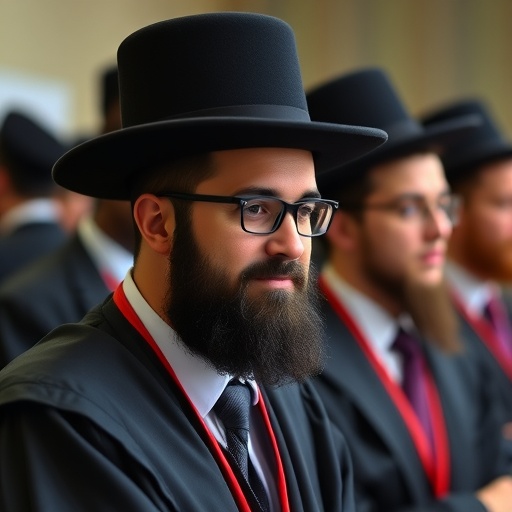
In recent years, the educational journey undertaken by Ultra-Orthodox students has drawn increased attention from researchers and educators. In their thought-provoking study, “Degrees of Change: The Impact of Academic Studies on Religious Belonging and Professional Development among Ultra-Orthodox Students, Across Gender and Marital Status,” scholars Omer Rubin and Nicky Novis-Deutsch delve into the profound transformations that higher education brings to this unique demographic. Their findings illuminate the extent to which academic pursuits alter not only professional aspirations but also religious identities among Ultra-Orthodox individuals.
The Ultra-Orthodox community, known for its stringent adherence to religious practices, has historically prioritized religious education over secular academic pursuits. However, the past decade has witnessed gradual shifts as the necessity for modern skills in an increasingly competitive job market penetrates this insular community. Rubin and Novis-Deutsch explore this delicate balance, examining how academic engagement influences religious beliefs and practices, particularly for those who previously adhered strictly to traditional roles.
One of the pivotal aspects of their research highlights the impact of gender on educational outcomes and religious alignment among Ultra-Orthodox students. While both male and female students face unique challenges, the study reveals distinct patterns of change based on gender. Male students often grapple with reconciling their academic growth with the expectations of their religious communities, which historically have placed greater emphasis on their roles as spiritual leaders. In contrast, female students are often encouraged to pursue education, albeit within specific boundaries that align with community values.
The study also addresses marital status as a significant variable in understanding the shifts experienced by Ultra-Orthodox students. Rubin and Novis-Deutsch argue that married students enter academia with varying sets of expectations, responsibilities, and support systems compared to their unmarried counterparts. The findings indicate that married students may navigate educational environments differently, often influenced by familial obligations and communal pressures that shape their educational journeys and outcomes.
A particularly compelling aspect of the research focuses on the concept of “religious belonging.” Throughout the study, the authors assess how educational experiences reshape students’ attachments to their religious identities. Some participants reported a dilution of their religious fervor as they engaged with more secular perspectives in academia, while others experienced a reinvigoration of their faith, integrating new knowledge with their traditional beliefs. This finding underscores the complexity of religious identity in the context of modern education, particularly within communities with strong cultural and religious foundations.
Furthermore, the researchers investigate the implications of professional development among Ultra-Orthodox students as they transition from academic studies to the workforce. The study indicates that these students are increasingly seeking careers that not only provide financial stability but also align with their values and beliefs. Many participants expressed a desire to bridge their academic training with their religious convictions, leading to innovative career paths that cater to both their professional ambitions and their commitment to their faith.
The authors also analyze the role of support systems in facilitating the academic and professional journeys of Ultra-Orthodox students. Family support, institutional backing, and community engagement emerged as critical components in determining students’ success and satisfaction in academic pursuits. Support networks not only bolster academic performance but also assist students in navigating the challenges posed by balancing secular education with religious adherence.
Importantly, the study acknowledges the role of mentorship in shaping educational experiences. Mentors, whether within academic institutions or the broader community, significantly influence the trajectories of Ultra-Orthodox students. Through guidance and encouragement, mentors help students navigate the complexities of higher education, fostering a sense of belonging that enhances both academic performance and personal growth.
As the research progresses, the authors express a hopeful outlook for the future of Ultra-Orthodox education. They emphasize the need for educational institutions to adapt their curricula and support structures to better serve this unique population. By recognizing the multifaceted identities of Ultra-Orthodox students, educators can create more inclusive environments that bolster both academic achievement and religious fulfillment.
Ultimately, “Degrees of Change” presents compelling evidence that higher education serves as a catalyst for transformation within the Ultra-Orthodox community. As students venture into academia, they are not only equipped with new skills and knowledge but also engage in profound personal and religious reflection. The findings suggest that while education may lead to challenges in maintaining traditional beliefs, it can also inspire renewed engagement with one’s faith, facilitating a richer understanding of religious identity in a contemporary context.
The discourse surrounding Ultra-Orthodox education is vital in understanding broader social dynamics at play in diverse societies. As these students continue to navigate the intersection of faith and academic inquiry, they embody the complexities of modern religious identities against the backdrop of ongoing societal change. The ripple effects of their educational experiences will undoubtedly shape both their community and the larger societal landscape in the years to come.
In conclusion, Rubin and Novis-Deutsch’s work opens the door for further exploration into the lives of Ultra-Orthodox students, urging scholars and educators to engage deeply with the nuances of their experiences. As the world continues to evolve, so too must our understanding of how faith, education, and identity intersect within this vibrant community, fostering an environment of inclusivity and growth.
Subject of Research: Impact of academic studies on religious belonging and professional development among Ultra-Orthodox students.
Article Title: Degrees of change: the impact of academic studies on religious belonging and professional development among Ultra-Orthodox students, across gender and marital status.
Article References: Rubin, O., Novis-Deutsch, N. Degrees of change: the impact of academic studies on religious belonging and professional development among Ultra-Orthodox students, across gender and marital status. High Educ (2026). https://doi.org/10.1007/s10734-025-01587-w
Image Credits: AI Generated
DOI: https://doi.org/10.1007/s10734-025-01587-w
Keywords: Ultra-Orthodox education, religious belonging, gender, marital status, professional development, academic studies, community support, mentorship.


