

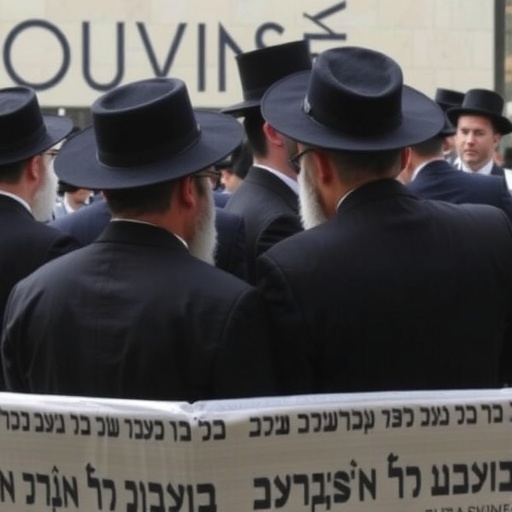
In a sociocultural landscape where individual rights and identity politics have become increasingly prominent, a recent study delves into the religious minority perspectives on sexual minorities, particularly focusing on contemporary Ultra-Orthodox Jewish perceptions of homosexuality in Israel. Conducted by researchers S. Zalcberg and S. Zalcberg-Block, the research unearths complex attitudes that contribute to the ongoing debate surrounding sexual orientation and religious identity within this unique demographic. The findings provide a critical insight into how deeply held beliefs can shape the understanding of sexual diversity, affecting both personal relationships and broader societal interactions.
The Ultra-Orthodox community, characterized by its adherence to traditional Jewish laws and practices, often exhibits rigid views towards modernity, particularly in the context of sexual orientation. The study reveals that these definitive stances are deeply entrenched, influenced not only by religious texts but also by communal norms and the socio-political landscape in which the community operates. By exploring the nuances of these views, researchers aim to illuminate the prevailing attitudes towards homosexuality and the implications of these perceptions on the lives of sexual minorities within Ultra-Orthodox circles.
One of the compelling aspects of this research is the multifaceted approach taken by Zalcberg and Zalcberg-Block. They utilized qualitative methods, including interviews and focus groups, to gather authentic narratives that reflect the lived experiences of Ultra-Orthodox Jews. Participants shared insights into their personal conflicts, generational differences, and the emotional turmoil that can arise when navigating their faith in relation to sexual orientation. This qualitative data paints a vivid picture of the internal and external struggles faced by individuals grappling with their identity in a community that may not readily accept it.
The study indicates that many Ultra-Orthodox individuals hold a rigid interpretation of religious texts that denigrate homosexuality, often associating non-heteronormative identities with sin and moral failure. These perceptions are not merely personal beliefs but are instilled and reinforced through communal teachings and educational institutions. The pressure to conform to these societal expectations can lead to ostracization for those who openly identify as LGBTQ+, highlighting the profound implications for mental health and personal well-being within this group.
Interestingly, Zalcberg and Zalcberg-Block also discovered that there are pockets of progressive thought emerging within the Ultra-Orthodox community. While still a minority, voices advocating for acceptance and understanding of sexual minorities are beginning to emerge. These individuals emphasize the importance of compassion and community, arguing that traditional interpretations of Jewish law should evolve to reflect more inclusive values. This shift signifies a potential disruption in the monolithic view that has historically characterized Ultra-Orthodox attitudes toward homosexuality.
The findings draw attention to the complex interplay between religious identity, cultural norms, and sexual orientation. It becomes evident that the perception of homosexuality is not solely dictated by religious ideology but is influenced by social dynamics, personal relationships, and historical context. Participants in the study articulated how familial bonds often clash with communal expectations, leading to a painful but necessary reconciliation process where some choose to remain closeted while others seek to foster dialogues about acceptance.
Moreover, the research underscores the role of external factors such as Israeli legislation and societal attitudes towards LGBTQ+ rights. As the broader Israeli society increasingly embraces LGBTQ+ rights, the Ultra-Orthodox community finds itself at a crossroads. The researchers argue that this societal shift could influence future perceptions and interactions between the two groups. While resistance to change is strong, the potential for dialogue and understanding presents an opportunity for growth and transformation.
However, it is essential to recognize the barriers that still exist. The study reveals that within the Ultra-Orthodox framework, discussions about sexuality often remain taboo. This lack of open discourse contributes to misinformation and reinforces stigma, making it challenging for individuals to live authentically without the fear of retribution or isolation. The interplay between fear and faith creates a paradox for many seeking acceptance amidst prevailing conservative attitudes.
As religious minority views on sexual minorities continue to evolve, the necessity for inclusive dialogue becomes increasingly apparent. Zalcberg and Zalcberg-Block’s research serves as a crucial stepping stone for further exploration of this topic. By shedding light on the intricacies of Ultra-Orthodox perceptions toward homosexuality, the study endeavors to pave the way for more inclusive spaces where open dialogue can thrive, allowing for a deeper understanding of identity, faith, and acceptance.
In conclusion, the research by Zalcberg and Zalcberg-Block highlights the challenging dynamics at play within the Ultra-Orthodox community regarding homosexuality. It demonstrates the need for a nuanced approach when discussing religious beliefs and sexual orientation. The findings call for deeper engagement and understanding within religious contexts, recognizing the complexities of human experiences that defy simplistic categorizations. As society continues to grapple with these issues, it becomes crucial to foster environments where acceptance can flourish, ultimately enriching the fabric of community life.
The implications of this study resonate far beyond academia, calling for advocacy and action to support LGBTQ+ individuals within traditional religious environments. As more people within the religious minority communities begin to question long-held paradigms, the possibility for transformative change emerges, highlighting the power of compassion and understanding in bridging divides.
Subject of Research: Ultra-Orthodox Jewish perspectives on homosexuality in Israel.
Article Title: Religious Minority Views on Sexual Minorities: Contemporary Ultra-Orthodox Perceptions Toward Homosexuality in Israel.
Article References:
Zalcberg, S., Zalcberg-Block, S. Religious Minority Views on Sexual Minorities: Contemporary Ultra-Orthodox Perceptions Toward Homosexuality in Israel.
Arch Sex Behav (2025). https://doi.org/10.1007/s10508-025-03316-x
Image Credits: AI Generated
DOI:
Keywords: Ultra-Orthodox, homosexuality, Israel, religious beliefs, sexual minorities, LGBTQ+ acceptance, societal attitudes, qualitative research.


