

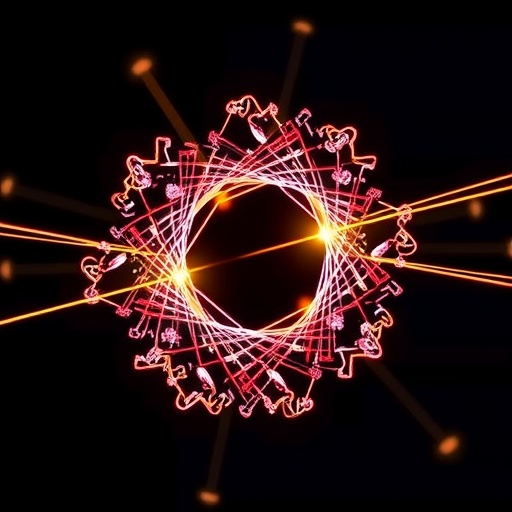
Quantum computing holds the promise to revolutionize technology and society by performing calculations exponentially faster than classical computers. This transformative potential arises from the use of qubits, the quantum analogs of classical bits, which leverage the principles of superposition and entanglement to process vast amounts of information simultaneously. Unlike classical bits restricted to states of either 0 or 1, qubits can exist in a continuum of states, fundamentally altering the landscape of computation for problems once deemed intractable, such as complex optimization and cryptography.
A striking illustration of quantum computing’s advantages can be imagined in the logistics domain. Consider the scenario where 1,000 trucks must reach 10,000 distinct destinations across a country. Traditional computing would require evaluating each of the 10 million potential routes sequentially, a process that is computationally prohibitive. Quantum computers, exploiting quantum parallelism, have the theoretical capability to analyze all these routes simultaneously, yielding solutions in a fraction of the time. This paradigm shift extends far beyond transportation, encompassing fields from drug discovery to sustainable materials design and fortified cybersecurity infrastructures.
Parallel to quantum computing, quantum sensing technologies are rapidly advancing, enabling measurements of unprecedented precision. Utilizing finely tuned quantum states of light, these sensors can detect minuscule variations in environmental parameters such as gravity and magnetic fields. Such capabilities are opening new avenues in medical imaging, where ultra-sensitive detection could lead to earlier and more accurate diagnoses, and navigation systems that operate independently of satellite GPS, thus enhancing robustness and security in transportation and defense applications.
Research conducted by the Quantum Silicon Photonics (QSP) group at the University of Central Florida’s College of Optics and Photonics (CREOL) is uncovering crucial insights into the fundamental behaviors of light that are essential for scaling up practical quantum technologies. Under the leadership of Professor Andrea Blanco-Redondo, the team’s work focuses on exploiting the robust and intricate properties of entangled light states formed within specially engineered photonic systems. Their recent breakthrough, published in the prestigious journal Science, reports on the generation of high-dimensional topological photonic entanglement, a discovery with significant implications for the durability and scalability of quantum information protocols.
Entanglement—a quantum phenomenon where particles become deeply linked such that the state of one instantly influences the state of another regardless of distance—is a cornerstone of quantum computation and sensing. However, generating and maintaining entangled states that are resilient to environmental noise and imperfections has been a formidable challenge. The approach taken by Blanco-Redondo and her collaborators involves harnessing topological modes in photonic superlattices, structures designed to host light waves with protections derived from global system properties rather than local details, making them inherently robust against defects.
Topological modes represent unique pathways for photons that remain stable even in the presence of manufacturing imperfections or environmental disturbances. The team’s achievement lies in demonstrating that these topologically protected modes can themselves be entangled in a scalable fashion. This entanglement spans multiple quantum states, enabling complex superpositions that expand the information encoding capacity while preserving resilience—a crucial advancement towards fault-tolerant quantum devices.
“Our method demonstrates a scalable route to generate increasingly complex entangled states,” explains Professor Blanco-Redondo. “By structuring silicon photonic waveguide arrays to support multiple co-localized protected modes, we effectively enlarge the quantum information bandwidth without escalating system complexity.” This elegant solution mitigates one of the core practical challenges of quantum photonics: increasing qubit numbers and circuit complexity often introduces additional noise and losses.
The technical ingenuity underpinning the team’s work lies in their strategic displacement of the photonic waveguides within the superlattice architecture. Rather than adding complexity by incorporating more components, they rearranged the existing elements to produce a configuration that naturally supports several topological modes in close proximity. This synergy enables the simultaneous creation and manipulation of multiple entangled photons, each occupying different but topologically protected pathways, boosting the system’s robustness and information capacity concurrently.
This breakthrough builds on prior research achievements by the QSP group, which recently elucidated how controlled dissipation—intentionally engineered to manage loss mechanisms—can paradoxically enhance the robustness of topological photonic states. Their published work in Nature Materials laid the groundwork for understanding how loss management intersects with topological properties, further solidifying UCF’s leading role in quantum photonics research.
The timing of this discovery is propitious as Florida’s burgeoning quantum technology ecosystem, supported by the Florida Alliance for Quantum Technology (FAQT), accelerates collaborations among academia, industry, and government entities. CREOL’s strategic involvement in initiatives like FAQT and the Quantum Leap Initiative amplifies its capacity to translate fundamental breakthroughs into scalable quantum devices, infrastructure, and commercial applications. These partnerships advance the state of quantum research and position Florida as a competitive hub in the rapidly evolving quantum economy.
Blanco-Redondo also co-leads UCF’s Quantum Initiative, fostering interdisciplinary collaboration and resource sharing to harness collective expertise in optics, photonics, and quantum information science. “Our strength lies in synergy,” she states. “By integrating diverse skillsets and building quantum infrastructure, we aim to propel quantum science from experimental labs to impactful technologies, leveraging photonics’ unmatched capabilities for quantum control.”
At its core, this research underscores the critical role of topology in quantum photonics. The concept of leveraging global system properties to protect quantum states against local perturbations represents a transformative approach to overcoming the fragility that has historically hindered practical quantum technologies. In deploying topological entanglement at scale, the UCF team has illuminated a path toward quantum devices that are not only powerful but also viable under realistic, imperfect conditions.
In a domain where complexity often breeds instability, achieving scalable topologically protected entanglement offers an elegant and promising route forward. It fortifies the foundation for next-generation quantum computers and sensors capable of tackling the most challenging problems in science, medicine, and industry. As researchers worldwide continue to push the boundaries of quantum mechanics applied to photonics, these advances from CREOL spotlight a new era where control over light’s quantum nature could unlock unprecedented technological horizons.
Subject of Research: Quantum photonics; topological photonic entanglement; scalable quantum information systems
Article Title: High-dimensional topological photonic entanglement
News Publication Date: 26-Mar-2026
Web References: DOI: 10.1126/science.aec1344
Image Credits: Antoine Hart, University of Central Florida
Keywords: Quantum information, Quantum computing, Topology, Photonics, Quantum entanglement, Quantum sensing, Silicon photonics, Quantum technologies


