

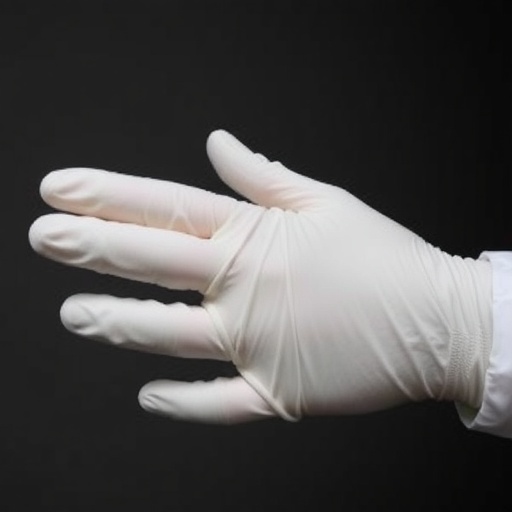
In recent years, microplastics have emerged as a pervasive environmental pollutant, attracting substantial scientific scrutiny due to their ubiquitous presence and potential impact on ecosystems and human health. However, a groundbreaking study led by researchers at the University of Michigan has uncovered a hidden source of contamination that could be skewing these measurements—residues from the very gloves scientists use to handle microplastic samples. This discovery challenges current methodologies and urges a critical reevaluation of standard laboratory practices.
Microplastics are typically detected by collecting environmental samples and analyzing particulate matter deposited onto substrates using spectroscopic techniques. The conventional wisdom has advocated for the use of disposable nitrile or latex gloves during sample preparation and analysis to prevent contamination. Nevertheless, the new study reveals that these gloves themselves can impart non-plastic particles known as stearates onto sampling equipment, masquerading as microplastics. Stearates are salts used in glove manufacturing as mold release agents, bearing a striking structural and visual resemblance to certain plastic polymers.
This inadvertent contamination by stearates can lead to significant overestimation of microplastic pollution levels. Researchers Madeline Clough and Anne McNeil describe this phenomenon as a “wild goose chase” in microplastics detection, wherein efforts to quantify plastic particulates are confounded by chemically similar but non-plastic residues. The implications of this finding are profound, as it questions the accuracy of many past microplastic datasets that relied on nitrile or latex gloves during sample handling.
The investigative process began when Clough observed unexpectedly high particle counts on air sampling substrates intended to capture atmospheric microplastics. Initial hypotheses considered various contamination sources, ranging from lab air to equipment materials. Eventually, meticulous experimentation pinpointed glove residues as the predominant source of false positives. To systematically assess this, the team tested seven types of gloves—nitrile, latex, and cleanroom variants—using conditions that simulated typical microplastic research scenarios.
On average, the gloves introduced roughly 2,000 false positive particles per square millimeter onto substrates, a staggering contamination level that could heavily skew microplastic quantifications. Notably, cleanroom gloves performed significantly better, releasing fewer particulates due to their manufacturing process that excludes stearate coatings. This insight suggests a straightforward mitigation strategy: transitioning to cleanroom-grade gloves to minimize contamination in microplastics research.
Further complicating matters, the researchers found that distinguishing between genuine microplastic particles and stearate residues by visual microscopy or spectroscopy alone is almost impossible. Both materials exhibit strikingly similar optical and chemical signatures, making skilled chemical analysis essential. To address this challenge, the team developed advanced methodologies using scanning electron microscopy combined with statistical techniques to accurately differentiate between true microplastics and glove-derived contaminants.
The significance of these findings extends beyond mere contamination control; they underscore the necessity for interdisciplinary approaches combining chemistry, materials science, and sophisticated analytical frameworks in environmental microplastic studies. Such rigor is essential to disentangle true pollution levels from laboratory artifacts, ensuring data integrity and guiding effective policy decisions.
Moreover, this study serves as a cautionary tale about the pervasiveness of plastic interference in environmental research. As McNeil emphasizes, the omnipresence of plastics in laboratory and environmental settings mandates vigilant contamination control and structural chemical understanding. Researchers must develop robust protocols that anticipate and mitigate such confounding factors, or risk systemic biases in pollution assessments.
Despite this setback, the research community is optimistic. Clough and McNeil demonstrated that datasets previously compromised by glove contamination can be salvaged through their refined analytical approaches. This not only preserves valuable environmental monitoring data but also offers a pathway to recalibrate global assessments of microplastic prevalence.
This investigation catalyzes a paradigm shift in microplastics research, urging the scientific community to critically reassess protocols and validate findings with a heightened awareness of potential contamination sources. As microplastic pollution remains an urgent environmental challenge, ensuring methodological precision is paramount to comprehending its true scale and impacts.
Ultimately, this advance highlights the crucial role of chemists and materials scientists in environmental research. Their expertise is vital to untangling the complex matrix of pollutants and laboratory artifacts, advancing the field toward more accurate and trustworthy insights into this pressing issue.
The University of Michigan team’s findings were published in the esteemed journal Analytical Methods, marking a pivotal contribution to the ongoing efforts to refine microplastic pollution analysis and interpretation.
Subject of Research: Microplastic detection contamination by glove-derived stearate residues
Article Title: Avoiding and Reducing Microplastic False Positives from Dry Glove Contact
News Publication Date: 26-Mar-2026
Web References:
Image Credits: Credit: Madeline Clough/University of Michigan
Keywords
Physical sciences, Chemistry, Chemical compounds, Chemical processes, Environmental chemistry, Microplastic contamination, Stearate interference, Analytical methods, Environmental pollution, Laboratory contamination, Spectroscopy, Cleanroom gloves


