

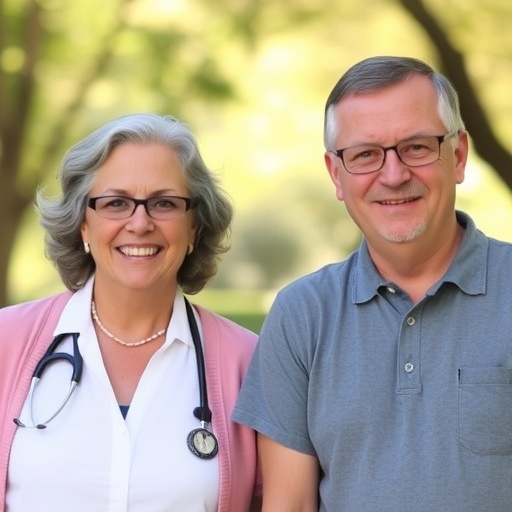
For over two decades, Robert Oman has lived free of cancer, a remarkable milestone credited to his participation in a clinical trial at the University of Rochester’s Wilmot Cancer Institute. This trial not only shaped Robert’s life but also marked a pivotal breakthrough in the treatment landscape for advanced-stage follicular lymphoma—a cancer historically viewed as incurable. The study underpinning this advancement reveals a paradigm shift, demonstrating durable remission and potential cure in a subset of patients treated with innovative chemoimmunotherapy regimens.
Follicular lymphoma, a subtype of non-Hodgkin lymphoma arising from B cells, has long challenged oncologists due to its indolent yet persistent nature. Traditionally, while initial treatments could induce remission, the disease’s tendency to relapse—even many years post-therapy—rendered it incurable. However, the new long-term analysis published in JAMA Oncology paints a vastly different picture. The study indicates that 42 percent of patients treated with CHOP-based chemoimmunotherapy had no risk of recurrence throughout their remaining lifespan, effectively achieving a functional cure.
This clinical trial, conducted over 25 years ago, imbued hope where none existed before. It randomized 531 untreated patients with advanced-stage follicular lymphoma to receive either rituximab combined with CHOP chemotherapy (R-CHOP) or CHOP followed by radioimmunotherapy (CHOP-RIT). These regimens leverage the synergistic cytotoxic effects of chemotherapy alongside targeted immunotherapy aimed at the CD20 antigen present on B cells. This approach aims to eradicate malignant lymphocytes more effectively and prevent disease resurgence.
Longitudinal data from the trial underscores a dramatic decline in relapse rates over time. Initial post-treatment years saw nearly 7 percent of patients relapsing within the first five years; however, those rates dwindled sharply, with only 0.6 percent experiencing relapse between 15 and 20 years after therapy. This temporal reduction in recurrence challenges previous assumptions about follicular lymphoma’s inevitability of relapse and establishes durable remission as a realistic clinical objective.
Robert Oman’s personal journey exemplifies the profound impact of these advances. Diagnosed at the age of 40, a notably young age for this disease, he faced a hereditary predisposition and familial history marked by repeated relapses despite multiple rounds of chemotherapy. Unlike his father, who endured recurrent disease and repeated chemotherapy, Robert’s enrollment in the SWOG S0016 phase 3 trial altered his trajectory. Receiving CHOP-RIT, he resumed normal life rapidly, maintaining his work and personal activities with minimal disruption.
The therapeutic backbone of CHOP involves cyclophosphamide, hydroxydaunorubicin (doxorubicin), vincristine, and prednisone—agents that target rapidly dividing cells through multiple mechanisms including DNA cross-linking, inhibition of microtubule formation, and immunosuppression. When combined with anti-CD20 monoclonal antibodies like rituximab or radioimmunotherapy, which deliver targeted radiation to lymphomatous tissue, this regimen intensifies cytotoxicity specifically towards malignant B cells.
Functionally curing follicular lymphoma reframes the therapeutic goal from merely prolonging survival to eliminating the risk of relapse entirely. This shift has profound implications for patient quality of life, healthcare resource allocation, and future research directions. The study’s findings encourage oncologists to pursue aggressive chemoimmunotherapy regimens early in the disease course to maximize the likelihood of durable remission.
At a molecular level, follicular lymphoma arises from genetic alterations that drive follicular center B cells into uncontrolled proliferation. Mutations in genes such as BCL2, which inhibits apoptotic pathways, enable malignant cells to survive indefinitely, resisting traditional chemotherapeutic agents. Incorporating immunotherapy disrupts this protective advantage by invoking immune-mediated cytotoxicity alongside chemotherapy-induced cell death.
The success of this clinical trial also underscores the importance of collaborative, long-term, and carefully designed randomized controlled trials in uncovering new standards of care. Supported by the National Cancer Institute and conducted by the SWOG Cancer Research Network, this landmark study exemplifies how rigorous clinical research can redefine previously bleak prognoses into stories of hope and cure.
Beyond the immediate therapeutic impact, the outcomes reported in the study challenge clinicians and researchers to further unravel the biological underpinnings of sustained remission. Understanding why a subset of patients achieves cure whereas others relapse could illuminate new biomarkers for treatment stratification and novel therapeutic targets.
Robert Oman’s story also highlights the psychological and social dimensions of cancer survivorship. Having witnessed his father’s prolonged battle with lymphoma, accompanied by recurrent treatment-related toxicity, Robert’s prognosis offered a newfound appreciation for life. Today, he enjoys normalcy, family milestones, and the simple joys of daily living, emphasizing the human impact of scientific progress.
Importantly, the study clarifies that the term “functional cure” acknowledges the probabilistic nature of cancer recurrence, recognizing that no therapy can guarantee absolute eradication but that some patients can live lymphoma-free for the remainder of their lives. This concept has redefined patient counseling and clinical decision-making, promoting hope balanced with realistic expectations.
The durable adhesion to remission also carries significant implications for follow-up protocols and healthcare costs. Reduced relapse rates over 15 to 20 years post-treatment may justify less intensive surveillance and tailor follow-up schedules, alleviating patient burden and optimizing resource utilization.
This groundbreaking research heralds a new era for follicular lymphoma management and exemplifies the transformative power of integrating chemotherapy with sophisticated immunotherapeutic modalities. As oncology embraces these approaches, patients like Robert Oman epitomize the transition from chronic disease management to potential cure, reshaping the narrative surrounding blood cancers.
In conclusion, the 15-year follow-up results from the SWOG S0016 trial provide compelling evidence that advanced-stage follicular lymphoma can be effectively managed, and even functionally cured, with CHOP-based chemoimmunotherapy regimens. These findings empower clinicians, inspire patients, and propel further innovations aimed at conquering a cancer once thought intractable.
Subject of Research: People
Article Title: Treatment of Follicular Lymphoma With CHOP and Anti-CD20 Therapy 15-Year Follow-Up of the SWOG S0016 Trial
News Publication Date: 26-Feb-2026
Web References:
10.1001/jamaoncol.2026.0042
Keywords:
Lymphoma, Blood cancer, Clinical trials, B cell lymphoma


