

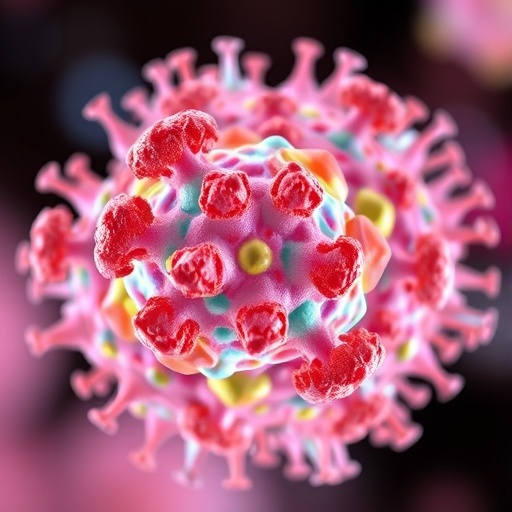
For over fifty years, SRC, a well-known enzyme intimately linked to cancer progression, was shrouded in mystery concerning its cellular localization. Traditionally, SRC was thought to reside solely within the intracellular environment, where it serves as a pivotal signaling molecule driving tumor growth. This internal presence deliberately obscured SRC from immune detection and therapeutic targeting. However, a groundbreaking revelation from researchers at the University of California, San Francisco (UCSF) has upended this long-held belief: SRC is not confined to the cell’s interior but also translocates to the exterior surface of various tumor cells, including those from bladder, colorectal, breast, and pancreatic cancers. This discovery opens an exciting frontier for targeted cancer therapies.
The biological process underpinning this phenomenon emerged from the tumor cells’ frantic metabolism and rapid proliferation, which generate abundant cellular waste. In normal healthy cells, this waste is efficiently processed and recycled, maintaining cellular homeostasis. Tumor cells, however, overwhelm their intracellular degradation systems due to the sheer volume of cellular debris. The excess waste, including certain proteins like SRC, is forcefully expelled to the cell’s outer membrane via vesicular extrusion mechanisms. This atypical presentation of SRC on the cell surface effectively serves as a molecular beacon, flagging these cancer cells for potential immune system recognition and antibody-mediated attack.
Scientists exploited this newfound vulnerability by engineering antibodies that specifically recognize SRC on the tumor cell surface. These antibodies were conjugated either to radioactive isotopes or designed to recruit immune effector cells, creating a two-pronged attack against cancer. In preclinical mouse models implanted with human tumor cells, these targeted therapies showed remarkable efficacy, leading to significant tumor shrinkage. Such results suggest that roughly half of all tumor types might be vulnerable to SRC-targeted immunotherapies, representing a transformative step in precision oncology.
The implications of this research are profound not only because SRC was the first oncogene ever identified—thanks to the Nobel laureates J. Michael Bishop and Harold Varmus in 1970s—but also because decades of SRC-focused drug development have faced formidable challenges. Efforts to inhibit SRC enzymatic activity intracellularly have been hampered by off-target effects, as SRC’s signaling role is essential both in normal and cancerous cells. The ability to direct therapeutic agents selectively to SRC on the tumor surface circumvents these issues, potentially improving safety profiles while enhancing antitumor efficacy.
Mechanistic investigations revealed that SRC reaches the cell surface through hijacking the cancer cell’s overburdened waste disposal pathway. Typically, cells encapsulate waste in vesicles known as lysosomes and autophagosomes, which digest and recycle their contents internally. However, in tumors, these vesicles, unable to process all the cellular detritus, merge with the plasma membrane, extruding their contents extracellularly. SRC, entrapped within these vesicles, is swept to the extracellular membrane where it becomes an accessible antigen. This mislocalization transforms SRC into an unanticipated “red flag” for immune detection.
Corleone Delaveris, PhD, a pivotal member of the research team and first author of the study, described SRC’s cell surface localization as akin to a warning banner visibly displayed on malignant cells, markedly absent on healthy tissues or immune cells. This specificity underscores the therapeutic promise of targeting SRC without collateral damage to normal tissues, a perennial challenge in cancer treatment.
Further experimental validation involved collaboration with radiology experts at UCSF, notably Michael Evans, PhD, who aided in the development of radioactive antibody tracers. Administered into mouse models bearing human xenografts, these radiolabeled antibodies exhibited preferential accumulation within SRC-expressing tumors, affirming the precision and potential of SRC as an imaging and therapeutic target.
Complementarily, the team engineered immune-engaging antibodies designed to galvanize the host’s immune system into recognizing and directly destroying cancer cells expressing surface SRC. These dual approaches—radioimmune targeting and immune cell recruitment—demonstrated efficacy and set the stage for translation into human therapeutics. Recognizing this potential, UCSF has licensed these antibodies and related biomolecules to Inversion Therapeutics, a biotechnology startup co-founded by key researchers including Delaveris, Wells, and Evans, who aim to advance these modalities through clinical development pipelines.
This research journey from fundamental discovery to promising preclinical interventions exemplifies the power of integrated biomedical research at UCSF. As Jim Wells, PhD, senior author and pharmaceutical chemistry professor, emphasized, uncovering the extracellular presence of SRC enables the repurposing of well-validated immunotherapies against this novel cancer target. This paradigm shift portends significant advances in the treatment of multiple malignancies, underscoring the importance of revisiting established cancer biology dogma through innovative perspectives.
The collective efforts of a multidisciplinary team of researchers, ranging from molecular biology and chemistry to radiology and immunology, underpin the robustness of this work. The authors include scientists with expertise in protein biochemistry, tumor biology, imaging, and clinical oncology. Moreover, this research benefitted substantially from diverse funding sources, notably multiple grants from the National Institutes of Health (NIH), philanthropic endowments, and dedicated cancer advocacy organizations, illustrating the collaborative ecosystem essential for high-impact biomedical advances.
While the translational journey to human clinical trials still lies ahead, the strategic licensing agreement with Inversion Therapeutics accelerates the trajectory toward developing these innovative SRC-targeting therapies into tangible clinical options. The dual modality approach—leveraging both the direct cytotoxic effects of radiolabeled antibodies and the specificity of immune cell recruitment—enhances therapeutic versatility and could address tumor heterogeneity, a known cause of treatment resistance.
In conclusion, the unexpected exodus of SRC from the intracellular milieu to the cell surface represents a seminal shift in cancer biology and therapy development. This discovery not only revives enthusiasm in the century-old oncogene but also charts a novel path toward precise, effective, and less toxic immunotherapies. As ongoing studies continue to elucidate the breadth of tumors expressing surface SRC and optimize antibody constructs, this approach has profound potential to transform oncologic outcomes worldwide.
Subject of Research: SRC enzyme localization on tumor cell surfaces enabling targeted immunotherapy against various cancers.
Article Title: Not provided in source text.
News Publication Date: March 12 (year not specified).
Web References: Not provided in source text.
References: Published in Science journal (specific article details not provided).
Image Credits: Not provided in source text.
Keywords: SRC enzyme, cancer, immunotherapy, antibodies, cell surface proteins, tumor biology, cancer genetics, radiolabeled antibodies, immune cell recruitment, UCSF, oncology, protein mislocalization


