

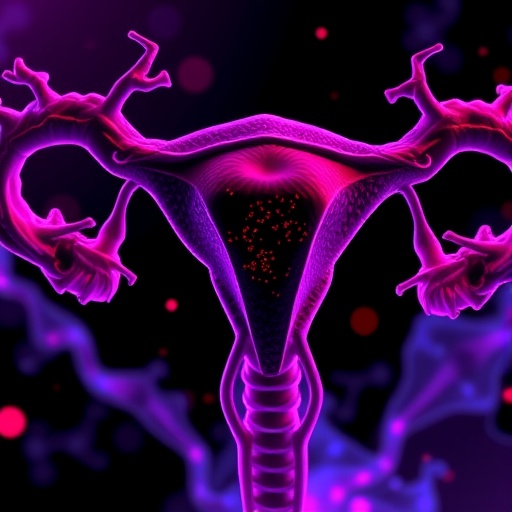
Recent advances in the understanding of ovarian cancer have shed light on the complex interplay between the tumor microenvironment and chemotherapy resistance, highlighting critical implications for targeted therapies. The study by Qi et al. in the Journal of Ovarian Research presents an in-depth analysis of how the microenvironment surrounding ovarian tumors can influence the effectiveness of chemotherapy treatments. This research has gained significant attention due to its novel findings that may change clinical approaches to treating ovarian cancer, a malignancy notorious for its poor prognosis and resistance to conventional therapies.
The tumor microenvironment, comprising various cell types, extracellular matrix components, and signaling molecules, plays a pivotal role in the progression and therapeutic resistance of ovarian cancer. Understanding this dynamic system has become increasingly crucial, as it may unveil new strategies to enhance treatment efficacy. The latest research indicates that cellular interactions within this environment can significantly affect tumor behavior, often leading to a decreased response to chemotherapy. The insight brought forth by Qi et al. emphasizes that ovarian cancer cells do not exist in isolation; rather, they are part of a complex ecosystem that influences their growth and survival.
One of the key findings highlighted in the study is the role of fibroblasts and immune cells within the tumor microenvironment. These cellular components can secrete various cytokines and growth factors that not only promote tumor growth but also confer resistance to chemotherapy. For instance, cancer-associated fibroblasts (CAFs) have been identified as critical players in promoting a protective niche around tumor cells, enhancing their survival even in the presence of chemotherapeutic agents. This interaction complicates the landscape of treatment, necessitating a deeper understanding of how these cells can be targeted alongside tumor cells for more effective therapy.
Moreover, the study discusses the impact of hypoxia within the tumor microenvironment on chemotherapy resistance. Hypoxic conditions, which are prevalent in many solid tumors, can lead to the expression of specific genes that confer survival advantages to cancer cells. Under hypoxic stress, ovarian cancer cells are known to adopt various survival strategies, such as upregulating anti-apoptotic pathways and downregulating drug uptake mechanisms. Therefore, addressing hypoxia in treatment plans could be crucial in overcoming resistance and improving patient outcomes.
Importantly, Qi et al. suggest that targeting the tumor microenvironment can provide a dual benefit—disrupting the protective niches that shield tumor cells while simultaneously enhancing the efficacy of existing chemotherapies. This two-pronged approach aligns with the growing trend in oncological research that emphasizes the need to treat tumors not just as standalone entities but as dynamic systems influenced by their surroundings. By integrating microenvironment-targeting strategies with conventional therapies, clinicians may be able to break through the barriers of resistance that have long plagued ovarian cancer treatment.
The implications of this research extend beyond mere survival rates, delving into the quality of life for patients undergoing treatment. As chemotherapy often comes with a host of side effects, researchers are keen to investigate how improving therapeutic responses through microenvironment interventions may lessen the severity and duration of these adverse effects. The potential to tailor treatments based on the unique composition of an individual’s tumor microenvironment could lead to more personalized and humane cancer care.
As we delve deeper into the molecules involved in the tumor microenvironment, there’s a growing recognition of the potential for novel therapeutic agents that specifically target these molecules. For instance, blocking certain growth factors or cytokines could disrupt the communication pathways that allow tumors to thrive in hostile conditions. The findings from Qi et al. provide a compelling case for continued investment in research that explores these avenues, paving the way for innovative therapies that could transform standard treatment protocols for ovarian cancer.
Furthermore, the emergence of immunotherapy offers another layer of complexity and promise in treating ovarian cancer. The interplay between immune cells in the tumor microenvironment and cancer cells is a topic of significant interest, with the capacity of certain immune populations to either hinder or help tumor progression being an essential focal point in ongoing research. Understanding how these dynamics influence treatment outcomes could lead to the development of synergistic therapies that leverage the body’s immune system to overcome resistance.
In summary, the research by Qi et al. underscores a paradigm shift in the understanding of chemotherapy resistance in ovarian cancer. By highlighting the influential role of the tumor microenvironment, the study compels both researchers and clinicians to rethink traditional approaches to treatment. As more data emerges, the hope is to see the clinical implications of these findings translated into real-world solutions that can improve survival and quality of life for patients battling this devastating disease.
In conclusion, the integration of microenvironment-targeting strategies with established chemotherapy regimens represents a promising frontier in the fight against ovarian cancer. The findings from this study not only enrich the scientific community’s knowledge base but also inspire a renewed sense of urgency in the quest for more effective cancer treatment options. As research progresses, the ultimate goal remains clear: to develop therapies that not only extend life but also enhance the quality of life for those affected by ovarian cancer, thus bringing us closer to a world where victorious outcomes are the norm rather than the exception.
By advancing our understanding of the tumor microenvironment and its critical role in chemotherapy response, we set the stage for a new wave of targeted therapies—one that considers the intricate web of interactions that define tumor biology. This holistic perspective promises to unlock new avenues for treatment and ultimately, to improve the prognosis for women diagnosed with this challenging cancer.
Subject of Research: The Role of the Tumor Microenvironment in Chemotherapy Resistance in Ovarian Cancer
Article Title: Role of the tumor microenvironment in chemotherapy resistance in ovarian cancer and targeted therapy
Article References:
Qi, R., Yang, J., Shen, S. et al. Role of the tumor microenvironment in chemotherapy resistance in ovarian cancer and targeted therapy.
J Ovarian Res (2025). https://doi.org/10.1186/s13048-025-01927-5
Image Credits: AI Generated
DOI: 10.1186/s13048-025-01927-5
Keywords: Tumor microenvironment, chemotherapy resistance, ovarian cancer, targeted therapy, cancer-associated fibroblasts, hypoxia, immunotherapy.


