

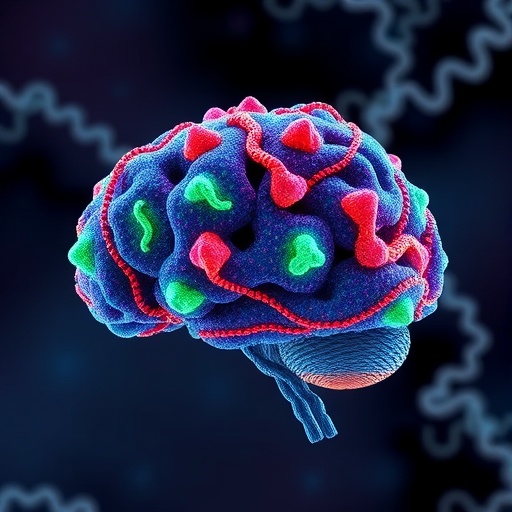
In a groundbreaking advancement in neurodegenerative disease research, scientists at Baylor College of Medicine have uncovered a promising new mechanism for combatting conditions such as Alzheimer’s and Parkinson’s diseases — ailments that afflict millions worldwide and remain largely incurable. These disorders are characterized by the pathological accumulation of misfolded proteins, namely Tau and alpha synuclein, which aggregate into toxic clumps within neurons, leading to cellular damage and progressive cognitive and motor decline. The Baylor team’s findings, published in the prestigious journal Nature Communications, pivot attention to tubulin, the fundamental structural protein that constitutes microtubules, and its critical role in redirecting these problematic proteins away from harmful aggregation toward their physiological functions.
The hallmark of diseases like Alzheimer’s and Parkinson’s involves the aberrant folding and aggregation of Tau and alpha synuclein proteins. Under normal conditions, these proteins fulfill essential roles in sustaining neuronal integrity and facilitating intracellular transport via interaction with the cytoskeleton. However, when these proteins misfold, they lose functionality and begin to form neurotoxic condensates—dense droplets that interfere with neuronal health, contributing to hallmark symptoms including memory loss, impaired movement, and eventual neuronal death.
Exploring deeper into the biophysical nature of these proteins, the researchers highlight that both Tau and alpha synuclein naturally undergo phase separation into tiny intracellular droplets, termed condensates. This phenomenon is a double-edged sword; while these condensates enable vital biological processes, their pathological forms serve as nucleation points for toxic aggregates. Previous therapeutic strategies predominantly sought to inhibit condensate formation altogether, but this indiscriminately risks disrupting the proteins’ beneficial roles—a dilemma long hindering drug development.
To circumvent this issue, the Baylor group hypothesized an alternative strategy: instead of preventing condensate formation, they proposed manipulating these droplets’ environment to steer Tau and alpha synuclein toward their non-pathological, healthy roles. Central to this pivot is tubulin, whose presence within neuronal cells forms the dynamic microtubule network. This network provides crucial intracellular transport routes and maintains the structural framework necessary for neuron function. The study’s findings revealed that tubulin can effectively “coax” Tau and alpha synuclein condensates away from forming toxic assemblies and promote their beneficial interaction with microtubules.
“In a way, Tau and alpha synuclein are like mischievous children in a classroom,” explains Dr. Lathan Lucas, lead author of the study. “You can either leave them idle, where they act out and create problems, or engage them in constructive activities. Tubulin serves as that constructive influence, guiding these proteins to support cellular architecture rather than disrupt it.” This metaphor encapsulates the study’s core insight—that by enhancing tubulin’s interaction with Tau and alpha synuclein, neurons can maintain protein homeostasis and prevent toxic misfolding.
This transformative finding emerged from meticulous experimentation involving a blend of biochemical assays, advanced biophysical characterization, high-resolution microscopy, and live neuronal analyses. These methods collectively illuminated how altering tubulin availability shifts the delicate balance within condensates, suppressing the formation of neurotoxic aggregates and advancing microtubule assembly. The implications are profound: they reshape tubulin’s role from being a passive casualty in neurodegenerative pathology to an active participant in neuroprotection.
Importantly, the study corroborates clinical observations which report depleted tubulin levels in Alzheimer’s patients associated with diminished microtubule networks. The depletion facilitates an environment where Tau and alpha synuclein are more prone to pathological aggregation. Conversely, maintaining or boosting tubulin concentrations can rescue this imbalance by fostering proper folding and stabilizing microtubules, thus preserving neuronal function. This insight opens a promising avenue for therapeutic intervention by targeting tubulin synthesis or stability as opposed to directly interfering with protein condensates.
Intriguingly, this strategy preserves the physiological roles of Tau and alpha synuclein, a critical advantage over current approaches aiming to eliminate condensate formation altogether—an approach fraught with the risk of disrupting essential cellular functions. By contrast, tubulin acts as a molecular chaperone that not only prevents the pathological cascade but simultaneously encourages proteins to perform their normal duties, bridging the gap between disease prevention and cellular health maintenance.
The study also underscores the broader concept of protein phase separation in neurobiology, emphasizing that not all condensates are deleterious but instead serve a spectrum of functions depending on their compositional context and interacting partners. Tubulin’s modulatory capacity demonstrates how nuanced regulation of biomolecular condensates could lead to breakthroughs in managing protein aggregation diseases beyond Alzheimer’s and Parkinson’s, potentially informing strategies for a range of synucleinopathies and tauopathies.
Co-corresponding authors Dr. Allan Ferreon and Dr. Josephine C. Ferreon emphasize that these findings warrant further exploration into pharmacological agents that enhance tubulin pools or mimic its modulatory effects. Such therapeutics could revolutionize treatment paradigms by enabling selective inhibition of toxic aggregation while conserving the structural and signaling integrity of neurons. As neurodegenerative diseases continue to escalate in prevalence with aging populations globally, this work offers a timely beacon of hope for developing effective, targeted interventions.
Collaborators Phoebe S. Tsoi, My Diem Quan, and Kyoung-Jae Choi contributed to this multifaceted study, which was made possible through generous funding from the NIH’s National Institute of Neurological Disorders and Stroke (NINDS), the National Institute of General Medical Sciences (NIGMS), and the Welch Foundation. These findings represent a significant leap forward in understanding the mechanistic interface between cytoskeletal dynamics and pathological protein phase transitions, illuminating a critical frontier in neurodegenerative disease research.
This pioneering work invites wider scientific and pharmaceutical communities to reevaluate traditional views on cellular scaffolding proteins, advocating a paradigm where tubulin is no longer seen just as a structural entity but recognized as an active guardian maintaining neuronal health. As research progresses, translating these molecular insights into clinical applications could transform the outlook for patients suffering from devastating neurodegenerative disorders, ushering in a new era of precision neuromedicine.
Subject of Research: Cells
Article Title: Tubulin transforms Tau and α-synuclein condensates from pathological to physiological.
News Publication Date: 3-Mar-2026
Web References: https://www.nature.com/articles/s41467-026-69618-3
References: NINDS-NIH grant R01 NS105874, Welch Foundation grant Q-2097-20220331, NIGMS-NIH grant R01 GM122763
Keywords: Neurodegenerative diseases, Alzheimer’s disease, Parkinson’s disease, Tau protein, alpha synuclein, tubulin, microtubules, protein aggregation, biomolecular condensates, neuronal health, protein phase separation


