

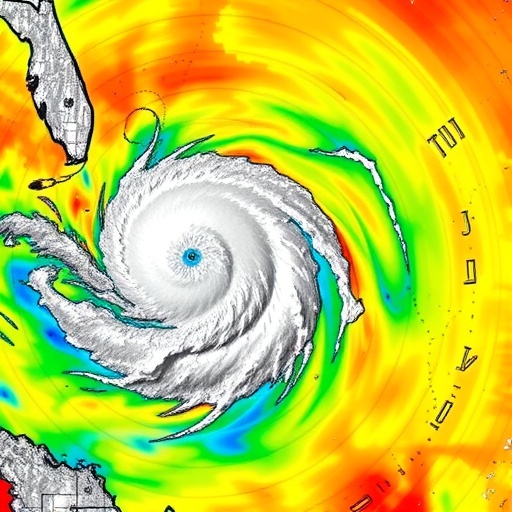
Recent research has presented a striking revelation about the influence of tropical cyclones on the formation of subsurface marine heatwaves. The study, conducted by a team of experts including Wang, Lian, and Zhang, sheds light on the intricate interplay between atmospheric disturbances caused by cyclones and the subsequent heat accumulation in ocean layers beneath the surface. This profound understanding is crucial, especially in an era where climate change is exacerbating the frequency and intensity of such weather phenomena.
The study posits that tropical cyclones, traditionally viewed as merely destructive forces of nature, have a much more complex role when it comes to marine ecosystems. Their findings suggest that these cyclones instigate significant increases in subsurface ocean temperatures, leading to the emergence of marine heatwaves—prolonged periods during which ocean temperatures soar above normal levels. This new perspective urges us to reconsider our approach to studying cyclones and their cascading effects on marine environments.
A particularly interesting aspect of the team’s research is the focus on the mechanisms by which cyclones facilitate the formation of these heatwaves. During their lifespan, cyclones generate intense winds and turbulence, effectively mixing surface waters and allowing warmer water from the upper layers to penetrate deeper. This mixing alters thermal profiles in the ocean, causing anomalies that result in the warming of subsurface layers. Consequently, marine organisms, especially those residing in deeper waters, face unprecedented challenges as their habitats change rapidly.
Moreover, the implications of these heatwaves extend beyond immediate ecological effects. The study underscores the potential for widespread disruptions to marine food webs. Many commercially important fish species rely on stable temperature ranges for breeding and feeding. As these subsurface heatwaves unsettle these patterns, fisheries may experience declines, impacting livelihoods and global food security. The ramifications of such changes highlight the urgent need for adaptive management strategies within marine resource sectors.
Furthermore, the researchers utilized advanced climate models to simulate various scenarios, emphasizing the striking correlation between cyclone activity and subsurface temperature anomalies. By analyzing historical cyclone data and comparing it with current marine temperature records, insights into future trends have emerged. The predictive nature of this research is vital as it can aid policymakers and conservationists in preparing for the shifts in ecosystem dynamics.
A crucial takeaway from the findings is the need for increased attention to the subtropical and temperate regions of the world’s oceans, particularly those that may not traditionally be associated with tropical cyclone activity. As climate patterns shift, new regions may become susceptible to cyclonic activity or, conversely, experience unexpected calmness, both of which will significantly affect marine heatwave occurrences.
Continuing this line of investigation, the research team plans to explore the long-term impacts of repeated cyclonic activity on ocean health. This includes assessing how chronic exposure to elevated temperatures changes the physiological capacities of marine species and their ability to adapt or migrate. Such studies will be essential in developing a comprehensive understanding of biodiversity responses to climate extremes.
The researchers also noted how subsurface marine heatwaves have implications for oceanic carbon cycles. Warmer waters have a reduced capacity for absorbing atmospheric carbon dioxide, potentially exacerbating global warming. As these heatwaves persist, they may lead to higher levels of CO2 in the atmosphere, creating a feedback loop that further accelerates climate change. Understanding these interactions is paramount for climate scientists focused on mitigating greenhouse gas emissions.
Moreover, the integration of social science perspectives could augment understanding of human interactions with marine ecosystems impacted by cyclones and heatwaves. Regions vulnerable to cyclonic threats often rely heavily on marine resources for economic stability. The interplay of natural disasters, resource management, and community resilience is an area ripe for research, further blending ecological knowledge with sociocultural considerations.
As we grapple with the realities of climate change, the insights derived from Wang and colleagues’ research hold profound significance. They contribute to a growing body of evidence underscoring the interconnectedness of atmospheric phenomena and ocean health. The increasing occurrence of marine heatwaves, driven partially by cyclone activity, presents a stark warning of the potential future we face if significant action is not taken to mitigate climate disturbances.
In conclusion, the study lays down a critical marker for future research and conservation efforts. By understanding the dynamics of tropical cyclones and their role in catalyzing marine heatwaves, we can better equip ourselves to anticipate ecological shifts. Awareness of these processes can guide informed decision-making in both policy and practice, ultimately contributing to safeguarding marine biodiversity.
Understanding the robust link between cyclones and marine heatwaves not only reshapes our knowledge of ocean dynamics but also emphasizes the role of natural events in the broader context of global climate change. As this field of study evolves, the findings will play an essential role in preparing for the environmental shifts that lie ahead.
Subject of Research: The impact of tropical cyclones on the genesis of subsurface marine heatwaves.
Article Title: Strong impact of tropical cyclones on the genesis of subsurface marine heatwaves.
Article References:
Wang, X., Lian, T., Zhang, H. et al. Strong impact of tropical cyclones on the genesis of subsurface marine heatwaves.
Commun Earth Environ (2025). https://doi.org/10.1038/s43247-025-02992-w
Image Credits: AI Generated
DOI:
Keywords: Tropical cyclones, marine heatwaves, subsurface temperatures, climate change, ecological impacts, ocean dynamics, fisheries, carbon cycles, biodiversity.


