

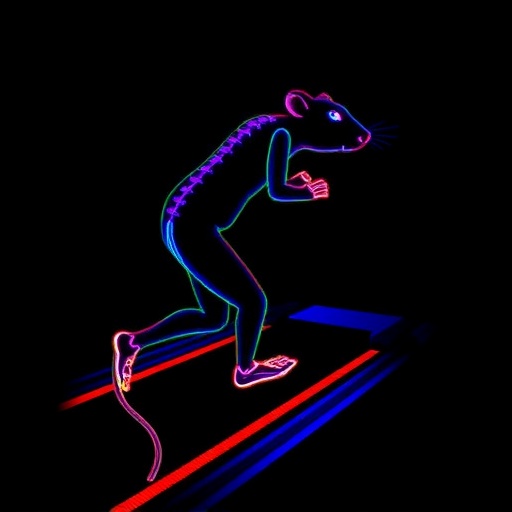
Recent research has shed light on the significance of body weight-supported treadmill training in the rehabilitation of spinal cord injuries (SCI). Conducted by a team led by researchers Cai, Wang, and Zhai, the study underscores the potential of this novel training approach to mitigate the negative consequences of SCI by specifically targeting glial scar formation, a key barrier to recovery following injury. This pioneering work could pave the way for innovative therapies aimed at restoring function in patients who have suffered from severe spinal cord injuries.
In the aftermath of an SCI, the body’s natural response includes the formation of a glial scar, which can impede regeneration and lead to further neurological deficits. This scar is primarily composed of reactive astrocytes, which proliferate and create a dense barrier that hinders axonal regrowth. The persistence of this glial scar is a significant obstacle in regenerative medicine, and understanding how to modulate its effects is crucial for developing effective rehabilitation strategies.
Researchers employed a methodical approach, utilizing a rat model of subacute spinal cord injury to evaluate the efficacy of body weight-supported treadmill training. The advantage of this training modality lies in its ability to engage the neuromuscular system while minimizing the risk of additional injury, allowing for a focused approach to rehabilitation. The study strategically assessed both the physiological and molecular responses elicited by this form of training, thereby providing a comprehensive overview of its potential benefits.
The results presented in this study are compelling. Body weight-supported treadmill training was found to significantly reduce glial scar overgrowth in SCI-affected rats. This reduction is correlated with a marked decrease in the reactivity of astrocytes, suggesting that the training regimen may play a critical role in recalibrating the neuroinflammatory response following spinal cord injury. This lowers the potential for adverse scar formation, offering a valuable insight into the plasticity of the central nervous system during critical recovery phases.
An additional layer of analysis involved examining the mechanistic underpinnings of the observed outcomes. Researchers highlighted the role of growth factors and cytokines in mediating the responses of astrocytes during the rehabilitation process. By modulating the environment surrounding the lesion site, body weight-supported treadmill training may foster an environment conducive to recovery by promoting the release of beneficial neurotrophic factors while simultaneously curbing inflammatory responses.
Notably, the study also emphasized the timing of interventions as a fundamental aspect of rehabilitation. Conducting the training during the subacute phase post-injury proved crucial in maximizing its therapeutic effects. This finding emphasizes the importance of early intervention and supports the notion that timely rehabilitation could significantly influence recovery trajectories following spinal cord injuries.
In terms of clinical implications, these findings could guide the development of rehabilitation protocols that are tailored to individual patient needs. The potential application of body weight-supported treadmill training in conjunction with other therapeutic strategies may enhance patient outcomes and promote greater independence in daily activities. This underscores the need for further studies to validate these findings in human clinical trials, ultimately seeking to transition these insights from animal models to effective human therapies.
As the field of neurorehabilitation continues to advance, the integration of innovative training methodologies such as body weight-supported treadmill training represents a significant step forward. This research not only sheds light on the biological mechanisms at play but also reinforces the importance of multidisciplinary approaches in addressing the challenges posed by spinal cord injuries. By focusing on the underlying pathology and identifying ways to manipulate the recovery environment, researchers are contributing valuable knowledge that can enhance therapeutic strategies.
Moreover, the exploration of how exercise impacts neuroinflammation opens new avenues for research, extending beyond spinal cord injuries to other neurological disorders. It indicates that exercise may have a universally beneficial effect on brain health and recovery across a range of conditions, thus expanding the importance of physical activity in medical guidance.
As we reflect on the overarching theme of this study, it becomes clear that the road to recovery for individuals with spinal cord injuries may lie in both the physical and biochemical realms. The journey toward restoring function will require a concerted effort to understand and navigate the complexities of the healing process. The insights garnered from this research position body weight-supported treadmill training not merely as a rehabilitative technique but as a potential cornerstone in the modern approach to neurorehabilitation.
Looking ahead, it will be vital for researchers to continue examining the precise biochemical pathways influenced by various training modalities, and to identify biomarkers that could predict recovery outcomes. The quest for knowledge in spinal cord injury rehabilitation is ongoing, and studies like this one mark important milestones in our understanding of the intersection between physical therapy and neurobiology.
Researchers are already positing that future studies can build upon these results to explore the long-term effects of body weight-supported treadmill training and its potential synergy with pharmacological treatments. Investigating how such interventions can be optimized in clinical practice, especially regarding patient compliance and engagement, will be pivotal for enhancing recovery.
In conclusion, the advancements detailed in this study provide a glimmer of hope for researchers and clinicians alike. They underscore the importance of integrating new knowledge into rehabilitation approaches to enhance recovery outcomes for individuals facing the life-altering effects of spinal cord injuries. As we continue to unravel the complexities of spinal cord recovery, the collaborative efforts between scientific inquiry and clinical practice will be essential in charting new territories in rehabilitation science.
Subject of Research: Body weight-supported treadmill training and its effects on spinal cord injury rehabilitation.
Article Title: Body weight-supported treadmill training reduces glial scar overgrowth in SCI rats by decreasing the reactivity of astrocytes during the subacute phase.
Article References: Cai, J., Wang, Y., Zhai, C. et al. Body weight-supported treadmill training reduces glial scar overgrowth in SCI rats by decreasing the reactivity of astrocytes during the subacute phase. BMC Neurosci 26, 30 (2025). https://doi.org/10.1186/s12868-025-00947-7
Image Credits: AI Generated
DOI: https://doi.org/10.1186/s12868-025-00947-7
Keywords: spinal cord injury, rehabilitation, body weight-supported training, gliosis, astrocytes, neuroinflammation, recovery strategies.


