

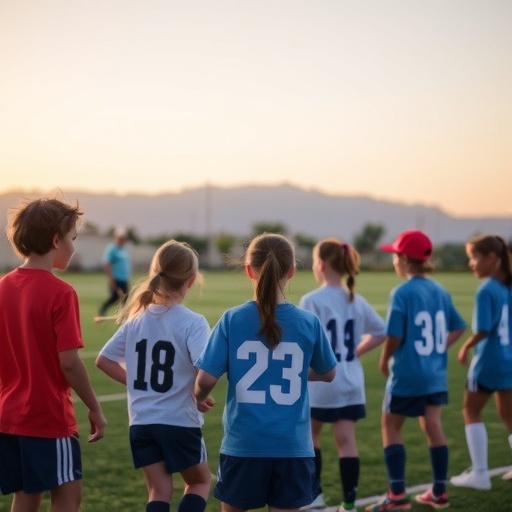
COLUMBUS, Ohio — Over recent decades, the landscape of youth sports in the United States has undergone a profound transformation. Traditional, informal games such as pickup basketball on neighborhood courts or spontaneous kickball matches have been increasingly supplanted by organized, adult-coached sports leagues. A new comprehensive study conducted by sociologists at The Ohio State University and Vassar College dissects this generational shift, revealing critical insights into how socioeconomic factors intertwine with the evolving culture of youth play.
At the core of this research lies an analysis of recreational patterns among Americans born from the 1950s through the 1990s. Through surveying thousands of adults nationwide about their childhood sports involvement, researchers established a clear trajectory: younger generations engage far more in structured sports environments, replete with coaching staff, uniforms, and formal competitions. In contrast, older cohorts reported a greater frequency of informal play—peer-organized, flexible, and rooted in neighborhood camaraderie.
Lead author Chris Knoester, a sociology professor at Ohio State, emphasizes the significance of the data: “The shift towards formal sports settings is unmistakable. However, those shifts are deeply stratified by socioeconomic status. Youth from wealthier families, particularly where parents hold higher education degrees, are disproportionately represented in formal sports participation.” This finding underscores how access to structured recreational opportunities correlates strongly with family resources and parental educational background, reinforcing concerns about equity in youth sports.
Conducted through the National Sports and Society Survey, which gathered data from 3,845 participants aged 21 to 65 via the American Population Panel, the study relied on retrospective self-reporting to chart individuals’ sports experiences. This methodological approach offers granular, individual-level evidence of these evolving patterns, complementing existing organizational data such as the Aspen Institute’s Project Play findings. Project Play reports that contemporary youth now allocate less than 25% of their sports time to informal settings, a staggering shift compared with previous generations.
Yet, this emerging trend toward organized youth sports raises critical questions about its broader impacts. While formal sports programs promise pathways to elite performance—fueled by private coaching, travel teams, and specialized training—Knoester and colleague Chris Bjork argue that informal play remains a vital contributor to lifelong engagement and athletic creativity. Informal sports settings offer essential opportunities for autonomy, social negotiation, and intrinsic motivation, all factors that formalized programs might inadvertently suppress.
Bjork, an education professor at Vassar, highlights the paradox entrenched in modern youth sports culture: “Despite the prevailing belief that early specialization and rigorous formal training are necessary to reach the highest athletic echelons, the evidence linking such intense investment to elite success is tenuous at best. Furthermore, there has been a steady increase in parental involvement, often bordering on ‘intensive parenting,’ which prioritizes competitive advantage over childhood joy and social development.”
Financial burdens compound these dynamics. Parents now commonly invest upwards of $1,500 annually per child on sports-related expenses, a figure that excludes ancillary costs like travel, accommodation, and time commitments. This investment, while elevated in affluent families, is not a guaranteed ticket to athletic stardom. The expansion of commercialized youth sports naturally stratifies opportunities, yet the critical developmental benefits associated with play—the long-term love of the game and resilience—may thrive more robustly in informal environments.
The consequences of this shift extend beyond individual athletes to community cohesion. Informal sports traditionally promote peer-led organization and emphasize fun and relationship-building. These settings nurture decision-making, conflict resolution, and ownership of play—skills that formal sports models, with their coach-driven structures and performance metrics, may inadvertently inhibit. Knoester points out that this erosion of informal play diminishes opportunities for children to experience sports as a source of pure enjoyment rather than a vehicle for achievement.
Drawing comparisons to Norway’s public participation-centered sports culture, credited with its Winter Olympics dominance, the researchers suggest that sustained involvement driven by intrinsic motivation nurtures fuller athletic development. This contrasts with the U.S. model where early specialization and commercialization potentially narrow the talent pool by sidelining those who disengage due to pressure or lack of access.
To address these disparities, Bjork advocates for reinvesting in community-based sports programs that provide inclusive, low-cost opportunities free from the high stakes of competitive specialization. Such initiatives could rebalance the spectrum between formal and informal sports, fostering both performance development and the social-emotional benefits intrinsic to play.
Ultimately, parents and policymakers are urged to critically assess the trajectory of youth sports. Recognizing the family’s role in shaping children’s athletic experiences, Bjork advises that choices should reflect long-term developmental goals rather than conformity to prevailing neighborhood trends or social expectations. This insight carries critical implications for equitable youth sports access and the holistic wellbeing of future generations.
This study, published in the journal Leisure Sciences, illuminates the complex interplay between generational shifts, socioeconomic status, and evolving youth sports participation. Its findings challenge the push toward hyper-structured sports environments, advocating for a balanced approach that honors informal play’s role in cultivating not only athletic skill but also creativity, passion, and social connectedness—qualities essential for lifelong engagement in physical activity and community life.
Subject of Research: People
Article Title: The Relative Frequencies of Playing Sports Informally Versus Formally, While Growing Up: An Analysis of Generational and Socioeconomic Status Differences in the U.S
News Publication Date: 28-Jan-2026
Web References:
- National Sports and Society Survey: https://nsass.org/
- Sports and Society Initiative: https://sportsandsociety.osu.edu/
- American Population Panel: https://americanpopulationpanel.org/social-media-site/
- Leisure Sciences Journal DOI: http://dx.doi.org/10.1080/01490400.2026.2620528
References: Knoester, C., & Bjork, C. (2026). The Relative Frequencies of Playing Sports Informally Versus Formally, While Growing Up. Leisure Sciences. https://doi.org/10.1080/01490400.2026.2620528; Bjork, C. (2023). More Than Just a Game: How the Youth Sports Industry Is Changing the Way We Parent and What to Do About It.
Keywords: youth sports, informal play, formal sports, socioeconomic status, organized sports, childhood development, sports participation trends, parental involvement, athlete specialization, community sports programs


