

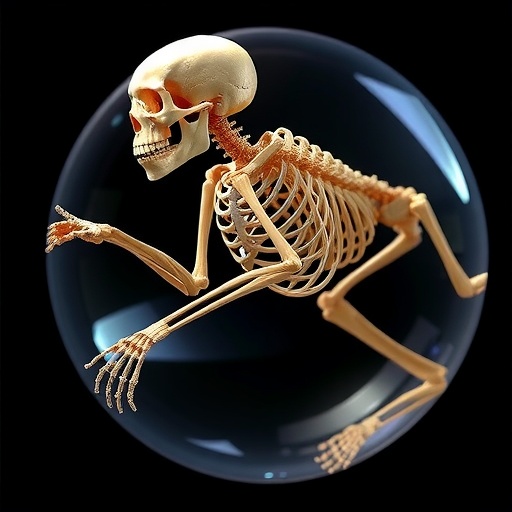
In a groundbreaking study, researchers led by Bram van Rossum have unveiled a new methodology to enhance the accessibility of plastinated specimens through the creation of high-quality digital 3D models. This innovative approach represents a significant leap forward in the field of educational resources and anatomical visualization, making it easier than ever for students, educators, and researchers to explore the intricacies of biological and anatomical structures. By merging traditional plastination techniques with cutting-edge digital technologies, the team has crafted a hybrid method that promises to revolutionize how we interact with anatomical specimens.
Plastination, a technique pioneered in the late 1970s by Dr. Gunther von Hagens, is an intricate process that replaces the water and fats in biological tissues with synthetic polymers. The result is a durable specimen that retains the original structure and appearance of the specimen while making it free from decay and odor. These specimens have been invaluable for educational and research purposes, particularly in the fields of medicine and biology. However, traditional methods of accessing and studying these specimens have often been limited to physical handling, which can pose challenges in terms of availability and accessibility for a broader audience.
This new study presents a hybrid methodology that addresses these challenges head-on. By integrating high-resolution imaging techniques with advanced 3D modeling software, van Rossum and his colleagues have managed to create digital replicas of plastinated specimens that not only capture the minute details of the original but also make them available for virtual exploration. This process begins with the acquisition of high-resolution scans of the plastinated specimens, thereby ensuring that every detail—down to the cellular level—is preserved in the digital format.
The next step involves the use of sophisticated software to convert these scans into intricate 3D models, allowing users to manipulate and explore the specimens in ways that were previously unimaginable. The researchers emphasized that the digital models can be rotated, zoomed in on, and dissected virtually, providing a comprehensive learning experience that goes beyond what is possible with physical specimens alone. This not only enhances understanding of complex anatomical relationships but also helps in the study of pathology, anthropology, and comparative anatomy.
One of the most compelling aspects of this research is its potential for educational institutions. With the rise of online learning and the increasing demand for remote educational resources, this hybrid method caters perfectly to the needs of modern learners who may not have direct access to traditional anatomy labs. The digital 3D models allow for a more interactive and engaging learning experience, enabling students to study from anywhere in the world, anytime they wish. This opens doors for students in remote or underserved communities where access to physical specimens may be extremely limited.
Moreover, this innovative approach to plastination and 3D modeling supports an interactive teaching method that encourages inquiry-based learning. Rather than passively observing a specimen in a lab, students can engage actively with the materials. They can formulate hypotheses, manipulate models, and visualize processes, leading to deeper understanding and retention of complex information. This level of interactivity aligns perfectly with modern pedagogical strategies that emphasize active learning, making this research not just a technical advancement but a pedagogical revolution as well.
The implications of this accessibility extend beyond the realm of education. Museums, research institutions, and even healthcare settings can benefit from the ability to create and share high-quality digital models of anatomical specimens. For example, medical professionals could use these models for patient education, allowing individuals to better understand their conditions through 3D visualizations tailored to their particular anatomy. This could improve patient engagement and ultimately lead to better health outcomes.
Additionally, the researchers have highlighted the sustainability aspect of their hybrid method. Traditional plastination can be resource-intensive, requiring significant amounts of chemicals and materials. By creating digital alternatives, there is an opportunity to reduce the ecological footprint associated with specimen preparation and storage. Digital models eliminate the need for physical specimens to be produced and maintained, leading to a more sustainable approach in the long run.
Nonetheless, converting plastinated specimens into high-quality 3D digital models is not without its challenges. The researchers faced obstacles in ensuring that the virtual representations accurately mirrored the physical specimens. Issues such as color discrepancies, texture mapping, and the faithful reproduction of minute anatomical features required iterative testing and refinement. The team diligently worked through these challenges, employing a combination of imaging techniques and modeling adjustments to ensure fidelity to the original specimens.
As interest in this innovative approach continues to grow, the research team has made it clear that they are only scratching the surface of what is possible. Future applications may include enhancing virtual reality (VR) or augmented reality (AR) experiences that could allow users to immerse themselves in a 3D space where they can interact with the anatomical models in real-time. Such advancements could bridge the gap between digital education and traditional practices, creating a seamless blend of both worlds that enhances the learning experience.
In conclusion, van Rossum and his associates’ research highlights a significant milestone in the use of digital technology in anatomical education. By making plastinated specimens accessible through high-quality digital 3D models, they are not only advancing educational methodologies but also contributing to sustainability in specimen education. This hybrid method could redefine how anatomical literature is taught and understood in the future, paving the way for a generation of learners equipped with cutting-edge tools and resources tailored to their academic needs.
With countless possibilities for expansion and adaptation, the study promises a bright future for educational resources. As institutions adopt these techniques, one can envisage a world where the exploration of the human body and its complexities is no longer confined to the walls of a laboratory but is democratized in digital spaces accessible to anyone with an internet connection. By marrying art with science, van Rossum’s team has set the stage for a new era in anatomical education that holds the potential to transform traditional learning into a dynamic, interactive experience.
Strong engagement from educational bodies, the healthcare industry, and museum sectors can amplify the impact of their findings. As discussions about the incorporation of these digital resources into curricula and public health initiatives begin to take shape, the implications of their study will likely echo throughout the academic and educational landscapes for years to come. In essence, this research does not just make specimens accessible; it brings to life the very nature of learning through technology and innovation, leading to a more knowledgeable society.
Subject of Research: Hybrid method to create high-quality digital 3D models of plastinated specimens.
Article Title: Making plastinated specimens more accessible: a hybrid method to create high-quality digital 3D models.
Article References:
van Rossum, B., Passarello, N., Salvatori, D.C.F. et al. Making plastinated specimens more accessible: a hybrid method to create high-quality digital 3D models.
Discov Educ (2025). https://doi.org/10.1007/s44217-025-01072-7
Image Credits: AI Generated
DOI:
Keywords: 3D models, plastination, anatomy education, digital resources, hybrid methodology, specimen accessibility.


