

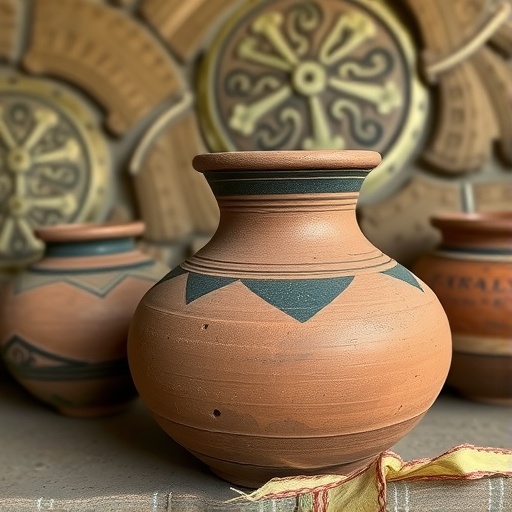
In the realm of archaeology and anthropological studies, pottery serves as one of the most enduring markers of human cultural evolution. The recent study conducted by Kudelić et al., published in Archaeological and Anthropological Sciences, delves into the resilience of traditional pottery practices amid significant technological transitions and environmental changes in early medieval Southern Pannonia. This comprehensive research sheds light on not just the survival but also the adaptation mechanisms of these ancient crafts, providing insights into the sociocultural dynamics of the time.
Southern Pannonia, a region nestled in what is now modern-day Hungary and its surrounding areas, has historically been a melting pot of cultural influences due to its strategic geographical location. The study meticulously chronicles how pottery production in this region has evolved over centuries, particularly during the turbulent early medieval period characterized by shifting socio-political landscapes. Notably, it examines the clay recipes and firing techniques employed by local artisans, underlining the intricate knowledge systems that have been passed down through generations.
One of the key focal points of the research is the analysis of traditional clay recipes that have been utilized by potters over the centuries. These recipes are not merely recipes; they encapsulate a wealth of knowledge regarding the local clay sources and their properties. Kudelić and colleagues highlight that the varying mineral compositions found in different clay sources resulted in distinctive pottery styles and functionalities. This specialization allowed potters to produce a wide array of ceramics that catered to various domestic and commercial needs.
Moreover, the research taps into the technological shifts that accompanied these traditional practices. As the region faced invasions and migrations, the influx of new techniques was inevitable. The study details how potters assimilated these innovations, merging them with their age-old practices to create hybrid techniques that reflected a blend of both tradition and modernity. This adaptability not only helped to sustain the craft during times of upheaval but also enriched the cultural tapestry of pottery in the region.
Kudelić et al. employ a multidisciplinary approach, integrating archaeological evidence with ethnographic observations and experimental archaeology. This method allows for a deeper understanding of the material culture and provides a context for the innovation processes that potters engaged in. By examining kiln structures, firing processes, and the finished products, the authors paint a detailed picture of the technical prowess required for successful pottery production in varying environmental conditions.
Additionally, the study emphasizes the role of community in maintaining traditional pottery practices. Local networks of knowledge transfer, often occurring within families or community groups, are depicted as crucial elements in ensuring the continuity of these practices. The research illustrates how communal resilience was instrumental in facing the challenges posed by climatic variations and socio-economic shifts. This perspective underscores the importance of social structures in the survival of cultural practices, offering broader implications for understanding resilience across different cultural domains.
Furthermore, the authors provide a critical analysis of how the changing demands of society influenced pottery production. As communities grew and their economic activities diversified, the types of pottery produced evolved to meet new market needs. This adaptability is a testament to the innovative spirit of potters who continuously modified their techniques and products to remain relevant within their socio-economic contexts.
The comprehensive dataset compiled by Kudelić et al. includes findings from archaeological excavations, pottery shards, and archival materials, making it an invaluable resource for future research. The integration of such diverse evidence strengthens the argument for the resilience of traditional pottery practices, emphasizing their capacity for transformation in response to change. This lineage of continuity and change serves to highlight the dynamic nature of cultural heritage.
Equally compelling is the discourse surrounding the preservation of traditional pottery practices. As modernization encroaches upon these age-old arts, questions regarding the sustainability of such crafts arise. The study by Kudelić et al. calls for an urgent need to support initiatives that foster traditional craftsmanship, not merely as a nostalgic endeavor but as a vital component of cultural identity. Efforts to document and teach these practices could ensure their survival for future generations.
Kudelić and team also touch upon the environmental aspects of pottery production, discussing how raw materials were sourced sustainably from the local landscape. This not only showcases the adaptability of potters but also highlights a symbiotic relationship with nature that has largely been overlooked in discussions about craft production. By respecting the ecological balance, traditional potters practiced a form of environmental stewardship that could serve as a model for contemporary artisans.
As the study unfolds, it becomes evident that traditional pottery is not just an art form; it is a narrative—a timeline of human resilience, adaptability, and creativity. The research offers a comprehensive framework for understanding the complexities surrounding pottery in early medieval Southern Pannonia, enhancing our appreciation for this craft and its practitioners. It sparks a conversation on the need to revisit and reintegrate traditional practices in the context of modern challenges, thus ensuring a thriving future for artisanal crafts.
Ultimately, the work of Kudelić et al. stands as a significant contribution to the field of archaeology and anthropology. It encourages readers to reflect on the broader implications of cultural resilience in the face of change, inspiring a renewed interest in preserving the rich heritage of traditional pottery practices. The authors call on future researchers, policy-makers, and communities to collaborate in fostering environments where such cultural expressions can flourish, emphasizing that the lessons learned from the past can inform our approaches to sustainability and cultural preservation today.
The resilience of traditional pottery practices as described in this study is not merely an artifact of historical interest; it offers a blueprint for navigating similar challenges faced by contemporary crafts and cultural expressions. By understanding and appreciating these ancient practices, we can better support their continuation and evolution, ensuring that the legacies of our forebears live on in vibrant and relevant forms.
Subject of Research: Resilience of traditional pottery practices in early medieval Southern Pannonia.
Article Title: Resilience of traditional pottery practices in the face of change: clay recipes and technological shifts in early medieval Southern Pannonia.
Article References:
Kudelić, A., Sekelj Ivančan, T., Neral, N. et al. Resilience of traditional pottery practices in the face of change: clay recipes and technological shifts in early medieval Southern Pannonia.
Archaeol Anthropol Sci 17, 185 (2025). https://doi.org/10.1007/s12520-025-02291-7
Image Credits: AI Generated
DOI: https://doi.org/10.1007/s12520-025-02291-7
Keywords: Resilience, traditional pottery, Southern Pannonia, clay recipes, technological shifts, cultural heritage, sustainability, archaeological evidence, community networks.


