

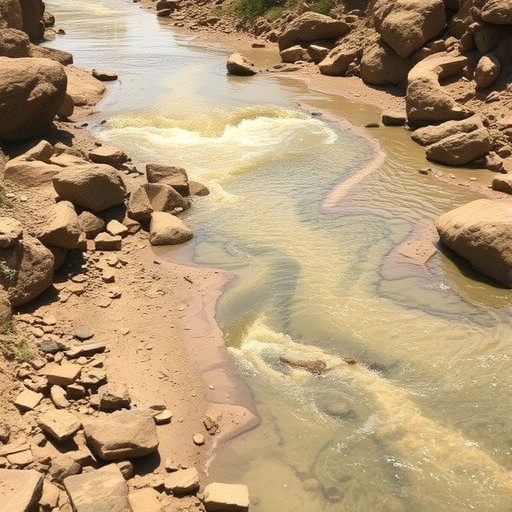
In a groundbreaking study, researchers have unveiled critical insights regarding trace element contamination in the El Harrach River, located in North Central Algeria. This longitudinal approach aims to shed light on the environmental impact of these contaminants on sediments and the broader ecosystem. Over the past few years, the El Harrach River has faced significant ecological challenges, primarily due to anthropogenic influences such as industrial discharges, urban runoff, and inadequate waste management practices. This study asserts the need for stringent monitoring and regulation to protect sensitive habitats and human health.
One of the cornerstones of this study is the meticulous sampling of river sediments across various locations along the El Harrach River. This comprehensive data collection spans several seasons, allowing scientists to observe temporal fluctuations in trace element concentrations. Such approaches enable researchers to capture the dynamic nature of sediment processes, which are often influenced by seasonal weather patterns, urban activities, and local geography. Importantly, the findings underscore the necessity of understanding how these parameters interact to shape sediment quality and ecological health.
Trace elements, defined as metallic constituents present in low concentrations, can present significant risks when they accumulate in environmental compartments. The primary concern revolves around their toxicological properties, which can adversely affect aquatic life and, ultimately, human health through the food chain. This research identifies key trace elements such as lead, copper, and cadmium—each notorious for their potential to harm both aquatic organisms and terrestrial life that may consume contaminated wildlife.
The researchers utilized advanced analytical techniques to assess trace element concentrations within sediment cores retrieved from strategic locations. By employing methods such as Inductively Coupled Plasma Mass Spectrometry (ICP-MS), they attained unparalleled precision in quantifying low concentrations of these contaminants. The study reveals surprisingly high levels of certain trace elements, suggesting that the El Harrach River is becoming a repository for pollutants that could have long-term repercussions for the surrounding environment.
Furthermore, this investigative endeavor highlights the significance of spatial distribution in contamination levels across various segments of the river. For instance, sites downstream from urbanized areas exhibited markedly higher concentrations of pollutants compared to more remote locations. This spatial analysis provides valuable insights into the sources of contamination, primarily linked to human activity. Urban runoff, often laden with various toxins from roadways and industrial zones, is identified as a significant contributor to sediment quality deterioration in the river ecosystem.
Understanding the implications of such findings is critical as they raise questions about the cumulative effect of trace element contamination on biodiversity within the El Harrach River. Aquatic organisms, including fish and invertebrates, are known to bioaccumulate these toxicants, which could lead to drastic declines in species populations, loss of biodiversity, and alterations in community dynamics. The current study adds to the burgeoning body of evidence advocating for the need to remediate contaminated sites and for initiating preventive measures that curb future discharges of pollutants into the river.
The implications of trace element contamination extend beyond ecological concerns; they also encompass public health issues. Contaminated sediments can serve as reservoirs of harmful substances, and their resuspension during high-flow events can lead to widespread exposure. This scenario emphasizes the relevance of sediment quality not just for the ecosystem but also for communities that depend on the river for their water supply and recreational activities. The study highlights the urgent need for comprehensive policies aimed at improving water quality and mitigating pollution sources in every aspect of governance.
Moreover, the study could also serve as a catalyst for public engagement and awareness regarding environmental issues in Algeria. By disseminating these findings, stakeholders can galvanize local communities to participate in conservation efforts, fostering a stewardship mentality toward the river and its surroundings. Educational initiatives could go a long way in promoting sustainable practices that minimize human impact on this vital resource.
In conclusion, the research presented on trace element contamination in the El Harrach River serves as a call to action for policymakers, environmental agencies, and local communities. The alarming levels of trace elements detected demand a coordinated effort to implement stringent regulations, restore damaged ecosystems, and enhance public awareness regarding environmental conservation. As the El Harrach River flows through the heart of North Central Algeria, its health remains a barometer for the region’s ecological integrity and the well-being of its inhabitants. The future of this river lies in the balance, hinging on informed actions and sustained commitment to restoring and preserving its natural environment.
Ultimately, this investigation enriches our understanding of the long-term impacts of trace contamination in freshwater systems and sets the groundwork for future research aimed at better preserving aquatic resources. The El Harrach River study becomes even more significant in the context of global environmental concerns, as local actions resonate within the broader narrative of conservation science and sustainable management practices. The collaborative effort by researchers not only contributes valuable knowledge to the field but also challenges us to rethink our relationship with water bodies and the impact of human activities on our fragile ecosystems.
As we continue to grapple with environmental challenges, studies like this serve as essential reminders of the interconnectedness between our actions and the health of ecosystems. With proactive measures, collaborative efforts, and community engagement, there is potential for meaningful change to enhance the quality of water and sediments in the El Harrach River and beyond. Moving forward, the commitment to understanding, protecting, and restoring such vital ecosystems will be imperative as we navigate the complexities of environmental stewardship in the 21st century.
For anyone invested in preserving our ecological heritage, the El Harrach River study is not merely an academic exercise; it is a powerful testament to the urgent need for collective action to foster a healthier planet.
Subject of Research: Trace Element Contamination of Sediments in El Harrach River
Article Title: A longitudinal approach of trace element contamination of sediments in El Harrach river (North Central Algeria): characterization and environmental quality
Article References: Benmoussa, N., Taleb, A., Benabdelkader, A. et al. A longitudinal approach of trace element contamination of sediments in El Harrach river (North Central Algeria): characterisation and environmental quality. Environ Monit Assess 198, 60 (2026). https://doi.org/10.1007/s10661-025-14848-z
Image Credits: AI Generated
DOI: https://doi.org/10.1007/s10661-025-14848-z
Keywords: Trace elements, sediment contamination, El Harrach River, Environmental quality, Public health, Biodiversity, Water quality.


