

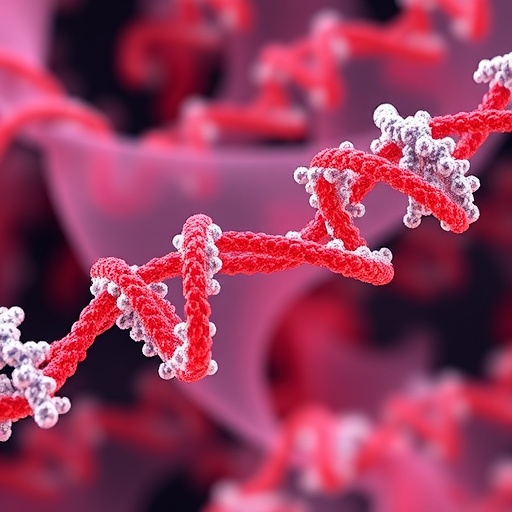
A groundbreaking advance in gene editing technology has emerged from the University of Texas at Austin, as researchers have engineered a novel CRISPR-based molecular tool that holds promise for direct therapeutic gene editing inside the human body. A collaborative effort involving scientists funded by the National Institutes of Health (NIH) and the biotech company Metagenomi Therapeutics, this innovation overcomes a significant barrier: the size limitations of viral delivery systems traditionally used to transport gene-editing machinery into targeted cells. Their work, published in Nature Structural & Molecular Biology, reveals a compact yet highly efficient CRISPR nuclease variant poised to revolutionize in vivo gene therapy.
CRISPR-Cas systems have transformed genetic research with their ability to precisely target and edit DNA sequences. However, clinical applications of CRISPR-based therapies largely remain ex vivo, editing cells outside the patient’s body before reintroduction. This limitation arises because the most accurate and safe gene editors are too large to be packaged into viral vectors—like adeno-associated viruses (AAVs)—which have a strict payload capacity of approximately 1,000 amino acids. To address this, researchers have sought smaller nucleases capable of fitting inside these vectors while maintaining robust editing capabilities.
In this study, the team at the University of Texas zeroed in on a naturally occurring bacterial nuclease called Al3Cas12f, belonging to a family of compact enzymes known as Cas12f. These proteins are considerably smaller—ranging from 400 to 700 amino acids—compared to conventional CRISPR nucleases. Despite their promising size, previous Cas12f enzymes exhibited limited editing activity within human cells, particularly due to the complex and dynamic cellular environment that challenges nuclease stability and efficiency.
Through detailed biochemical and structural investigation enhanced by cryo-electron microscopy, the researchers elucidated the unique molecular architecture of Al3Cas12f. Their analyses showcased an unusually large and stable interface among the enzyme’s subunits, ensuring a preassembled, highly stable protein complex that can efficiently engage DNA targets soon after synthesis. This intrinsic stability is pivotal, as transient complexes often fail to achieve consistent editing outcomes in live cells.
Yet, initial testing of the wild-type Al3Cas12f revealed that while its editing efficiency surpassed other Cas12f variants, it still struggled to modify certain genomic sequences effectively. To optimize performance, the scientists employed rational protein engineering, exploiting structural insights to design mutations that could enhance DNA binding affinity and catalytic turnover. This effort culminated in an engineered variant dubbed Al3Cas12f RKK, which demonstrated remarkable improvements in gene-editing efficiency.
The Al3Cas12f RKK nuclease was introduced into human cells derived from leukemia patients, targeting genes implicated in a spectrum of debilitating diseases such as cancer, atherosclerosis, and amyotrophic lateral sclerosis (ALS). The results were staggering: editing efficiency increased from less than 10% with the native enzyme to exceeding 80% across multiple genomic targets. Achieving such high efficiency in a compact nuclease now suitable for AAV packaging paves the way for direct gene therapy applications that were previously unattainable.
Critical to the success of Al3Cas12f RKK is its compatibility with viral delivery vectors widely used in clinical settings. AAV platforms are heralded for their safety and tissue specificity, but their limited cargo capacity has long constrained therapeutic gene editing. The development of a nuclease that not only fits within these size constraints but also excels functionally in the challenging milieu of human cells represents a profound leap forward in the quest for in vivo gene editing.
The research team utilized a synergistic approach, combining high-resolution structural biology, machine learning models, and functional cellular experiments. Cryo-electron microscopy provided atomic-level details of the enzyme-DNA complexes, while computational techniques simulated the dynamics of nuclease operation. This integrated methodology revealed structural elements underpinning enhanced DNA recognition and catalysis, guiding the targeted mutation strategy to create the RKK variant.
Looking ahead, the University of Texas researchers plan to conduct comprehensive in vivo studies to evaluate the performance of Al3Cas12f RKK when delivered through AAV vectors into animal models. Success in these endeavors would signify a critical translational milestone, bringing the promise of efficient, site-specific gene editing therapies for diverse genetic disorders such as muscular dystrophy, cancer, and neurodegenerative diseases ever closer to clinical reality.
David Taylor, professor of molecular biosciences and co-author, emphasized the broader implications of this discovery: “The identification of a compact, highly efficient nuclease capable of robust editing inside human cells sets a new standard for gene therapy tools. Our findings lay the foundation for customizable CRISPR systems that fulfill the exacting size and function parameters necessary for safe and effective in vivo applications.”
The innovation holds transformative potential not only in therapeutic gene editing but also in advancing biotechnological tools for fundamental genetic research, including model organism studies and functional genomics. By pushing the limits of protein engineering and delivery technologies, this research opens avenues for safer, more precise genetic interventions that could be administered directly to patients without invasive cell extraction procedures.
Importantly, funding from NIH’s National Institute of General Medical Sciences (NIGMS) supported this work, underscoring the critical role of public investment in basic and translational biomedical research. NIGMS acting director Erica Brown remarked, “Smart delivery of gene-editing systems is a powerful notion with broad clinical implications, and this basic science finding takes us a significant step toward that future.”
This cutting-edge study not only advances the frontiers of CRISPR technology but also addresses a pressing bottleneck in genetic medicine—the need for compact, reliable gene-editing tools that can be delivered efficiently within the human body. As gene therapy continues to evolve, engineered nucleases like Al3Cas12f RKK offer tangible hope for treating previously intractable genetic diseases through precise genomic interventions.
Subject of Research: Cells
Article Title: Comparative characterization of Cas12f orthologs reveals mechanistic features underlying enhanced genome editing efficiency
News Publication Date: April 13, 2026
Web References: https://www.nature.com/articles/s41594-026-01788-6
References: 10.1038/s41594-026-01788-6
Image Credits: University of Texas at Austin
Keywords
Gene editing, Gene therapy, CRISPRs, Genome editing


