

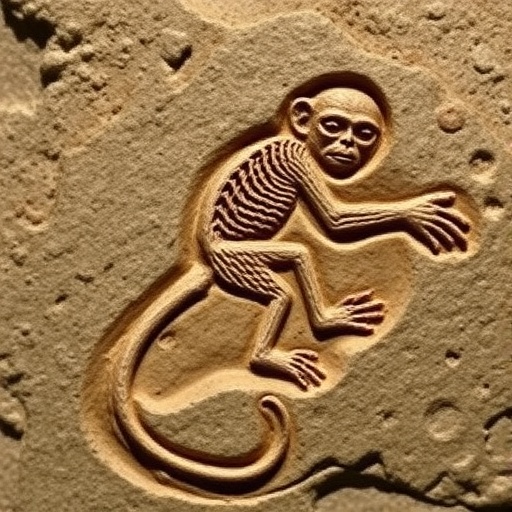
In a groundbreaking paleontological discovery that pushes the boundaries of our understanding of primate evolution, scientists have unearthed fossils of Purgatorius, the earliest known relative of all primates, in a location farther south in North America than ever before recorded. This remarkable find, at the Corral Bluffs study area within Colorado’s Denver Basin, opens new vistas into the geographic origin and seasonal evolution of primates soon after the devastating mass extinction event that eradicated the dinosaurs roughly 66 million years ago.
Purgatorius represents a genus of small, shrew-sized mammals considered to be the most basal or primitive lineage in the primate evolutionary tree. Until now, the oldest fossils of this archaic genus were exclusively found in regions such as Montana and southwest Canada, limiting the known geographic range of these early primates. The new discoveries extend the southernmost known occurrence by hundreds of miles, challenging long-standing assumptions about early primate distribution and biogeographic dispersal patterns immediately following the Cretaceous-Paleogene extinction event.
The importance of this discovery lies not only in expanding the geographical map of one of our earliest primate ancestors but also in shedding light on the timeline and manner in which mammals, particularly primates, diversified and adapted to post-dinosaur ecosystems. This find supports the hypothesis that archaic primates originated further north and migrated southwards shortly after life’s catastrophic reset. Evidence of Purgatorius in Colorado signifies a more rapid biogeographic expansion than previously thought, demonstrating swift ecosystem recovery and diversification during the Paleocene epoch.
The research team, led by Dr. Stephen Chester from Brooklyn College and the Graduate Center at the City University of New York, conducted meticulous fieldwork involving innovative screen-washing techniques to extract minuscule fossils from sediment samples. Unlike traditional fossil collection methods, which rely on easily visible bones discovered on the surface, screen-washing allows paleontologists to recover microscopic remnants, such as Purgatorius teeth, only a few millimeters in size. This methodological leap has overcome previous sampling biases that underestimated the presence of small vertebrate fossils in southern localities.
Detailed analysis of the newfound Purgatorius teeth reveals a unique combination of morphological features distinct from known species within this genus. These critical anatomical characteristics suggest the possibility of an undescribed species, potentially rewriting the narrative of primate early diversification. However, the research team remains cautious, awaiting additional fossil material to conclusively define and describe any new taxonomic entity within this basal primate group.
One key aspect of understanding Purgatorius ecology comes from the examination of ankle bones of previously recovered specimens, which indicate arboreal adaptations. Such skeletal evidence supports the notion that these early primates were adapted for life in trees, implicating the important role of forested habitats during mammalian evolutionary radiations following the mass extinction. The previous absence of Purgatorius fossils south of Montana had puzzled scientists, especially considering the rapid post-impact recovery of plant communities. The new findings confirm that Purgatorius indeed inhabited these southern forest ecosystems, filling a crucial gap in the spatial and temporal fossil record.
The fieldwork, conducted in partnership with the City of Colorado Springs and supported by a substantial National Science Foundation grant exceeding $3 million, utilized extensive labor from dedicated volunteers and students. Their tireless efforts in processing sediment samples led to the retrieval of a fossil assemblage that includes not only Purgatorius teeth but also an array of associated vertebrate fauna such as fish, turtles, and crocodilians. This wide spectrum of biodiversity offers invaluable insights into ecosystem composition and dynamics in the vulnerable interval immediately following the Cretaceous-Paleogene boundary.
Importantly, these findings challenge a long-standing sampling bias that has pervaded paleontological records in the region. For nearly 150 years, traditional surface-collecting methods predominated, favoring the discovery of large, conspicuous fossils. The reliance on these approaches concealed the presence of small but ecologically significant organisms like basal primates. This research highlights how adopting more refined and sensitive collection techniques can profoundly alter scientific perceptions of ancient biodiversity and evolutionary pathways.
From a paleobiogeographical perspective, the southward dispersal of Purgatorius expands our understanding of mammalian migration corridors and habitat utilization during the early Paleocene. It signals a rapid colonization of tropical and subtropical forest environments across the Western Interior of North America, a process possibly driven by ecological opportunities arising from the mass extinction’s aftermath. Such findings are pivotal for reconstructing the evolutionary origins of primates, including the distant ancestors of modern humans.
The study’s interdisciplinary nature, involving paleontologists, paleoecologists, and botanists, illustrates the complexity of reconstructing ancient life and environments. Insights garnered from co-located plant fossils affirm a swift vegetational recovery, which in turn facilitated the expansion and diversification of early mammalian lineages. These ecological reconstructions provide context for the evolutionary pressures that shaped the morphology and behavior of emergent primate species, including arboreal adaptations.
Furthermore, the discovery underscores the necessity for ongoing, intensive paleontological surveys using advanced methodologies to uncover minute vertebrate fossils. The potential for future revelations about the origins of primates and mammalian evolution post-dinosaurs is vast, as this research demonstrates that significant evolutionary narratives remain concealed in overlooked sediment deposits. By broadening the lens of fossil investigation beyond traditional macroscopic collection, scientists can expect a fuller, more nuanced understanding of prehistoric life.
The implications of this study resonate broadly, not just within vertebrate paleontology but across evolutionary biology, biogeography, and conservation science. Understanding how life rebounded after the single most catastrophic extinction event offers critical perspectives on resilience and adaptation. Such knowledge has relevance for contemporary biodiversity challenges, illustrating the long-term consequences of environmental disturbances on evolutionary trajectories.
This landmark research, published in the Journal of Vertebrate Paleontology in March 2026, was made possible through extensive collaboration involving Brooklyn College, the City University of New York, and the Denver Museum of Nature & Science. Funding was provided by prestigious institutions such as the U.S. National Science Foundation, Leakey Foundation, and Lyda Hill Foundation, reflecting the global significance of uncovering humanity’s distant evolutionary roots.
As fossil excavation and analysis continue, scholars anticipate additional discoveries that will refine the taxonomy, ecology, and biogeographic history of Purgatorius. This relentless pursuit of paleontological evidence promises to illuminate the shadowy origins of primates, bridging an essential evolutionary gap. The newly unearthed southernmost fossils serve as a beacon, guiding scientists toward a more comprehensive understanding of the dawn of primates and ultimately, the origins of modern humans.
Subject of Research: Animal tissue samples
Article Title: Southernmost occurrence of Purgatorius sheds light on the biogeographic history and diversification of the earliest primate relatives
News Publication Date: 3-Mar-2026
Web References:
Journal of Vertebrate Paleontology – Article
References:
DOI: 10.1080/02724634.2026.2614024
Image Credits: Dr Stephen Chester
Keywords: Evolution, History of life, Origins of life, Paleontology, Fossils, Animal fossils, Vertebrate paleontology, Paleobiology, Paleogeography, Primates


