

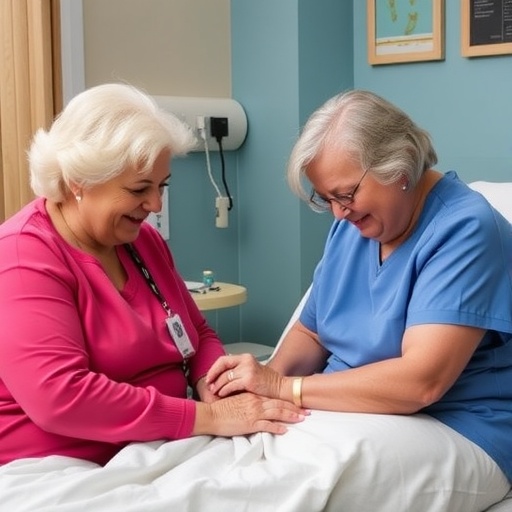
In a groundbreaking study that promises to reshape the landscape of psychiatric nursing care, researchers have delved into the intricate relationship between care models and the lived experiences of adult individuals with physical disabilities. The investigation, spearheaded by Çaynak and Keser, explores the impact of the Tidal Model—a patient-centered, narrative-driven approach—on both the perceived meaning of life and the coping mechanisms employed by this often-overlooked demographic. Published in the esteemed journal BMC Psychology, this action research offers a compelling framework that could revolutionize psychiatric nursing toward more empathetic and effective methodologies.
The Tidal Model, developed initially by Phil Barker in the late 1990s, emphasizes the significance of personal stories and acknowledges the individual as an expert in their own life. Unlike conventional psychiatric care models that tend to adopt a more clinical and sometimes detached approach, the Tidal Model centers on the person’s narrative, drawing out their voice and enabling them to reclaim agency over their recovery journey. Applying this model specifically to adults with physical disabilities presents a novel intersection of chronic physical health challenges intertwined with mental health needs.
Adults with physical disabilities often encounter a complex matrix of psychological distress, societal stigma, and fluctuating self-perceptions. These factors can drastically diminish their psychological well-being and adversely influence how they confront daily adversities. The research by Çaynak and Keser illuminates this multifaceted experience, demonstrating how psychiatric nursing care anchored in the Tidal Model could bolster individuals’ abilities to find renewed meaning and enhance their adaptive coping skills. This is particularly critical because traditional psychiatric interventions have frequently marginalized the unique experiences and emotional landscapes of persons with physical disabilities.
Methodologically, the study adopts an action research design, which inherently involves active participation and collaboration between healthcare providers and patients. This dynamic interplay is crucial for capturing nuanced insights into the impact of the Tidal Model. The researchers meticulously documented changes in participants’ self-reported meaning in life and coping levels over the intervention period. This approach underscores the participatory ethos at the heart of the Tidal Model, seeking not only to observe changes but actively shape care methods responsive to individual needs.
Results from the study indicate statistically significant enhancements in both existential satisfaction and coping capabilities among the participants. These improvements were not just quantitative but deeply qualitative, with many subjects expressing a redefined sense of purpose and empowerment. Notably, the Tidal Model’s emphasis on narrative therapy—encouraging participants to articulate their stories and confront emotional challenges—played a pivotal role in these outcomes. By amplifying personal meaning, the intervention helped participants transcend the limitations imposed by their physical conditions.
The implications of these findings are far-reaching for psychiatric nursing. Integrating the Tidal Model into everyday practice could bridge the existing gap between mental health support and the lived realities of people with physical disabilities. This integrative care model encourages nurses to move beyond symptom management towards fostering holistic recovery, respecting personal histories, and nurturing hope. It highlights the necessity for psychiatric nurses to adopt flexible, patient-tailored strategies that reaffirm the dignity and capabilities of individuals regardless of physical limitations.
Furthermore, this research contributes to the ongoing discourse about mental health equity. Physical disability and psychiatric care often operate in siloed domains, yet the emotional toll of physical impairments is undeniable. Çaynak and Keser’s study calls healthcare systems to recognize the synergistic relationship between physical and mental well-being and to develop interdisciplinary practices that address both simultaneously. This shift could mitigate the pervasive barriers and stigma that many physically disabled individuals face when seeking mental health services.
Technically, the study’s deployment of validated psychometric instruments to measure ‘meaning of life’ and ‘coping levels’ ensures robust and reliable data. These measurements relate to constructs such as existential fulfillment, resilience, and emotional regulation, which are complex yet critical parameters in psychiatric nursing outcomes. The data analysis incorporated both statistical techniques and thematic interpretation of narratives, enhancing the richness of findings by balancing empirical rigor with the depth of human experiences.
Critically, the study’s focus on participatory care models aligns with emerging trends in mental health practice prioritizing patient empowerment. The Tidal Model’s utility in this context suggests that psychiatric nursing is moving towards co-creative healing partnerships. Nurses become facilitators of recovery rather than mere executors of treatment, fostering therapeutic alliances that honor client autonomy and individual meaning-making processes.
Moreover, the research challenges prevailing misconceptions about adults with physical disabilities, often stereotyped as psychologically fragile or passive recipients of care. Instead, the Tidal Model-based intervention reveals their resilience and capacity for self-reflection. Empowering such individuals through narrative engagement not only boosts coping but may positively influence physiological health via psychosomatic pathways, though this warrants further exploration.
Potential limitations noted in the study include the relatively small sample size typical of action research and cultural considerations that may affect generalizability. Nonetheless, these shortcomings provide fertile ground for future expansive studies across diverse cultural contexts and disability types, potentially validating and refining the applicability of the Tidal Model.
As psychiatric nursing evolves within the broader mental health discipline, innovations like the Tidal Model illuminate pathways for more inclusive, compassionate care frameworks. This research serves as a clarion call for policy makers and practitioners alike to invest in training and structural change that support narrative-driven, person-centered approaches, especially for marginalized populations.
In conclusion, the pioneering work by Çaynak and Keser underscores that psychiatric nursing care grounded in the Tidal Model holds transformative potential. By centering on meaning-making and individualized coping strategies, it offers a lifeline of hope and resilience to adult persons with physical disabilities, amplifying their voices and fostering profound psychological healing. This study heralds a new era in psychiatric care, one where stories reclaim their rightful place at the heart of recovery.
Subject of Research: The impact of Tidal Model-based psychiatric nursing care on the meaning of life and coping levels in adult individuals with physical disabilities.
Article Title: Impact of tidal model-based psychiatric nursing care on the meaning of life and coping level of adult persons with physical disabilities: an action research.
Article References:
Çaynak, S., Keser, İ. Impact of tidal model-based psychiatric nursing care on the meaning of life and coping level of adult persons with physical disabilities: an action research. BMC Psychol (2025). https://doi.org/10.1186/s40359-025-03848-w
Image Credits: AI Generated


