

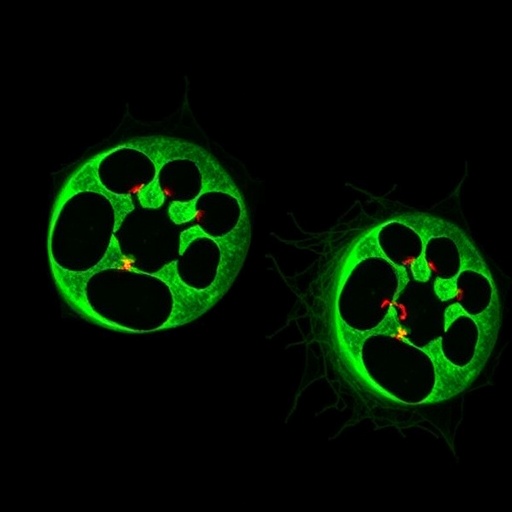
In a groundbreaking study recently published in Medical Oncology, researchers Emrah B. and Senay V.K. have unveiled intricate mechanisms by which thymoquinone, a bioactive compound derived from Nigella sativa, modulates cellular pathways linked to mitochondrial dynamics and apoptosis. This investigation engages deeply with the molecular underpinnings of how thymoquinone influences pivotal proteins such as PINK1, DRP1, TFEB, and cytochrome c within two significant cell types: HepG2, a human liver cancer cell line, and HDF, human dermal fibroblasts. The findings illuminate potential therapeutic avenues in oncology and cell biology, underscoring the compound’s capacity to orchestrate complex intracellular events leading to programmed cell death.
Mitochondria are not merely energy powerhouses; they are dynamic organelles whose shape, size, and number are tightly regulated through fission and fusion processes. This dynamic equilibrium is critical for maintaining cellular homeostasis, bioenergetics, and the initiation of apoptosis. Proteins like PINK1 and DRP1 are central regulators of mitochondrial quality control and dynamics. PINK1 (PTEN-induced kinase 1) serves as a sensor of mitochondrial health, tagging damaged mitochondria for degradation, whereas DRP1 (Dynamin-related protein 1) mediates mitochondrial fission, facilitating mitochondrial segregation and removal. The interplay between these proteins determines cell fate during stress, and the modulation of their expression facilitates cellular adaptation or triggers apoptosis.
Thymoquinone’s influence on PINK1 and DRP1 protein expression indicates that this compound has a remarkable ability to tip the balance of mitochondrial dynamics toward either repair or destruction pathways. Through meticulous experimentation, the researchers demonstrated altered expression patterns of these proteins in HepG2 and HDF cells following thymoquinone treatment. In cancerous HepG2 cells, which possess altered mitochondrial functions compared to non-cancerous counterparts, thymoquinone triggered changes in PINK1 and DRP1 that favored mitochondrial fission and apoptotic signaling. In contrast, HDF cells exhibited differential sensitivity, highlighting the compound’s selective cytotoxic potential.
Another vital player examined in the study is TFEB (Transcription Factor EB), a master regulator of lysosomal biogenesis and autophagy. TFEB activation has been linked to improved clearance of damaged cellular components, and its modulation is crucial for cellular longevity and stress response. The research reveals that thymoquinone upregulates TFEB expression, potentially enhancing autophagic flux and promoting the removal of dysfunctional mitochondria and cellular debris. This suggests a dual mechanism by which thymoquinone not only promotes mitochondrial fission but also facilitates the clearance of fission products, bolstering cellular quality control pathways.
Cytochrome c, a mitochondrial intermembrane space protein, plays a well-established role in the intrinsic apoptotic pathway. Upon mitochondrial outer membrane permeabilization, cytochrome c is released into the cytosol, where it helps activate caspase cascades culminating in apoptotic cell death. The study provides compelling evidence that thymoquinone initiates cytochrome c release in cancerous HepG2 cells, thereby directly stimulating apoptotic pathways. This finding positions thymoquinone as a potent pro-apoptotic agent capable of selectively inducing cell death in tumor cells through mitochondrial-mediated mechanisms.
By comparing HepG2 and HDF cells’ responses, the researchers uncovered differences in mitochondrial responses to thymoquinone that likely reflect underlying variations in mitochondrial health, bioenergetic states, and stress resistance mechanisms between cancerous and normal cells. These disparities offer a plausible explanation for thymoquinone’s selective toxicity, making it a promising candidate for anticancer therapy with minimal off-target effects on healthy cells. The selective induction of mitochondrial dysfunction and apoptosis in tumorigenic cells could form the basis for future clinical applications.
The implications of these findings extend beyond cancer biology. Given mitochondria’s central role in numerous diseases tied to dysfunctional apoptosis and mitochondrial dynamics, such as neurodegenerative disorders and metabolic syndromes, thymoquinone’s modulatory capacity may have broader therapeutic relevance. Understanding how compounds like thymoquinone reorganize mitochondrial architecture and induce autophagic and apoptotic responses opens new horizons in biomedical research focused on mitochondrial medicine.
Moreover, the study employs state-of-the-art techniques, including quantitative protein expression analysis and advanced imaging, to elucidate the mechanistic pathways underpinning thymoquinone’s effects. This rigorous methodological approach allowed for precise mapping of changes at the mitochondrial level, thereby strengthening the validity of the conclusions drawn. The research team’s ability to dissect these pathways in both cancerous and normal cellular models provides a balanced and comprehensive perspective on the pharmacological potential and safety profile of thymoquinone.
In summary, this pivotal research delivers compelling evidence that thymoquinone induces significant changes in crucial mitochondrial regulators — PINK1, DRP1, TFEB, and cytochrome c. These alterations promote mitochondrial fission, autophagy, and apoptosis, particularly in cancerous HepG2 cells, supporting the compound’s role in mediating tumor suppression through mitochondrial pathways. The differential responses observed in HDF cells highlight the nuanced nature of thymoquinone’s action and hint at its therapeutic specificity.
As the study concludes, the intersection of mitochondrial dynamics and apoptotic signaling emerges as an essential target for anticancer strategies. Thymoquinone, with its natural origin and multi-targeted mode of action, emerges as a novel agent capable of modulating mitochondrial homeostasis and cell fate decisions. Future investigations are poised to expand on these findings, exploring combination therapies and clinical translation while elucidating other potential molecular targets influenced by this potent phytochemical.
This research represents a milestone in understanding mitochondrial regulation by natural compounds and paves the way for harnessing thymoquinone’s biological properties to develop innovative therapeutic interventions. The possibility of leveraging mitochondrial dynamics to achieve selective cancer cell elimination without harming normal cells is a promising frontier in pharmaceutical sciences, with thymoquinone standing at the forefront.
As we deepen our knowledge of mitochondrial biology, the findings of Emrah and Senay provide a paradigm shift in targeting mitochondria-mediated apoptosis through naturally derived substances. Their work charts a compelling course toward novel, safer, and more effective therapies for cancer and possibly other mitochondrial dysfunction-related diseases.
In essence, the investigation into thymoquinone-induced modifications in PINK1, DRP1, TFEB, and cytochrome c bridges molecular biology and clinical potential. It offers exciting prospects for the future of precision medicine, where mitochondrial dynamics are not just cellular processes but therapeutic levers to combat disease.
Subject of Research: The modulation of mitochondrial dynamics and apoptosis by thymoquinone through changes in PINK1, DRP1, TFEB, and cytochrome c expression in human liver cancer (HepG2) and human dermal fibroblast (HDF) cells.
Article Title: Association of thymoquinone-induced changes in PINK1, DRP1, TFEB, and cytochrome c expression with mitochondrial dynamics and apoptosis in HepG2 and HDF cells.
Article References:
Emrah, B., Senay, V.K. Association of thymoquinone-induced changes in PINK1, DRP1, TFEB, and cytochrome c expression with mitochondrial dynamics and apoptosis in HepG2 and HDF cells. Med Oncol 43, 46 (2026). https://doi.org/10.1007/s12032-025-03180-8
Image Credits: AI Generated


