

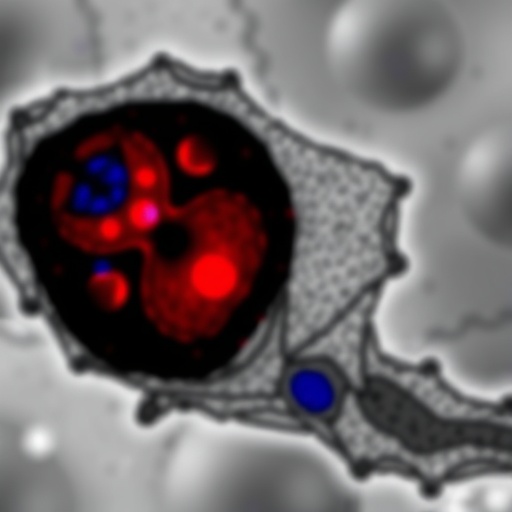
Recent advancements in our understanding of cancer biology have elucidated the complex mechanisms through which tumors adapt and progress. A pivotal study led by Kuo et al. delves deep into the role of thrombomodulin in melanoma progression, revealing the significant influence this protein has on tumor dynamics and behavior. The findings suggest that thrombomodulin is not merely a passive participant in the tumor microenvironment but actively facilitates melanoma’s adaptability and survival in detrimental conditions.
The researchers discovered that thrombomodulin is intricately linked to the pathways governing cell migration and proliferation. One of the critical pathways identified was the focal adhesion kinase (FAK) signaling pathway, which is crucial for maintaining cellular adhesion and signaling in response to the extracellular matrix. When thrombomodulin levels are elevated, they appear to bolster FAK activity, thereby propelling melanoma cells toward increased motility. This heightened mobility allows melanoma cells to escape local microenvironments and invade surrounding tissues, amplifying tumor growth and metastasis.
Linked closely to FAK signaling is the ezrin protein, known for its role in linking the plasma membrane to the cytoskeleton and facilitating cell deformability. As the study reveals, thrombomodulin enhances the activation of ezrin, which, in turn, contributes to the phenotypic plasticity of melanoma cells. This plasticity is essential for the cells to adapt to varying environmental conditions, such as those found in metastatic sites, allowing them to thrive in hostile surroundings. The interplay between thrombomodulin, FAK, and ezrin exemplifies a sophisticated mechanism that melanoma cells utilize to navigate their microenvironment.
In essence, the study posits that thrombomodulin serves as a significant modulator of cellular behavior in melanoma. By promoting the activation of key signaling molecules, it enables melanoma cells to exhibit a more aggressive and adaptable phenotype. This revelation stands to reshape current therapeutic approaches aimed at targeting melanoma, as inhibiting thrombomodulin or disrupting its signaling pathways could provide a novel avenue for treatment.
Moreover, the implications of this research extend beyond melanoma alone. The pathways influenced by thrombomodulin and its downstream effectors are likely to be relevant in various forms of cancer that employ similar mechanisms of invasion and metastasis. Thus, the findings may provide insights not only into melanoma but also into a broader spectrum of malignancies characterized by aggressive cellular behaviors driven by phenotypic plasticity.
Understanding the role of thrombomodulin sheds light on the complex biology of melanoma but also presents potential therapeutic targets. The quest for effective cancer treatments has often been hindered by the dynamic and adaptable nature of tumors. Thus, a focus on proteins facilitating such adaptability, like thrombomodulin, could revolutionize our strategies in combating this formidable disease.
In summary, Kuo and colleagues’ research enriches our understanding of the molecular players involved in melanoma progression. Thrombomodulin emerges as a crucial facilitator of the aggressive traits possessed by melanoma via its modulation of FAK and ezrin. The potential for targeted interventions that disrupt this process raises new hope in the fight against melanoma, urging further studies to explore these findings in clinical settings.
As research continues to unfold, the urgency to comprehend the myriad interactions within the tumor microenvironment becomes increasingly apparent. Further investigations into the mechanistic roles of thrombomodulin, alongside other critical pathways, are essential not only to delineate melanoma biology but also to fine-tune targeted therapeutic modalities that can effectively curb its progression. The complexity of these interactions serves as a reminder of the challenges that lie ahead in oncology but also highlights avenues filled with promise for future discoveries and innovations.
This burgeoning field carries the hope that, through a detailed understanding of the signaling networks that drive cancer progression, we can develop strategies that not only halt the growth of tumors but also render them more susceptible to existing therapies. The findings of this study open doors to promising new frontiers in cancer research, laying the groundwork for innovative treatment paradigms that could save countless lives from the clutches of melanoma.
In the fight against cancer, it is studies like that of Kuo et al. that light the way forward, providing essential insights into the fundamental nature of tumor biology. The exploration of thrombomodulin’s role in melanoma marks a critical step in unraveling the complexities of cancer, ultimately paving the way for the development of novel therapeutic strategies that align with the evolving landscape of disease management.
The implications of this study cannot be underestimated, as they call for a realignment of focus in cancer research. By directing attention toward proteins such as thrombomodulin, scientists and clinicians are given an opportunity to design therapies that not only inhibit tumor growth but also disrupt the pathways that allow for its relentless adaptability. As researchers worldwide continue to uncover the mysteries of cancer, studies like this offer a glimmer of hope that innovative therapeutic approaches are within reach.
In conclusion, the pivotal role of thrombomodulin in facilitating melanoma progression underscores an urgent need for heightened research efforts in this direction. The findings from Kuo et al. invite further exploration and demonstrate how targeting specific pathways can reframe our therapeutic strategies, thus bringing us closer to effective interventions against one of the most challenging forms of cancer known to modern medicine.
Subject of Research: The role of thrombomodulin in melanoma progression.
Article Title: Thrombomodulin facilitates melanoma progression via FAK- and ezrin-mediated phenotypic plasticity.
Article References: Kuo, CH., Sie, RH., Ku, YC. et al. Thrombomodulin facilitates melanoma progression via FAK- and ezrin-mediated phenotypic plasticity. J Biomed Sci 33, 14 (2026). https://doi.org/10.1186/s12929-026-01217-2
Image Credits: AI Generated
DOI: https://doi.org/10.1186/s12929-026-01217-2
Keywords: thrombomodulin, melanoma, phenotypic plasticity, FAK, ezrin, cancer progression, signaling pathways.


