

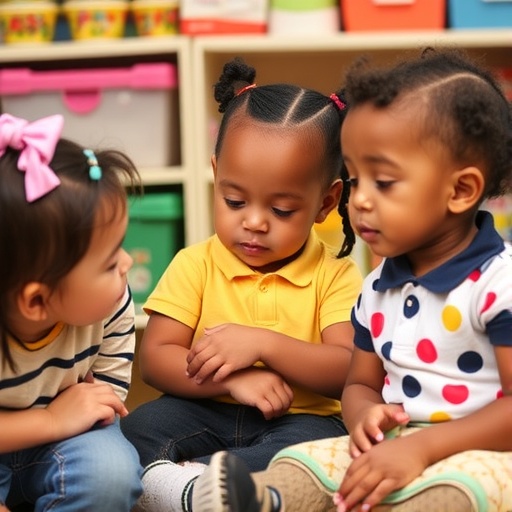
In the realm of early childhood education, the voices of children often go unheard, overshadowed by the perspectives of adults who shape the educational landscape. However, recent research by McFarland, Page, and Baker sheds light on the invaluable insights of three-year-old children regarding their kindergarten experiences amid educational reforms. The study, titled “We Need to Keep Picturing All of the Stuff I Like!” emphasizes the importance of listening to young learners as they navigate transitional phases in their education.
The impetus for this research stems from the ongoing debates about educational reform, particularly how these changes impact the learning experiences of the youngest students. As policymakers introduce new curricula and pedagogical methods, the core of the educational experience may shift, often neglecting what children themselves value and enjoy in their learning environments. By investigating children’s perspectives, researchers aim to bridge the gap between educational policy and the lived experiences of students, ensuring that reforms reflect the needs and preferences of early learners.
Through a qualitative approach, the researchers engaged with a group of three-year-olds in their kindergarten settings. This age group was chosen due to their critical developmental stage, where play and exploration are foundational to learning. The study employed conversational interviews and interactive art activities, enabling the children to express their thoughts and feelings about their educational experiences. Such methods not only yielded richer data but allowed the children to communicate in ways that resonated with their natural modes of expression.
One of the most striking findings of the research was how children articulated their enjoyment of various aspects of kindergarten, emphasizing the significance of play, creativity, and social interaction. The phrase “We need to keep picturing all of the stuff I like!” became a recurring theme as participants expressed a desire for their interests to be integrated into the school curriculum. This sentiment underscores the necessity of incorporating child-led interests within educational frameworks, advocating for a more dynamic and responsive approach to teaching.
Moreover, the researchers identified several key areas that children particularly valued in their learning environments. These included opportunities for hands-on activities, the freedom to choose their play, and the role of supportive relationships with teachers and peers. The findings reveal a disconnect between educational policymakers’ intentions and the realities faced by young learners, highlighting the importance of aligning educational practices with children’s voices to enhance their overall learning experiences.
The implications of this research extend beyond kindergarten classrooms. As educational reform continues to evolve, it is essential that the preferences of children are considered in policy discussions and curriculum development. The study encourages educators, administrators, and policymakers to prioritize children’s perspectives, fostering an educational culture where student voice plays a pivotal role in shaping learning experiences. By doing so, the education system can become more attuned to the needs of its youngest members.
In conclusion, McFarland, Page, and Baker’s research exemplifies the need for a paradigm shift in how educational reforms are approached. Rather than imposing top-down changes, the study advocates for a participatory model where children’s voices guide the direction of educational practices. As the education system grapples with significant transformations, the wisdom of three-year-olds serves as a poignant reminder of the importance of centering learners in discussions about their educational journeys. Listening to children’s perspectives can lead to more inclusive, engaging, and effective educational environments—crucial for nurturing the next generation of learners.
This research ultimately champions the idea that listening to children is not merely an act of kindness but a necessity for effective educational reform. It calls for a commitment to understanding and valuing children as active participants in their learning journeys, rather than passive recipients of adult-driven educational strategies. As the findings suggest, when educators prioritize what children cherish and enjoy, they create a more vibrant and comprehensive educational landscape that not only meets curriculum standards but also fosters a love of learning.
Creating an educational system that is responsive to the preferences of young learners will take collective effort and a shift in mindset. Educators, parents, and policymakers must work collaboratively to ensure that children’s voices are integrated into the ongoing dialogue about educational practices. This partnership can pave the way for reforms that are not only theoretically informed but practically enriching for every child involved in the educational process.
Ultimately, the research by McFarland and colleagues invites us to rethink the ways we design educational experiences for young children. It urges all stakeholders to cultivate environments that honor children’s insights, passions, and experiences. By doing so, we can build a richer, more inclusive educational framework that empowers every child to thrive.
Through this lens, we are reminded that reform in education should not just be about implementing new policies or curricula; it should be about improving the overall quality of learning to ensure that every child has the opportunity to engage with and enjoy their education. As we reflect on the findings presented, let us commit to fostering an educational landscape that truly embraces and celebrates the voices of our youngest learners.
Engagement with children’s perspectives not only facilitates their happiness but also cultivates their intrinsic motivation to learn, ultimately resulting in better educational outcomes. By honoring what they love, we can nourish not only their minds but also their spirits.
This continuous dialogue and the push for reform based on children’s narratives is what will drive the evolution of education in the years to come, ensuring that it remains relevant and meaningful in the face of rapidly changing societal demands.
By embracing the insights garnered through studies like this one, we can envision a future where the education system is not only effective in delivering knowledge but is also a nurturing ground for young minds to flourish with enthusiasm, creativity, and resilience.
Subject of Research: Perspectives of three-year-old children on their kindergarten experiences during educational reform.
Article Title: “We Need to Keep Picturing All of the Stuff I Like!”: Three-Year-Old Children’s Perspectives of Their Kindergarten Experiences During Educational Reform.
Article References:
McFarland, L., Page, J., Baker, L.M. et al. “We Need to Keep Picturing All of the Stuff I Like!”: Three-Year-Old Children’s Perspectives of Their Kindergarten Experiences During Educational Reform. IJEC (2025). https://doi.org/10.1007/s13158-025-00471-z
Image Credits: AI Generated
DOI: https://doi.org/10.1007/s13158-025-00471-z
Keywords: Educational Reform, Child Perspectives, Kindergarten Experiences, Early Childhood Education.


