

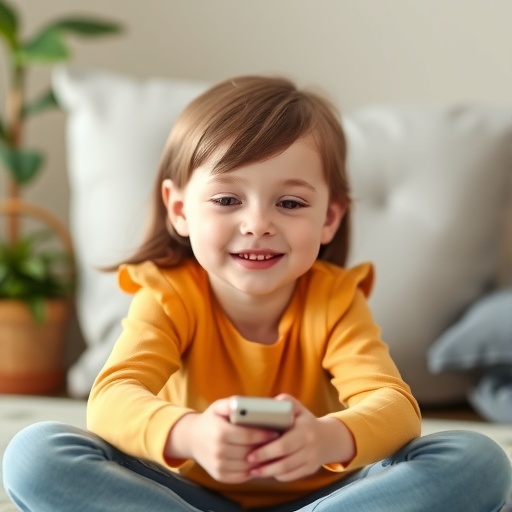
In the realm of child development and autism spectrum disorder (ASD), innovative approaches to therapies are continuously emerging. A recent randomized controlled trial explored the effectiveness of a therapist-managed video-modeling smartphone application tailored for self-care training aimed at children with autism and their parents. This groundbreaking study, conducted by researchers Zohrabi, Karamali Esmaili, and Sheikhtaheri, was published in the Journal of Autism and Developmental Disorders and presents promising insights into how technology can help bridge the gap in therapeutic practices.
The application under scrutiny utilizes video modeling, a highly effective intervention strategy in the autism field. Video modeling involves demonstrating desired behaviors through visually engaging content and has been shown to enhance learning by providing a clear and illustrative guide for individuals on the spectrum. With the integration of smartphone technology, the research team sought to maximize accessibility and engagement, thereby streamlining the learning process for children with autism.
One of the most significant barriers facing families of children with autism is the demand for specialized care and effective training resources. Traditional therapy can often be fluid and inconsistent, as parents juggle multiple responsibilities alongside their children’s needs. This study aims to provide a structured and manageable method for self-care training, empowering parents with the necessary tools and knowledge to support their children’s independence and daily self-care habits.
Through rigorous methodological design, the researchers implemented a randomized controlled trial, a hallmark of clinical research that ensures the reliability of the findings. Participants were divided into two groups, where one received the video-modeling app, while the other received the standard therapy approach. This design not only established a clear control mechanism but also enabled comparison of the results between the intervention and control groups, underscoring any observable differences in outcomes.
The results of the study yielded compelling evidence supporting the efficacy of the smartphone application. Children who engaged with the video-modeling content exhibited marked improvements in various self-care skills, such as personal hygiene, dressing, and eating independently. These skills are fundamental for fostering autonomy and confidence in children with autism and are often areas of difficulty that can hinder daily functioning and quality of life.
Engagement metrics indicated that children were particularly responsive to the smartphone format, with usage patterns suggesting a high level of interest and proactive participation. This finding aligns with the overarching trend of increased technology use in educational and therapeutic contexts, as children are drawn to interactive and visually stimulating content. The adaptability of smartphone applications further allows for personalization, enabling the incorporation of specific tasks relevant to each child’s self-care needs.
The benefits were not limited to the children alone. Parents who participated in the study reported enhanced knowledge and skill sets related to supporting their children’s development. The application empowered parents by providing them with a structured approach to reinforce the skills taught in therapy sessions. Training parents to utilize these innovative tools makes them co-facilitators in the therapeutic process, a shift that can promote a greater sense of agency and partnership in the care of their children.
The research also goes beyond individual outcomes, contributing to the larger body of evidence advocating for the integration of technology in therapeutic practices for autism. As the incidence of autism continues to rise globally, there is an urgent need for scalable and effective interventions that can reach families across diverse settings. The findings from this study propose a template for developing similar applications for various aspects of childhood education and therapy.
Despite the positive outcomes, the authors acknowledged several limitations within their study. The sample size, while adequate for preliminary insights, could be expanded to enhance the validity of the results and allow for subgroup analyses based on age, severity of autism, and other demographic factors. Additionally, longitudinal studies would be invaluable to assess the long-term efficacy of the intervention and its sustainability in various contexts.
Within the discourse of autism interventions, this pioneering research underscores the latent potential of technology as an ally rather than an adversary. As parents and professionals continue to seek effective solutions in a rapidly changing world, combining traditional therapeutic methods with innovative technologies may pave the way for groundbreaking advancements in the field. The future lies in harnessing these digital tools to create an environment of learning and growth for children with autism, equipping them not only with necessary life skills but also instilling confidence and self-worth.
Looking ahead, it will be critical for future research to explore the pathways for wider implementation of such applications in therapeutic settings. Collaboration with software developers, educators, and mental health professionals will be essential in shaping user-friendly, targeted applications that can cater to the diverse needs of children with autism. There’s an exciting horizon ahead where tech-driven solutions could revolutionize the way families and professionals approach autism-related challenges, forging connections and building support systems that foster growth.
In summary, the foundational study conducted by Zohrabi and colleagues illuminates a promising avenue in autism treatment through the lens of technology. It champions the integration of functional, therapist-managed applications that not only benefit children with autism but also uplift families, thereby creating a holistic approach to therapy and learning. As industries converge, the future of autism intervention appears increasingly bright, powered by the potential of modern technology to lead individuals toward independence and fulfillment.
Subject of Research: Effectiveness of a Therapist-Managed Video-Modeling Smartphone Application for Self-Care Training for Children With Autism and Their Parents.
Article Title: Effectiveness of a Therapist-Managed Video-Modeling Smartphone Application for Self-Care Training for Children With Autism and Their Parents: A Randomized Controlled Trial.
Article References: Zohrabi, S., Karamali Esmaili, S., Sheikhtaheri, A. et al. Effectiveness of a Therapist-Managed Video-Modeling Smartphone Application for Self-Care Training for Children With Autism and Their Parents: A Randomized Controlled Trial. J Autism Dev Disord (2025). https://doi.org/10.1007/s10803-025-07161-8
Image Credits: AI Generated
DOI: https://doi.org/10.1007/s10803-025-07161-8
Keywords: Autism, smartphone application, video modeling, self-care training, randomized controlled trial, children, parents.


