

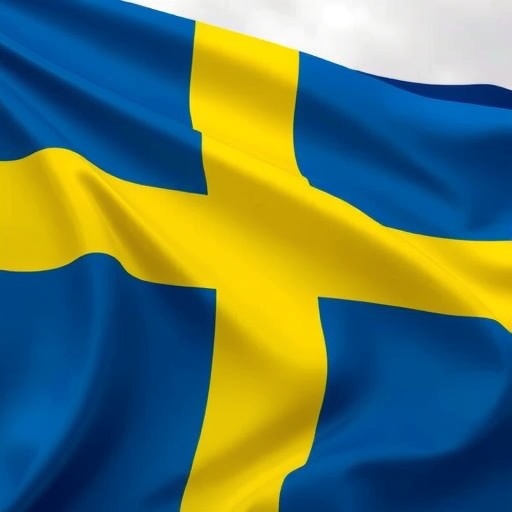
In an era marked by escalating political division and intensifying affective polarization, a seemingly modest symbol—the national flag—may hold surprising power to bridge ideological divides. A groundbreaking experimental study conducted by researchers at Uppsala University has unveiled that unobtrusive exposure to the Swedish flag can significantly reduce social aversion toward political adversaries. This phenomenon intrigues not only political scientists but also social psychologists who seek mechanisms to mitigate the pernicious effects of polarization, which threatens democratic cohesion worldwide.
The study’s genesis stems from an observable paradox in Swedish society, where the national flag, despite its subdued visibility in everyday life, permeates intimate cultural practices such as newborn celebrations and school graduations. The researchers hypothesized that even a subtle visual cue of the flag might activate a latent sense of common identity, subliminally fostering tolerance across political fault lines. To rigorously test this supposition, they designed an experiment embedding the Swedish flag into surveys assessing national identity and social attitudes toward political opponents.
Participants, recruited through a reputable online paneling platform, YouGov, included approximately 1,200 individuals from Sweden and an equivalent number from Denmark, thus enabling a comparative cross-national analysis. The experiment consisted of two primary conditions: one where respondents completed the questionnaire accompanied by a visual of the national flag, either standalone or adorning a cake, and a control condition devoid of any flag imagery. Crucially, the key measure of affective polarization was captured by participants’ reactions to hypothetical family members marrying supporters of various parliamentary parties.
Results revealed a compelling pattern: Swedish participants exposed to the flag imagery displayed a marked reduction in their inclination to socially distance themselves from political adversaries. This attenuation of affective polarization suggests that the flag functions as a potent cue, invoking a shared Swedish identity that temporarily overrides partisan animosities. Intriguingly, many participants reported not consciously perceiving the flag during the survey, underscoring the flag’s subliminal influence on social attitudes.
In contrast, the Danish cohort did not exhibit a comparable effect. The researchers attribute this disparity to differential national symbolic norms and flag visibility. In Denmark, the national flag is omnipresent across daily life, potentially diluting its capacity as a distinctive psychological prime. Moreover, Swedish cultural consensus values—such as compromise and collective harmony—seem to synergize with the flag’s unifying symbolism, whereas Danish identity embraces contrariness and dissent as normative.
The implications of these findings resonate beyond Scandinavian borders. Affective polarization—defined as the mutual animus and negative stereotyping between supporters of opposing political groups—poses a grave threat to democratic processes and social fabric globally. It correlates with an increased propensity toward political violence, delegitimization of electoral outcomes, and erosion of civil discourse. The storming of the U.S. Capitol in January 2021 exemplifies the real-world consequences of entrenched partisan hostility.
By demonstrating that national symbols, often dismissed as mere ceremonial artifacts, can mitigate affective polarization, the study posits a novel avenue for fostering social cohesion. This subtle cue appears to recalibrate individuals’ social perceptions, reminding them of overarching commonalities despite ideological differences. The concept aligns with theories in social identity psychology, wherein salient reminders of superordinate group membership buffer intergroup conflict.
Technically, the researchers employed a between-subjects experimental design to isolate the flag’s effect. Statistical analyses compared responses between treatment and control groups, controlling for demographic variables. The methodological rigor, including the use of matched control conditions and cross-national samples, enhances the robustness and generalizability of the conclusions.
Nevertheless, the study acknowledges limitations. The temporary nature of priming effects warrants investigation into long-term impacts and potential habituation. Future research could explore whether repeated flag exposure sustains reduced polarization or if integrating such cues into institutional practices may bolster democratic resilience. Additionally, extending analyses to diverse political contexts would clarify the universality of flag priming effects.
The research invites policymakers, civic leaders, and educators to reconsider the symbolic environment of political engagement. Incorporating subtle national identity primes may serve as an unobtrusive yet effective tool to temper partisan hostility and promote dialogue. In a polarized age, the unassuming national flag emerges not only as a cultural emblem but as a psychological balm, reminding citizens of unifying bonds amidst diversity.
This study, published in the European Journal of Political Research, underscores the nuanced interplay between symbolism and social cognition. It challenges assumptions about the neutral role of national symbols and highlights their strategic potential in addressing societal challenges. As democracies grapple with division, harnessing the unifying magic of unwaved flags might be a critical step toward healing fractured societies.
Ultimately, the findings illuminate a hopeful narrative: beneath the clamor of partisan discord lies a shared identity waiting to be reawakened. The Swedish flag, quietly present yet psychologically potent, exemplifies how cultural artifacts can transcend mere decoration to become agents of social unity. This revelation encourages a reexamination of national symbols’ role in fostering empathy and cooperation, heralding new horizons for political psychology and civic harmony.
Subject of Research: People
Article Title: The unifying magic of the unwaved flag: Do national identity primes reduce affective polarization?
News Publication Date: 17-Jan-2026
Web References: DOI: 10.1017/S1475676525100649
Image Credits: Credit: David Naylor
Keywords: affective polarization, national identity, social cohesion, flag priming, political psychology, Swedish flag, experimental study, social tolerance, political division, intergroup relations


