

What Defines Contemporary Political Movements in the United States? Exploring the Terminology and Context of Fascism, Populism, and Far-Right Trends
As political discourse intensifies globally, identifying appropriate frameworks and terminology for contemporary political movements has become imperative for scholars and the public alike. In particular, the United States’ current political landscape presents a challenge for categorization. Terms such as “fascism,” “populistic,” “autocratic,” and “far-right” are often used variably and sometimes interchangeably in both academic and media narratives. This complex semantic terrain is the focus of an upcoming interdisciplinary conference set for March 26 and 27, 2026, hosted by the University of Konstanz alongside the University of Münster in Germany. This event offers a critical platform for historians, sociologists, and literature scholars to interrogate the applicability and consequences of these terms in describing political phenomena today.
The conference emerges in response to the increasing politicization of language around authoritarian and extremist ideologies. At its core, this symposium seeks to analyze not only the semantic dimensions but also the historical lineage and cultural implications of political terminology. Historically informed scholarship is seen as vital in disentangling the often emotive and politically charged usage of “fascism” and related descriptors. By convening on the scenic shore of Lake Constance in Konstanz, the conference positions itself as a bridge connecting rigorous academic inquiry with contemporary social relevance.
Central to the discussions will be four research focuses. The first involves creating historical analogues between past and present political configurations, thereby situating current movements within a continuum or rupture relative to classical fascism and other authoritarian systems. This comparative historical method allows participants to discern patterns, adaptations, and divergences over time, fostering nuanced understandings beyond reductive labels.
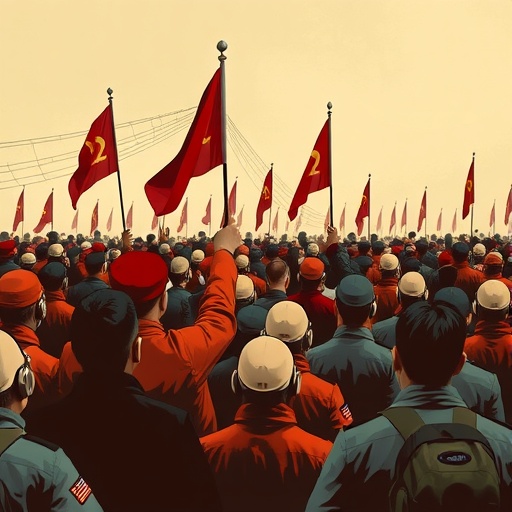
Secondly, conference participants will delve into the symbolic and visual lexicons used historically and currently in fascist and far-right movements. This includes critical examination of racist and anti-feminist imagery which has been instrumentalized to mobilize supporters and stigmatize opposition. Understanding how these images and narratives persist or evolve in modern contexts illuminates mechanisms of political persuasion and identity construction.
Media ecology and communication strategies constitute the third pillar of the conference dialogue. Fascism and related ideologies have often employed sophisticated use of media to propagate ideologies, manipulate public sentiment, and consolidate power. Analysis of both historical propaganda and contemporary media platforms provides insights into the technological mediation of political influence and the transformation of public spheres.
Lastly, discussions will pivot around the tangible political ramifications of fascist ideologies, encompassing both their historical impact and their potential trajectories in present and future socio-political landscapes. This forward-looking dimension underscores an urgent scholarly and civic imperative: to understand not merely what fascism is, but what it might become, and how societies can respond or resist its manifestations.
Opening the conference, Jan Philipp Reemtsma, a renowned literature scholar and social scientist, will deliver a public lecture provocatively titled “Is it Fascism?” His expertise as founder of the Hamburg Institute for Social Research and his academic stature promises a foundational framing for the symposium’s themes. By publicly interrogating the criteria and intentions behind the question of fascism, Reemtsma sets a tone of intellectual rigor combined with accessible discourse.
Significantly, this event embraces transparency and public engagement. While the in-person attendance is limited, the University of Konstanz will broadcast the conference via a live stream, thus democratizing access to these critical conversations. This approach reflects a broader commitment within the humanities and social sciences to contribute substantively to ongoing political debates which often suffer from misrepresentation and oversimplification.
The collaborative nature of the conference, involving institutions from Konstanz and Münster, highlights the transnational importance of studying political extremism and authoritarian tendencies. The Centre for Cultural Inquiry (ZKF) in Konstanz and the involvement of the local adult education center (VHS Landkreis Konstanz) emphasize the intersectional and public dimension of this academic endeavor, integrating scholarly insights with community engagement.
Behind the scenes, organizers Sven Reichardt, Levent Tezcan, and Özkan Ezli bring expertise from diverse but complementary fields—contemporary history, social science research on Islam in Europe, and sociology. Their combined perspectives facilitate an interdisciplinary approach, critical for mapping the complexities of political ideologies that cannot be fully grasped through single-discipline lenses.
The conference’s structure and thematic scope also reflect evolving methodological trends in political and cultural studies. It exemplifies how interdisciplinary, historically informed, and media-critical approaches can collectively deepen our grasp of phenomena that resonate far beyond academia. The decision to open participation to registered media representatives aims to foster responsible journalism grounded in scholarly nuance.
For anyone engaged in understanding today’s global political tensions, attending or viewing this conference offers a rare opportunity. It promises a comprehensive exploration of what terms like fascism, populism, and far-right actually signify in today’s context, backed by rigorous research and open analysis. Such efforts are crucial in a time when political definitions become battlegrounds that influence public perception and democratic resilience.
Through sustained scholarly interrogation at events like this, the contours of political language can be sharpened, serving as a bulwark against misinformation and enabling informed civic discourse. Ultimately, this conference illuminates the vital role of humanities and social sciences as active participants in the global conversation on governance, power, and resistance.
Subject of Research: Contemporary political terminology and ideological analysis relating to fascism, populism, and far-right movements in the United States and beyond.
Article Title: Dissecting Contemporary Political Movements: Is Fascism the Right Term?
News Publication Date: March 2026
Web References: Conference details available via the University of Konstanz website; Article “Can we call it fascism?” in University of Konstanz’s online magazine.
Keywords: Fascism, populism, far-right, autocracy, political terminology, historical comparisons, media influence, political imagery, interdisciplinary conference, social sciences, contemporary history, political discourse.


