

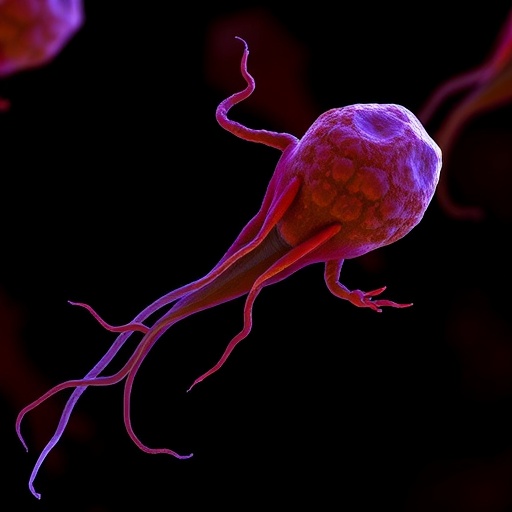
In a groundbreaking study poised to reshape our understanding of male fertility, researchers have identified a pivotal molecular mechanism governing spermiogenesis, the final differentiation phase of sperm development. The study centers on a testis-specific E3 ubiquitin ligase complex, a protein assembly whose precise regulation appears integral to the maturation of sperm cells and ultimately influences male fertility. Published in the prestigious journal Nature Communications, this investigation melds advanced molecular biology with reproductive science, offering novel insights that could pave the way for innovative treatments for male infertility.
Spermiogenesis, the terminal step in spermatogenesis, transforms round spermatids into highly specialized spermatozoa, equipped for motility and fertilization. This complex biological process entails profound cellular remodeling, including chromatin condensation, cytoplasmic reduction, acrosome formation, and flagellum development. While much is understood about the hormonal and genetic controls of early germ cell differentiation, the molecular scaffolding that fine-tunes the later stages of sperm maturation has remained elusive. This study illuminates one such regulatory axis centered on ubiquitination—a post-translational modification that tags proteins for degradation or functional change.
At the heart of this discovery lies the testis-specific E3 ubiquitin ligase complex, a multiprotein enzyme machinery that selectively marks substrate proteins with ubiquitin molecules. Ubiquitination is a well-known cellular process involved in protein quality control and signal transduction, but its specific, localized function within spermatids has been poorly characterized until now. The researchers employed cutting-edge proteomic analyses and CRISPR-Cas9 gene editing in murine models to delineate the composition and function of this E3 ligase complex, revealing its indispensability for normal sperm development.
The study reveals that this E3 ubiquitin ligase complex orchestrates the timely degradation of key regulatory proteins whose persistence would otherwise disrupt spermiogenic progression. Among these targets are factors involved in chromatin remodeling, cytoskeletal reorganization, and membrane dynamics. By fine-tuning the turnover of such proteins, the complex ensures that the intricate morphological transformations required for functional spermatozoa proceed in a tightly regulated fashion. Loss of this complex results in aberrant sperm morphology, impaired motility, and subsequent infertility, thus firmly linking molecular ubiquitination machinery to reproductive capacity.
Further biochemical assays elucidated the substrate specificity of the ligase complex, suggesting that its activity is modulated by yet-to-be-identified testis-restricted cofactors. These could provide additional layers of control over ubiquitin-mediated proteolysis during spermiogenesis, highlighting a complex regulatory network. Importantly, the researchers observed that perturbations in this ligase’s function trigger a cellular stress response akin to proteotoxicity, implicating protein homeostasis as a critical aspect of sperm maturation.
From a translational perspective, this discovery opens exciting avenues for novel contraceptive strategies and therapeutic interventions targeting male infertility. Unlike hormonal treatments that broadly affect the reproductive axis, manipulation of this testis-specific ubiquitination pathway could achieve high specificity with potentially fewer side effects. Modulating E3 ligase activity may allow for reversible suppression of spermiogenesis or correction of defective sperm production in cases with underlying ubiquitination anomalies.
This research also underscores the broader biological significance of the ubiquitin-proteasome system in reproductive biology. While ubiquitination has been intensively studied in various cellular contexts, its spatially restricted functions in gametogenesis are only beginning to be appreciated. The testis, given its remarkable cellular diversity and unique developmental processes, serves as a fertile ground for uncovering tissue-specific regulatory modules of protein turnover.
The identification of a testis-specific E3 ubiquitin ligase complex further accentuates the evolutionary refinement of reproductive mechanisms. Spermiogenesis demands exquisite precision, and evolutionary pressures have likely tailored ubiquitin ligase complexes to meet the distinct needs of male germ cells. This study presents compelling evidence of such molecular specialization, demonstrating that even ubiquitination—traditionally viewed as a ubiquitous cellular process—can exhibit tissue-specific distinctiveness.
Intriguingly, the study also hints at potential crosstalk between ubiquitin-mediated protein degradation and other post-translational modifications such as phosphorylation and sumoylation in the context of sperm maturation. Future research will be essential to unravel how these modifications interplay to coordinate the multifaceted changes occurring during spermiogenesis. Such integrative insights could yield a holistic understanding of sperm development’s regulatory landscape.
Methodologically, the authors implemented a suite of sophisticated experimental approaches, including conditional knockout mouse models, high-resolution mass spectrometry, immunoprecipitation assays, and live-cell imaging. These complementary techniques allowed for a comprehensive dissection of the E3 ligase complex’s molecular identity, spatial localization, and functional consequences upon loss of activity. The robustness of these approaches lends high confidence to the findings and facilitates follow-up studies examining therapeutic potential.
Critically, the documented infertility phenotypes in mouse models deficient in the testis-specific E3 ligase complex recapitulate features observed in certain human male infertility syndromes, suggesting clinical relevance. These phenotypic parallels raise the prospect that mutations or dysregulation of analogous ligase components could underlie unexplained cases of male infertility in humans. Genetic screening of affected individuals may eventually uncover novel diagnostic markers or treatment targets based on this ubiquitination paradigm.
Beyond its clinical implications, the study enriches fundamental cell biology by illustrating how specialized protein degradation systems underpin developmental transitions. Spermiogenesis serves as an exemplary model wherein cellular architecture is extensively remodeled within a short timeframe, relying on precisely choreographed protein clearance. The testis-specific E3 ubiquitin ligase complex thus exemplifies nature’s strategy to harness universal cellular processes for highly specialized outcomes.
In summation, this pioneering research delineates a critical role for a previously uncharacterized testis-specific E3 ubiquitin ligase complex in governing spermiogenesis and male fertility. By integrating molecular, cellular, and physiological data, the study not only advances reproductive biology but also hints at novel paths for fertility modulation. As the global incidence of male infertility rises, such insights are both timely and transformative, offering hope for effective interventions tailored to the molecular etiology of sperm production disorders.
Looking forward, dissecting the upstream regulatory signals controlling this E3 ligase’s activity and identifying its full spectrum of substrates will be paramount. Additionally, exploring whether analogous ubiquitination mechanisms operate in female gametogenesis or other differentiation processes may reveal conserved principles and broaden the impact of these findings. This exciting frontier at the intersection of proteostasis and reproductive health promises to reshape how we conceive infertility diagnostics and therapeutics in the years to come.
Subject of Research: Spermiogenesis regulation by a testis-specific E3 ubiquitin ligase complex and its impact on male fertility
Article Title: A testis-specific E3 ubiquitin ligase complex governs spermiogenesis and male fertility
Article References:
Wu, T., Tu, C., Feng, Y. et al. A testis-specific E3 ubiquitin ligase complex governs spermiogenesis and male fertility. Nat Commun (2026). https://doi.org/10.1038/s41467-026-70025-x
Image Credits: AI Generated


