

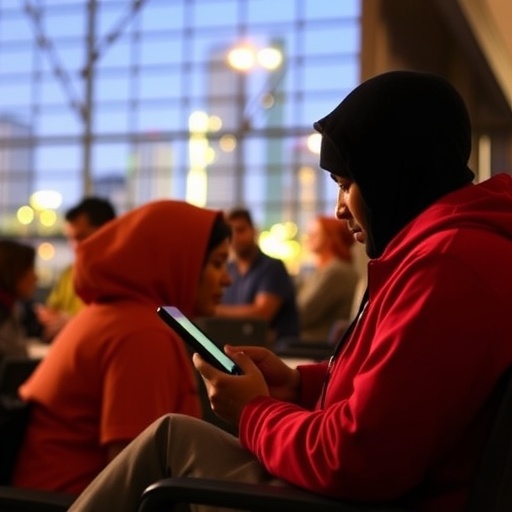
As the digital era advances, healthcare is rapidly transforming with telehealth emerging as a pivotal component in expanding access to medical services. However, the reach of telehealth is uneven, especially among vulnerable populations such as people experiencing homelessness. A groundbreaking study led by Doherty and colleagues, published in the International Journal for Equity in Health, sheds new light on how this demographic perceives and accesses telehealth services. Their work challenges existing assumptions and highlights both the enormous potential and stark limitations of digital healthcare solutions in addressing health inequities.
Telehealth, defined broadly as the delivery of health-related services and information via telecommunications technologies, promises unprecedented convenience and expanded reach. It enables remote consultations, monitoring, and even mental health support through digital platforms, potentially overcoming traditional barriers like transportation or clinic wait times. Yet, for people experiencing homelessness—who often grapple with unstable living conditions, limited digital literacy, and lack of reliable technology—the promise of telehealth can sometimes feel more like a mirage than an accessible reality.
Doherty et al. approached this issue with a meticulous rapid review methodology, critically analyzing patient perspectives to understand the lived realities behind telehealth’s accessibility challenges. Their review captures qualitative insights drawn from multiple studies, surveys, and direct patient narratives that reveal how factors such as device availability, internet connectivity, digital skills, and the environments in which patients live converge to create significant hurdles.
One key finding from the research is that while many individuals experiencing homelessness recognize the potential benefits of telehealth—such as reduced need to travel and avoid crowded clinics—these advantages are frequently undermined by practical constraints. Access to smartphones or computers is limited, and public Wi-Fi networks, a common workaround, often offer inconsistent and insecure connections. This technological gap significantly reduces the feasibility of fully engaging in telehealth appointments.
Moreover, the study emphasizes that digital literacy is a critical yet often overlooked barrier. Even when devices and internet access are available, navigating healthcare platforms can be daunting without prior experience or support. Patients voiced frustrations over complex interfaces, unclear instructions, and difficulty troubleshooting technical issues, which sometimes led to missed appointments or incomplete consultations. This underscores the necessity of designing telehealth systems that are not only accessible but also intuitively user-friendly for those with minimal digital experience.
Privacy also emerges as a profound concern. People experiencing homelessness often lack private spaces to conduct confidential telehealth appointments, raising fears about stigma, confidentiality breaches, and a general discomfort with discussing sensitive health issues in public or semi-public areas. Doherty et al. argue that privacy considerations need to be incorporated thoughtfully into telehealth implementations, perhaps through partnerships with community organizations that can offer safe, private rooms for virtual consultations.
Importantly, the rapid review reveals that telehealth is not a panacea but rather one component within a broader ecosystem of care. Many patients emphasized the continued importance of in-person interactions for complex diagnoses, physical examinations, and the human connection that fosters trust and adherence to medical advice. Telecommunications technology can augment but not fully replace the nuanced dynamics of face-to-face healthcare.
Doherty and colleagues also highlight the crucial role of community-based support networks in mediating access to telehealth. Shelters, outreach programs, and social workers can serve as vital intermediaries, providing devices, technical assistance, and private spaces. Investments in these support structures may yield more immediate improvements in telehealth uptake among the homeless population than technological solutions alone.
From a policy perspective, the study calls for integrated approaches that align healthcare, housing, digital inclusion, and social services to address the multifaceted barriers faced by people experiencing homelessness. Policy frameworks must prioritize equitable access to technology, subsidize data plans, and fund training initiatives that empower patients with digital skills. Equally, safeguards to ensure patient privacy and data security are paramount to build trust in telehealth systems.
The research also underscores the value of incorporating patient voices in designing telehealth interventions. Participatory approaches that involve people experiencing homelessness in the development and evaluation of digital health tools can lead to more culturally competent and contextually appropriate solutions. This patient-centered mindset is critical to fostering sustainable adoption and mitigating unintended disparities.
As telehealth becomes embedded in mainstream healthcare, Doherty et al.’s insights serve as a clarion call to avoid a one-size-fits-all approach. The stark disparities in digital access and literacy reflect broader social inequities that technology alone cannot solve. Without deliberate efforts to tailor telehealth services inclusively, vulnerable populations risk being further marginalized in an increasingly digitized health ecosystem.
Furthermore, the study reflects an emerging understanding within the global health community about the social determinants of health and their interplay with technological innovation. Mental health, chronic disease management, and preventive care among homeless individuals require complex interventions that integrate digital tools with robust human support systems. Telehealth initiatives must be grounded in this holistic vision to realize their full equity potential.
International comparisons within the review suggest variability in telehealth access based on geographic, socioeconomic, and policy contexts. Countries with stronger social safety nets and proactive digital inclusion strategies see relatively better engagement among homeless populations. This global perspective provides valuable lessons for countries seeking to bridge the digital divide in healthcare.
In conclusion, the rapid review by Doherty and colleagues shines a vital spotlight on the nuanced realities shaping telehealth access for people experiencing homelessness. Their findings elucidate significant structural and experiential obstacles but also highlight actionable paths forward through community engagement, tailored technology design, and integrated policy approaches. Achieving truly equitable telehealth care demands sustained commitment to inclusion, innovation, and patient empowerment.
As healthcare systems around the world continue to evolve in response to technological advances, ensuring that telehealth fulfills its promise of bridging, rather than widening, health disparities will be measured by the extent to which the most vulnerable can participate fully. This study is a crucial contribution to that ongoing conversation, urging stakeholders to center equity in the future of digital health.
Subject of Research: Patient Perspectives on Telehealth Access Among People Experiencing Homelessness
Article Title: Patient perspectives on telehealth access among people experiencing homelessness: a rapid review
Article References:
Doherty, C., Pepper, H., Jessup, R. et al. Patient perspectives on telehealth access among people experiencing homelessness: a rapid review. Int J Equity Health (2026). https://doi.org/10.1186/s12939-025-02749-z
Image Credits: AI Generated


