

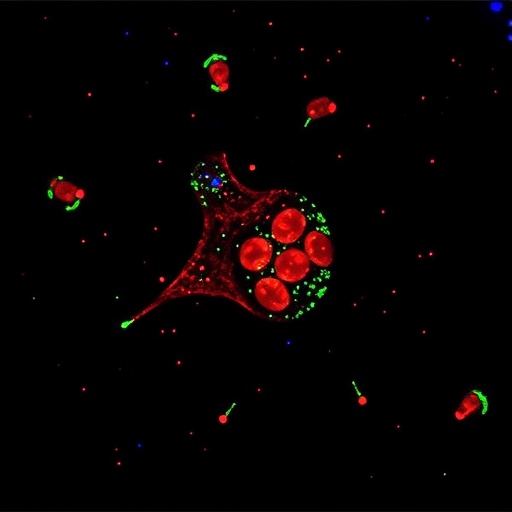
In a groundbreaking study published in Cell Death Discovery, researchers have unveiled a novel therapeutic approach that targets oncogene-induced senescence in ETV6::RUNX1 pre-leukemic cells, shedding new light on the early stages of leukemia development. This discovery provides a rare window into pre-leukemic cell biology and sets the stage for innovative interventions aimed at preventing full-blown leukemia by halting its progression at a cellular level. The implications of this work extend far beyond a specific leukemia subtype, potentially reshaping our understanding of oncogenic stress response mechanisms and their manipulation in cancer therapy.
Oncogene-induced senescence (OIS) is a critical tumor-suppressive mechanism, acting as an intrinsic cellular brake designed to halt the proliferation of cells experiencing oncogenic stress. In the context of ETV6::RUNX1, a fusion oncogene commonly detected in childhood B-cell precursor acute lymphoblastic leukemia, this senescence response emerges as a pivotal checkpoint that determines whether pre-leukemic cells remain dormant or progress toward malignancy. Crucially, this study deciphers the molecular underpinnings of how ETV6::RUNX1 drives this senescence program and reveals exploitable vulnerabilities that enable therapeutic targeting.
The ETV6::RUNX1 fusion gene originates from a chromosomal translocation event involving chromosomes 12 and 21. This aberrant gene plays a defining role in pre-leukemic clones by altering transcriptional networks and regulatory pathways, causing a cellular stress condition that ordinarily activates senescence. What makes this fusion oncogene so enigmatic is its dualistic nature: while it initiates leukemogenesis, it simultaneously triggers a protective senescence program that restrains the malignant transformation—a biological paradox the research team sought to unravel.
Through meticulous experimentation involving cellular and molecular assays, the investigators deciphered the signaling cascade activated downstream of ETV6::RUNX1. Their findings illustrate that the fusion protein induces DNA damage responses and activates key tumor suppressor pathways, including the p53 and p16^INK4a^ axes, thereby enforcing a senescence-associated cell cycle arrest. This cellular state is not merely a passive endpoint; rather, it represents an active program conferring a complex secretory phenotype that modifies the microenvironment, possibly influencing neighboring cellular responses.
Capitalizing on these insights, the researchers explored strategies to pharmacologically manipulate this senescence machinery. By employing small molecules that selectively abrogate the senescence-associated secretory phenotype (SASP) or modulate key signaling nodes such as mTOR and NF-κB, they demonstrated a potential to disrupt the protective senescent state selectively in pre-leukemic cells harboring ETV6::RUNX1. This therapeutic interference shifts the balance, either driving cells into apoptosis or sensitizing them to additional anti-cancer agents.
One of the most remarkable aspects revealed by this work is the temporal aspect of targeting OIS. The pre-leukemic cells exist in a precarious equilibrium, balancing between senescence-mediated dormancy and proliferative escape. Therapeutic targeting during this window could preempt leukemia onset—a preventive paradigm differing fundamentally from conventional leukemia treatments that focus on eradicating established disease. This approach could reduce treatment-related morbidity, a vital consideration in pediatric patients where therapy-induced toxicity remains a significant concern.
Beyond therapeutic implications, the study also propels forward our mechanistic understanding of oncogene-induced senescence in the hematopoietic system. Previous investigations have predominantly focused on solid tumors, but this analysis reveals nuances specific to blood progenitors, including the role of chromatin remodeling, epigenetic regulation, and immune surveillance in maintaining the senescence phenotype. These insights open new paths for research into how the immune microenvironment interacts with senescent pre-leukemic clones and whether modulating immune clearance could complement direct senescence targeting.
Additionally, this research highlights the importance of early detection of pre-leukemic clones in individuals at risk. Utilizing biomarkers linked to OIS activation and senescence-associated molecular profiles, clinicians may one day diagnose and monitor pre-leukemic conditions with enhanced precision. This would enable personalized interventions aimed at eradicating or controlling malignant evolution before clinical disease manifestation, heralding a new frontier in cancer prevention.
Another layer of complexity explored by the authors involves the interplay between oncogene-induced senescence and cellular metabolism. Their data suggest that senescent pre-leukemic cells undergo metabolic rewiring, adapting their bioenergetics to support the senescent phenotype and SASP production. Targeting these metabolic dependencies, such as alterations in mitochondrial function and reactive oxygen species generation, offers an adjunct approach to sensitize cells to senolytic treatments, thereby dismantling the protective niche of senescence.
This comprehensive study also underscores the limitations and potential challenges in translating senescence-targeted therapies to the clinic. Selectivity is paramount to avoid deleterious effects on normal hematopoietic stem cells and ensure that interventions do not inadvertently promote malignant progression or immune evasion. The research team emphasizes the need for further preclinical models and carefully designed clinical trials to evaluate the safety profile and efficacy of proposed compounds.
Intriguingly, the investigation opens debate on the broader role of oncogene-induced senescence beyond leukemia. Many cancers initiate from premalignant clones subjected to oncogenic stress and senescence barriers; hence, insights gained from ETV6::RUNX1 pre-leukemia might be extrapolated to other malignancies. The principles of exploiting the senescence machinery as a therapeutic target could extend to oncology as a whole, generating a ripple effect across multiple cancer types.
Ultimately, the study presents a powerful proof of concept that the cellular senescence barrier in oncogene-driven pre-leukemic cells is not an impenetrable fortress but rather a vulnerable Achilles’ heel. This breakthrough paves the way for innovative therapeutics that harness the biology of tumor suppression to prevent cancer, transforming senescence from a challenge into an opportunity. It catalyzes a paradigm shift toward intercepting cancer at its earliest and arguably most manageable phase.
In conclusion, the landmark discovery that targeting oncogene-induced senescence can influence the fate of ETV6::RUNX1 pre-leukemic cells signals a new horizon in leukemia research and cancer biology. By unraveling the complex molecular dialogues orchestrated by this prevalent fusion oncogene and exposing novel intervention points, researchers have illuminated a promising avenue to rewrite the course of leukemia development. As studies progress, hope rises for curative strategies that preempt leukemia by striking at its very roots—through the enigmatic yet conquerable realm of oncogene-induced senescence.
Subject of Research: Oncogene-induced senescence in ETV6::RUNX1 pre-leukemic cells and therapeutic targeting strategies.
Article Title: Targeting oncogene-induced senescence in ETV6::RUNX1 pre-leukemic cells.
Article References:
Acunzo, D., Bertagna, M., Risca, G. et al. Targeting oncogene-induced senescence in ETV6::RUNX1 pre-leukemic cells. Cell Death Discov. (2026). https://doi.org/10.1038/s41420-026-03001-5
Image Credits: AI Generated


