

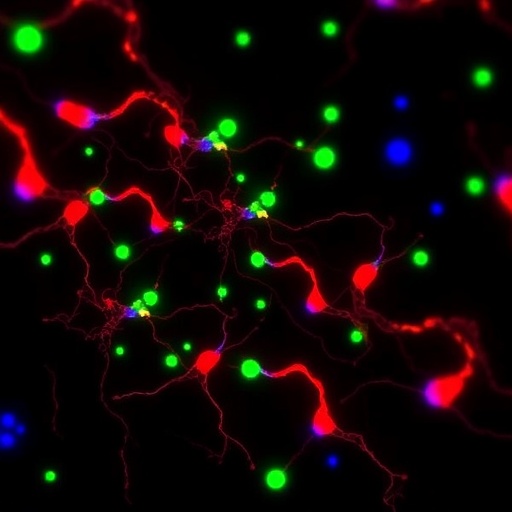
In a groundbreaking study published in BMC Neuroscience, researchers delved into the potential of Tamibarotene, a retinoid derivative, to influence neural differentiation in SH-SY5Y neuroblastoma cells. Neuroblastoma represents a challenging area in pediatric oncology, and uncovering therapeutic strategies for this aggressive cancer is paramount. The findings not only reinforce the significance of differentiation therapies but also spotlight the mechanistic underpinnings via the activation of the PI3K/AKT signaling pathway.
The research team, led by Zhang and colleagues, embarked on a quest to evaluate how Tamibarotene affects cellular pathways that predicate neuroblastoma cell differentiation. Tamibarotene is known for its role as a potent teratogenic agent, exhibiting promising effects in prompting the maturation of immature neural cells. By activating certain signaling cascades, it has the ability to transform neuroblastoma cells into neuron-like cells, potentially providing a novel approach to treatment for patients suffering from this form of cancer.
The study meticulously documented the molecular and cellular changes observed when SH-SY5Y neuroblastoma cells were treated with varying concentrations of Tamibarotene. Researchers noticed that over time, there was a significant increase in morphologically neuron-like characteristics among the treated cells. What made this transformation particularly noteworthy was the documented activation of the PI3K/AKT pathway—a critical route that mediates numerous cellular processes, including growth, survival, and differentiation.
Identifying the interplay between Tamibarotene and the PI3K/AKT pathway sheds light on existing gaps in understanding why differentiation therapies have been elusive in some cancer treatments. The findings suggest that by leveraging this pathway, Tamibarotene may enhance the potential for targeted therapies that push neuroblastoma cells out of their malignant state and into differentiation. It offers a clues that could lead to the development of new strategies in treating this particularly aggressive pediatric cancer.
Additionally, the study provided insights into the timing and dosage of Tamibarotene administration. The researchers discovered that not all concentrations were equally effective, with some leading to minimal differentiation effects. This emphasizes the importance of understanding the pharmacological properties of Tamibarotene, as inappropriate dosages could render the treatment ineffective or even toxic. Hence, optimizing the dosing schedule remains an essential factor in the therapeutic application of this compound.
Furthermore, the implications of these findings extend beyond just differentiation therapies for neuroblastoma. The modulation of the PI3K/AKT pathway may present opportunities for a broader spectrum of treatments for other types of cancer that also exhibit aberrant signaling through this critical pathway. Consequently, this research opens avenues for investigating additional compounds that could synergize with Tamibarotene or operate independently to activate similar differentiation mechanisms in various malignancies.
In parallel, as the research community continues to probe the cellular mechanisms of neuroblastoma, understanding the role of the tumor microenvironment is increasingly important. Factors present in the microenvironment can exert significant influence on the behavior of cancer cells, including their capability to evade differentiation signals. This highlights the need for integrating both intrinsic cellular pathways and the extrinsic environmental cues to develop a comprehensive therapeutic strategy.
Moreover, while Tamibarotene appears to offer promising differentiation-inducing properties, it is crucial to gauge long-term outcomes in patient populations. Investigating the safety and efficacy of Tamibarotene treatment in clinical trials would serve as an essential next step. This study represents a vital precursory exploration that could lead to larger, more comprehensive investigations, advancing our understanding of Tamibarotene’s role in altering neuroblastoma biology.
In summary, the research conducted by Zhang et al. significantly contributes to the field of neuro-oncology by elucidating the pathways affected by Tamibarotene. The demonstrated capability of this retinoid to enhance neuronal differentiation while engaging the PI3K/AKT pathway underscores its potential therapeutic value. As the fight against neuroblastoma continues, such discoveries could pave the way for innovative and effective treatment modalities, ultimately benefiting children battling this formidable cancer.
In conclusion, while there are still hurdles to overcome, the emergence of Tamibarotene as a potential player in differentiating neuroblastoma cells underscores the need for continuous research and innovation within the field. The interconnectedness of cancer treatment with developmental biology principles offers a broader view of how we might approach pediatric malignancies in the future. Harnessing the complexities of cell signaling can lead to unexpected breakthroughs, and studies such as this one reinforce the hopeful prospects for better, more targeted therapies in the realm of childhood cancers.
Subject of Research: Differentiation of neuroblastoma cells via Tamibarotene affecting the PI3K/AKT signaling pathway
Article Title: Tamibarotene promotes differentiation of neuroblastoma SH-SY5Y cells into neurons, which is associated with activation of the PI3K/AKT signaling pathway
Article References:
Zhang, J., XiangWei, W., Zhang, F. et al. Tamibarotene promotes differentiation of neuroblastoma SH-SY5Y cells into neurons, which is associated with activation of the PI3K/AKT signaling pathway.
BMC Neurosci 26, 41 (2025). https://doi.org/10.1186/s12868-025-00962-8
Image Credits: AI Generated
DOI: https://doi.org/10.1186/s12868-025-00962-8
Keywords: Tamibarotene, neuroblastoma, SH-SY5Y, PI3K/AKT pathway, differentiation therapy, pediatric oncology


