

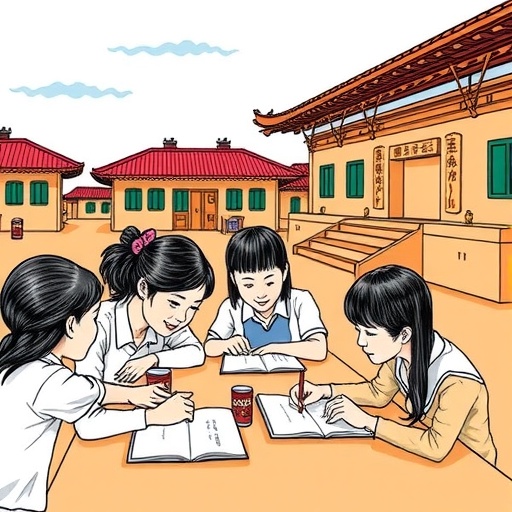
In recent years, the educational landscape has undergone significant transformations, particularly influenced by the growing realization of the necessity for competency-based curriculum models. One illuminating example is Taiwan’s approach, which has not only redefined its own education system but offers a replicable model that has compelling implications for low- and middle-income countries worldwide. By examining Taiwan’s competency-based curriculum, we can uncover insights that may provide these nations with the tools necessary for enhancing educational outcomes and addressing systemic challenges.
The transformative power of competency-based education lies in its focus on the individual learner rather than a one-size-fits-all model. This approach recognizes that each student possesses unique abilities, learning styles, and paces. Taiwan’s education system meticulously designs its curriculum to ensure that students attain specific competencies, enabling them to demonstrate mastery over skills and knowledge instead of merely passing through grade levels. This strategic shift from traditional education paradigms allows students to become more engaged, informed, and ready for the demands of the modern workforce.
Central to Taiwan’s educational success is a well-structured framework that emphasizes collaboration among educators, policymakers, and the business community. In creating a curriculum that aligns with market demands, Taiwan has cultivated a system where learning is not just theoretical but practical. By engaging industries in the educational process, Taiwan has ensured that students gain relevant experiences that prepare them for future employment. This partnership exemplifies a forward-thinking approach, recognizing that education must evolve in tandem with societal and economic changes.
Countries in low- and middle-income brackets often grapple with various educational challenges. Overcrowded classrooms, insufficient resources, and outdated teaching methods plague many of these regions. Taiwan’s competency-based curriculum model provides a blueprint that could be adapted to ameliorate these challenges. By prioritizing essential competencies, these nations can streamline their curriculums, focusing on core skills that are applicable in the real world and essential for economic growth.
Investing in teacher training is another critical component of Taiwan’s educational system. Competency-based education hinges on adept instructors who possess a robust understanding of the pedagogical strategies associated with it. In Taiwan, educators are continually supported through professional development opportunities, ensuring they remain at the forefront of educational advancements. For low- and middle-income countries to replicate Taiwan’s success, concerted efforts must be made to elevate the teaching profession, providing teachers with both the tools and the motivation needed to confidently implement these innovative curriculum models.
One of the remarkable aspects of Taiwan’s approach is its inclusive nature. The curriculum is designed in such a way that it accommodates diverse learners, including those with disabilities. This commitment to inclusivity serves as a pivotal lesson for low- and middle-income countries striving to create equitable education systems. By embedding inclusivity into the fabric of the curriculum, Taiwan ensures that all students, regardless of their backgrounds or abilities, have equal access to quality education, thereby fostering a culture of acceptance and understanding.
Moreover, the role of technology cannot be understated in Taiwan’s competency-based education model. With rapid advancements in digital learning tools, Taiwan has effectively integrated technology into its curriculums, enhancing student engagement and facilitating personalized learning experiences. For low- and middle-income countries, harnessing technology holds the potential to bridge gaps in education delivery. This approach can enable remote learning opportunities and provide students with access to vast resources that were previously beyond their reach.
Student assessment is another critical area that sets Taiwan’s competency-based curriculum apart from traditional methods. Instead of relying heavily on standardized testing, Taiwan employs varied assessment strategies that provide more holistic insights into student learning. These assessments focus on students’ ability to apply knowledge in practical contexts, offering a more accurate picture of their competencies. For many developing nations, shifting away from an over-reliance on examinations could not only reduce educational stress but also promote deeper learning experiences.
Key to the effectiveness of Taiwan’s model is its adaptability. Recognizing that a singular approach may not be suitable for every educational context, Taiwan encourages the customization of its competency frameworks to meet local needs. This flexibility allows other countries to adapt the model according to their cultural and socioeconomic realities, ultimately leading to a greater likelihood of successful implementation and sustainable educational reform.
Furthermore, Taiwan’s experience has highlighted the importance of policy coherence in driving educational change. Strengthening the alignment between different education policies and initiatives creates a more coherent approach, leading to improved educational outcomes. For low- and middle-income countries, harmonizing goals across various sectors—such as health, social services, and economic development—can result in a comprehensive strategy that supports educational advancements.
As educational systems worldwide grapple with the complexities of preparing students for future challenges, the value of contemporary curriculum models like Taiwan’s cannot be overstated. A transformative competency-based curriculum can help reshape the educational paradigms of low- and middle-income countries by placing emphasis on practical skills, industry engagement, inclusivity, and continuous teacher development.
The journey toward implementing a competency-based curriculum model will not be without obstacles; however, the potential rewards are vast. As nations strive to equip their future generations with the skills they need to thrive in an increasingly competitive global landscape, learning from Taiwan’s approach can serve as a guiding light in navigating these complexities.
The ripple effects of adopting such models extend not only to economic benefits but also to social justice, fostering a more educated populace equipped to contribute positively to the global society. Ultimately, the quest for educational excellence is a shared journey, and focusing on competency-based models may pave the way towards eradicating disparities in learning outcomes for countless students around the world.
In conclusion, Taiwan’s competency-based curriculum model serves as a promising template for low- and middle-income countries as they embark on their educational reforms. By embracing this approach, these nations can effectively address systemic challenges while ensuring that their students emerge as competent, skilled, and well-rounded individuals ready to tackle the complexities of the modern world.
Subject of Research:
Competency-based curriculum models in education
Article Title:
Leveraging Taiwan’s competency-based curriculum model: implications for low- and middle-income countries
Article References:
Yasin, G.M. Leveraging Taiwan’s competency-based curriculum model: implications for low- and middle-income countries.
Discov Educ (2026). https://doi.org/10.1007/s44217-026-01104-w
Image Credits: AI Generated
DOI:
Keywords:
Competency-based education, curriculum models, Taiwan, low-income countries, middle-income countries, educational reform, teacher training, inclusivity, digital learning, assessment strategies.


