

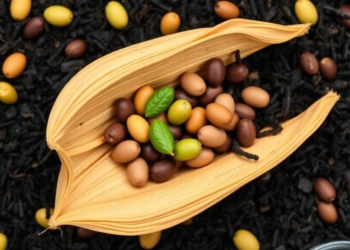
Bean Husk Waste Transformed into Biochar That Strips Lead and Chromium from Water
Researchers converted discarded bean husks into a low-cost biochar that removed up to 94.7% of lead and 91.5% of hexavalent ...
Researchers converted discarded bean husks into a low-cost biochar that removed up to 94.7% of lead and 91.5% of hexavalent ...

A new scoping review finds the anti-anxiety drug diazepam and the antidepressant fluoxetine in drinking water across seven countries at ...
A new review reveals how copper-based advanced oxidation processes could outperform traditional iron Fenton chemistry in destroying persistent micropollutants across ...
Researchers converted invasive Rhus typhina biomass into a nano-magnesium oxide modified pyro-hydrochar that removes fluoride from water with record-setting capacity ...
A stabilized single-reagent tetramethylbenzidine method for free chlorine closely matches the standard DPD technique across tap water and mineral matrices, ...
Researchers have created a magnetic Bi2MoO6/CoFe2O4 composite photocatalyst that removes 99.9 percent of rhodamine B dye under visible light and ...
A new review argues that the real barrier to removing pharmaceuticals, pesticides, and other emerging contaminants from water is a ...
Researchers in China built a boron-doped graphitic carbon nitride homojunction that, with persulfate and visible light, degrades 98.6 percent of ...
A new biopolymer composite membrane removes over 91% of carcinogenic chromate ions from water within 40 minutes and can be ...
Researchers have grafted g-C3N4, CeO2, and ZnO onto PVDF/TiO2 nanohybrid membranes, finding that a graphitic carbon nitride variant removes nearly ...

Embark on a thrilling journey of discovery with Scienmag.com—your ultimate source for cutting-edge breakthroughs. Immerse yourself in a world where curiosity knows no limits and tomorrow’s possibilities become today’s reality!